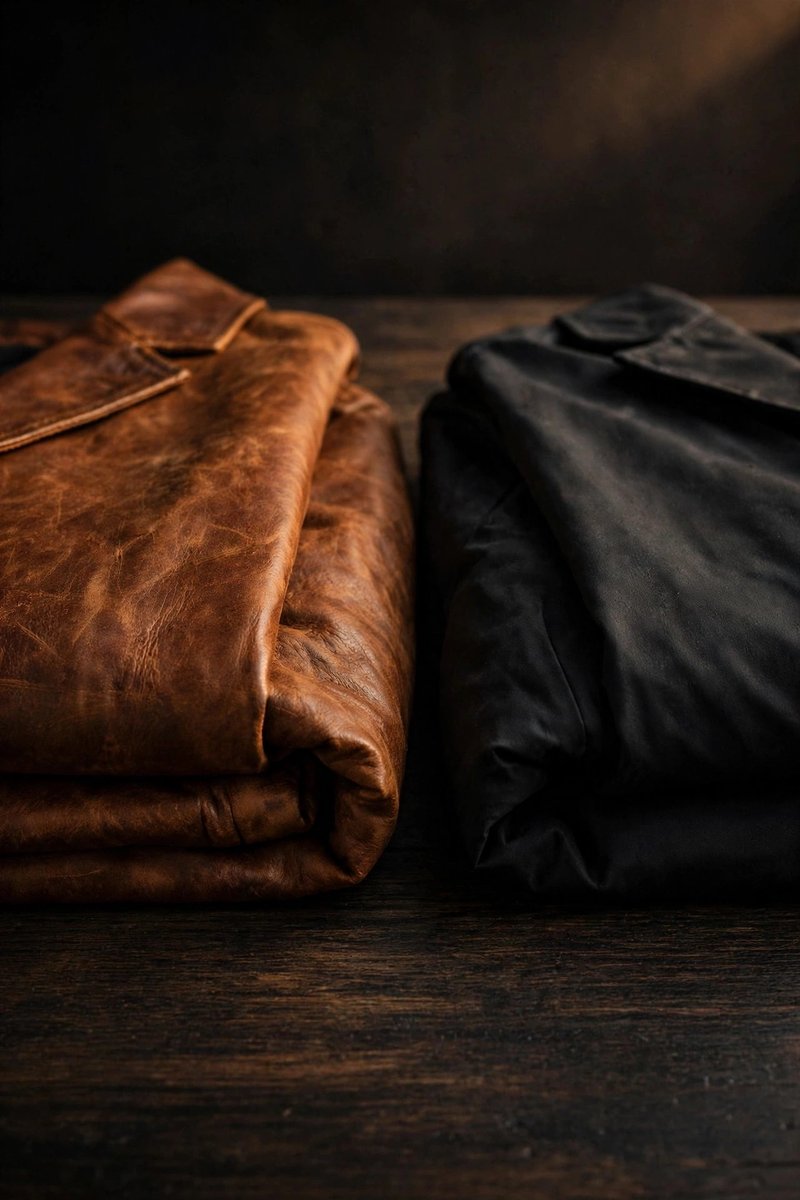
We sell real leather, so you might expect this article to be a prosecution of the fake stuff. It is not. Faux leather has a legitimate place in a wardrobe, and pretending otherwise would insult your intelligence. But the two materials are not interchangeable versions of the same product — they age in opposite directions, fail in different ways, and suit different buyers. This comparison goes through the differences that actually decide a purchase, honestly, including the rounds faux leather wins. If you are mid-decision, it pairs well with our first leather jacket buying guide; if you simply need to identify what a jacket in front of you is made of, use the tests in how to spot real leather instead.
What each material actually is
Real leather is animal hide — in jackets, usually sheepskin, lambskin, cowhide or goatskin — tanned so the fibre network stays strong and flexible. It is a natural material: no two hides are identical, and the surface is the animal's actual skin, pores and all. Our guide to the types of leather covers the varieties and grades.
Faux leather is a manufactured sheet: a fabric backing (usually polyester) coated with plastic — polyurethane (PU) on most modern jackets, PVC on cheaper ones — then embossed with a leather-like grain. Better faux is genuinely convincing at arm's length. Underneath, though, there are no fibres, and that single fact drives almost every difference below.
Durability and ageing: the decisive difference
Real leather ages *into* itself. It softens where you bend, darkens gently where hands touch, builds patina, and moulds to your body. A ten-year-old real jacket usually looks better than it did new — it looks like yours. It can also be repaired: torn linings replaced, zips renewed, dry leather revived with conditioner.
Faux leather ages *out of* itself. The plastic coating is at its best the day you buy it. With wear and time — faster in heat, sunlight and at flex points like elbows and collar — the coating dries, cracks and eventually peels away from the fabric backing in flakes. There is no conditioner that prevents this and no repair that reverses it; once peeling starts, the jacket is finished. Expect a few seasons of good looks from faux worn regularly, against decades from real leather worn the same way.
Comfort and weather
Breathability: real leather's fibre network lets some air and moisture pass, so it feels comfortable across a wider range of temperatures. Faux leather's plastic coat is effectively sealed — warmer in a cold wind, noticeably clammy in mild weather or indoors.
Rain: neither is waterproof. Real leather tolerates getting wet and recovers fully if dried slowly; faux shrugs off rain on the day but water finds the cracks as the coating ages. Our rain guide covers protection and recovery for real leather.
Weight and feel: faux is lighter and uniformly thin; real leather has substance and variation — most people find it feels more "real" in the hand because it is. Faux also tends to crease sharply where it folds, while real leather's creases soften into the surface.
Care: the round faux honestly wins
Faux leather asks for almost nothing: a wipe with a damp cloth, no conditioner, no protector, no anxiety about rain spots or storage conditions. Real leather asks for a small routine — occasional conditioning, proper hanging, care in storage — of the kind set out in our leather care guide. Ten minutes a few times a year is the true cost, but it is a cost. If you know you will never do it, that is a real point in faux's favour — though neglected real leather still tends to outlast cherished faux.
Cost: do the maths over years, not at the till
Faux wins the receipt and loses the spreadsheet. A faux jacket might cost a third of a real one — but if it is replaced every three years while the real jacket serves fifteen, the real jacket is the cheaper purchase, before you count that it can be resold and the faux cannot. The honest exception: trends. A shape you will wear for one season — an extreme cut, a fashion colour — is a rational faux purchase, because longevity you will never use is worth nothing. The trap to avoid is the middle: faux jackets priced close to real leather, sold on the word "vegan leather" as if it were a grade of quality rather than a description of plastic.
The ethics question, without the spin
Faux leather is the only option if you do not wear animal products, and that settles it for many people — a perfectly coherent position. The environmental comparison is muddier than either side admits: faux is mostly plastic, sheds microfibres, and its short life means more jackets manufactured and landfilled; real leather uses a by-product hide that would otherwise be waste, lasts for decades and biodegrades eventually, but tanning — especially cheap tanning — carries real chemical costs. Reasonable people land on both sides. What is not reasonable is a seller using either argument to disguise which material you are actually buying, which is why we name the exact leather on every product.
Shopping questions that reveal the truth
Whichever material you choose, these questions separate honest listings from hopeful ones — ask them of any jacket, at any price:
- What is the material, exactly? "Leather" should come with an animal (sheepskin, cowhide, lambskin) and ideally a grade. "Vegan leather", "leatherette" and "PU leather" all mean faux; "bonded leather" means ground-up leather scraps reconstituted in a plastic binder — real content, but it behaves like faux and ages like it too.
- How thick is it? A seller of real leather can usually tell you the hide thickness in millimetres. Silence here usually means thin.
- What happens when it wears out? Real leather can be conditioned, repaired and re-lined; ask a faux seller the same question and the answer is replacement. Factor that into the price comparison.
- What does the inside of a cuff or hem look like? On real leather, the underside is suede-like fibre. On faux, you will see woven fabric or foam.
- Why is it priced there? Real leather has a floor cost set by the hide itself. A "real leather" jacket at a fast-fashion price is telling you something — believe it.
Side by side
- Lifespan: real — decades with basic care. Faux — a few seasons before the coating fails.
- Ageing: real improves and personalises. Faux declines and peels.
- Repairability: real can be conditioned, repaired, re-lined. Faux, once cracked, cannot be restored.
- Care effort: real needs occasional conditioning. Faux needs a wipe.
- Breathability: real, noticeably. Faux feels sealed in mild weather.
- Upfront cost: faux, by a wide margin. Cost per year of wear: real, usually by a wider one.
- Consistency: faux is perfectly uniform. Real has natural variation — most buyers come to see it as character.
So which should you buy?
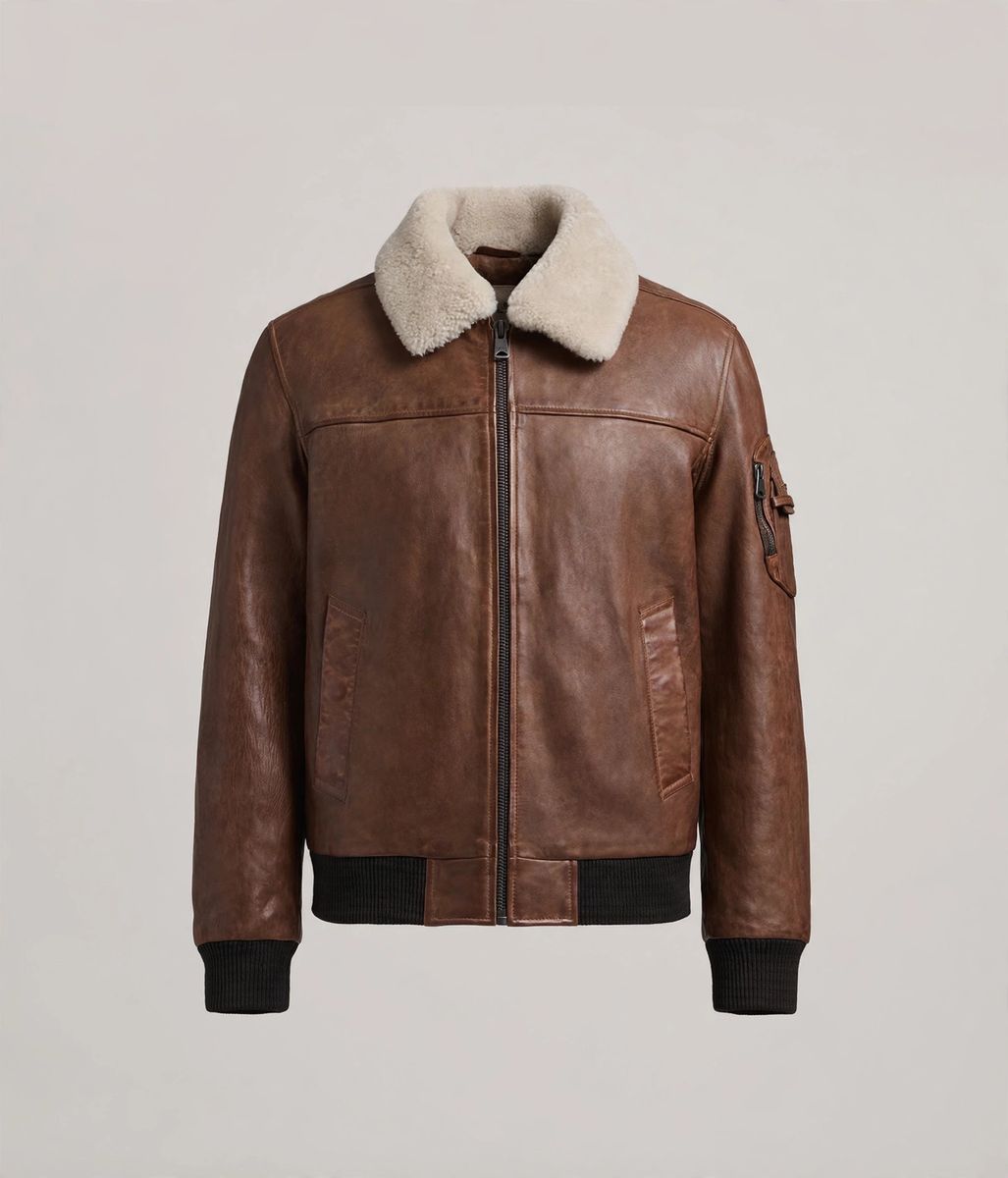
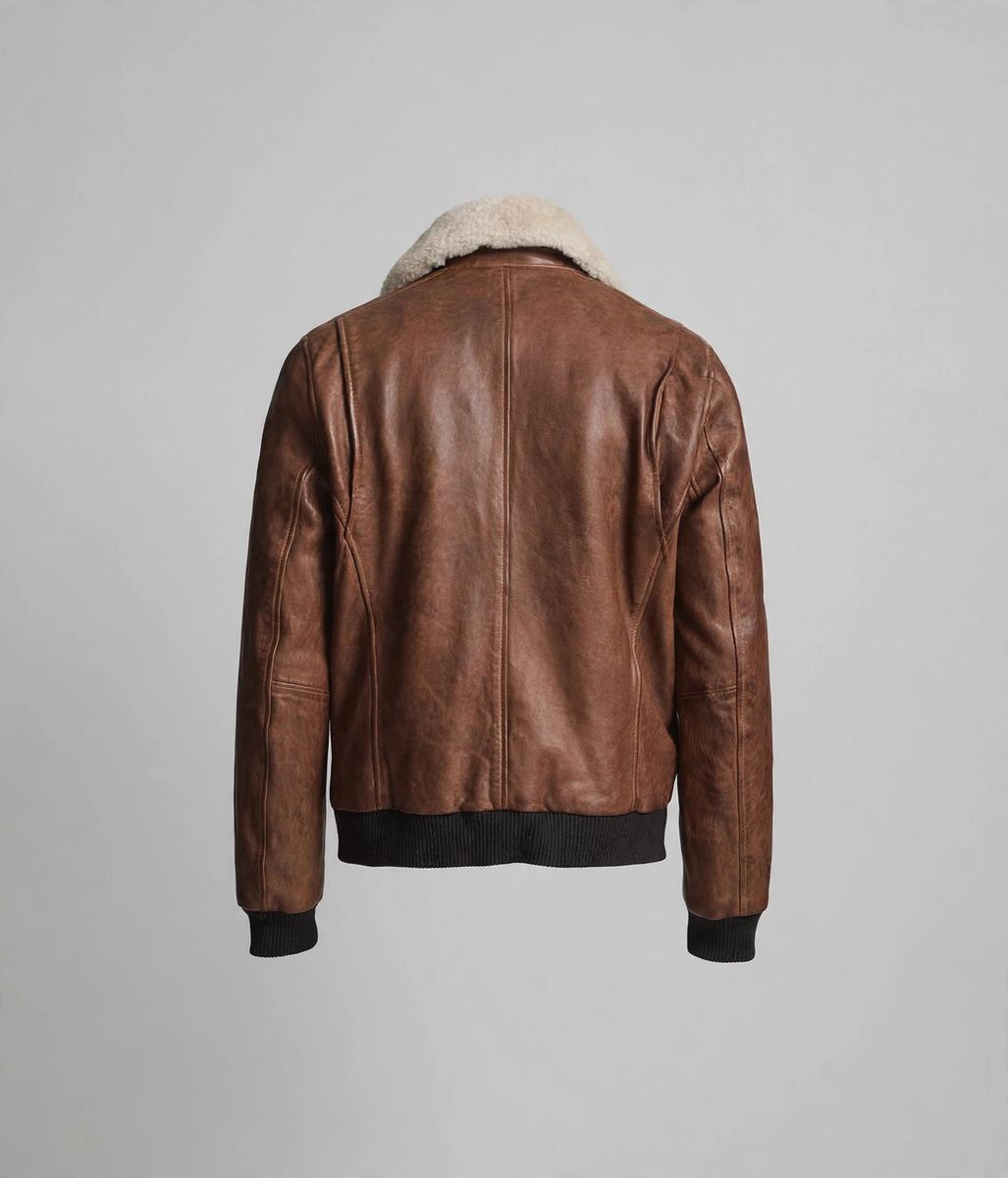
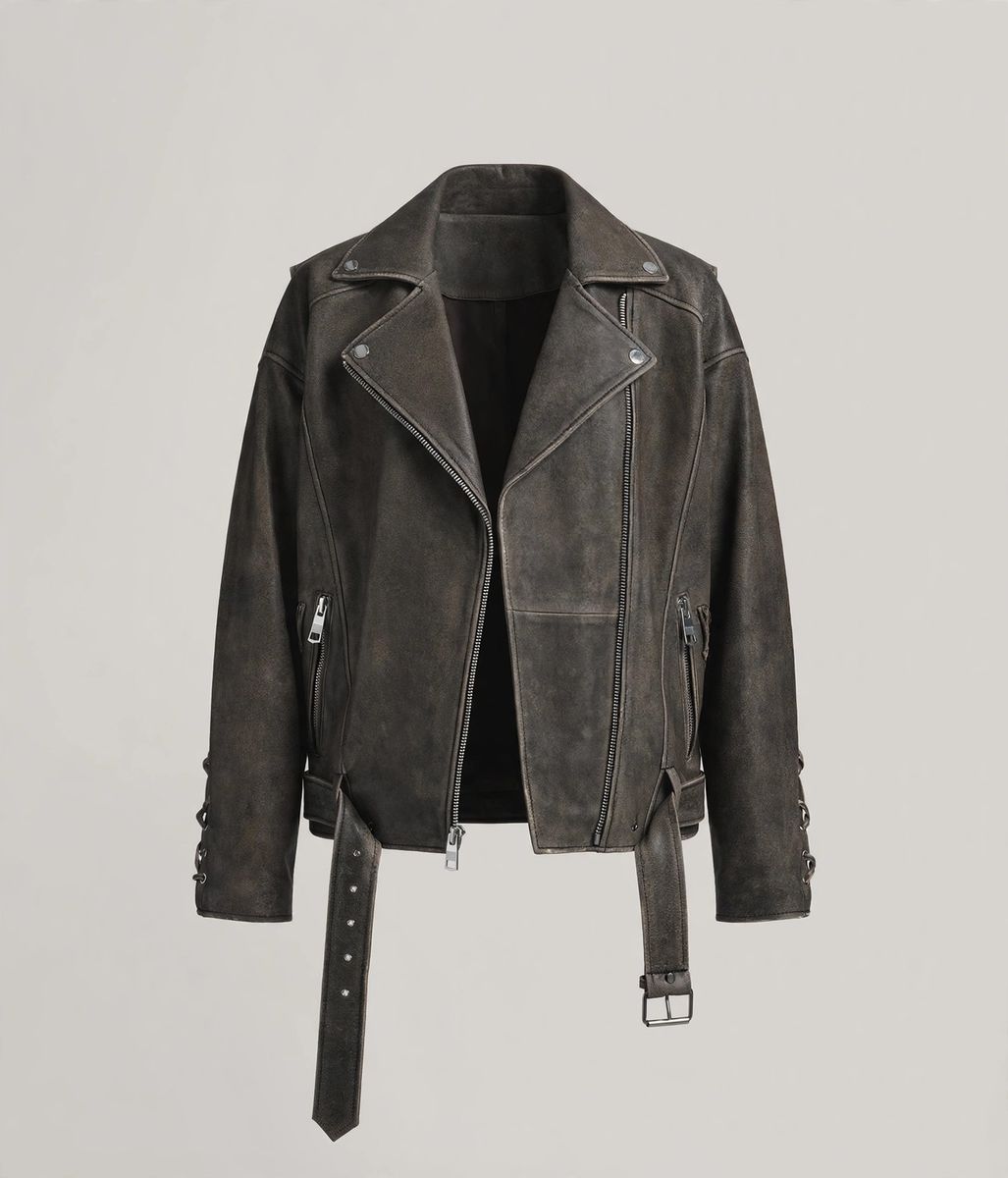
Choose faux if you avoid animal products, if the jacket is a short-lived fashion experiment, or if your budget simply does not stretch and a jacket now beats a jacket someday. Choose real if this is a core wardrobe piece you will wear weekly for years — which, for a classic style like a bomber or a moto, it usually becomes. That is the whole logic behind pieces like the Ace Bomber: a timeless cut in sheepskin is bought once. Whichever you choose, choose it knowingly — check what the jacket in front of you is really made of, price it against how long it will actually serve, and the material question answers itself.