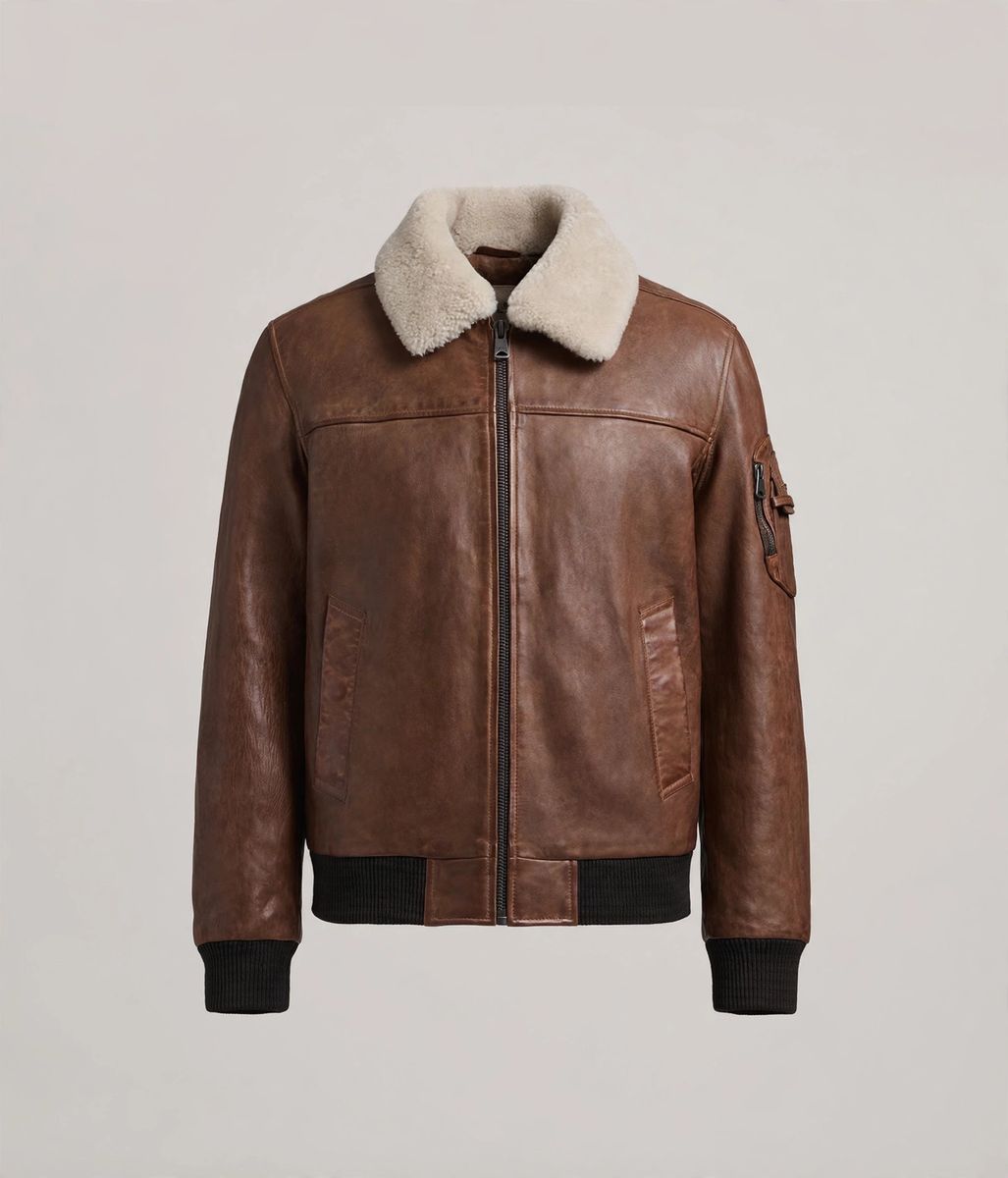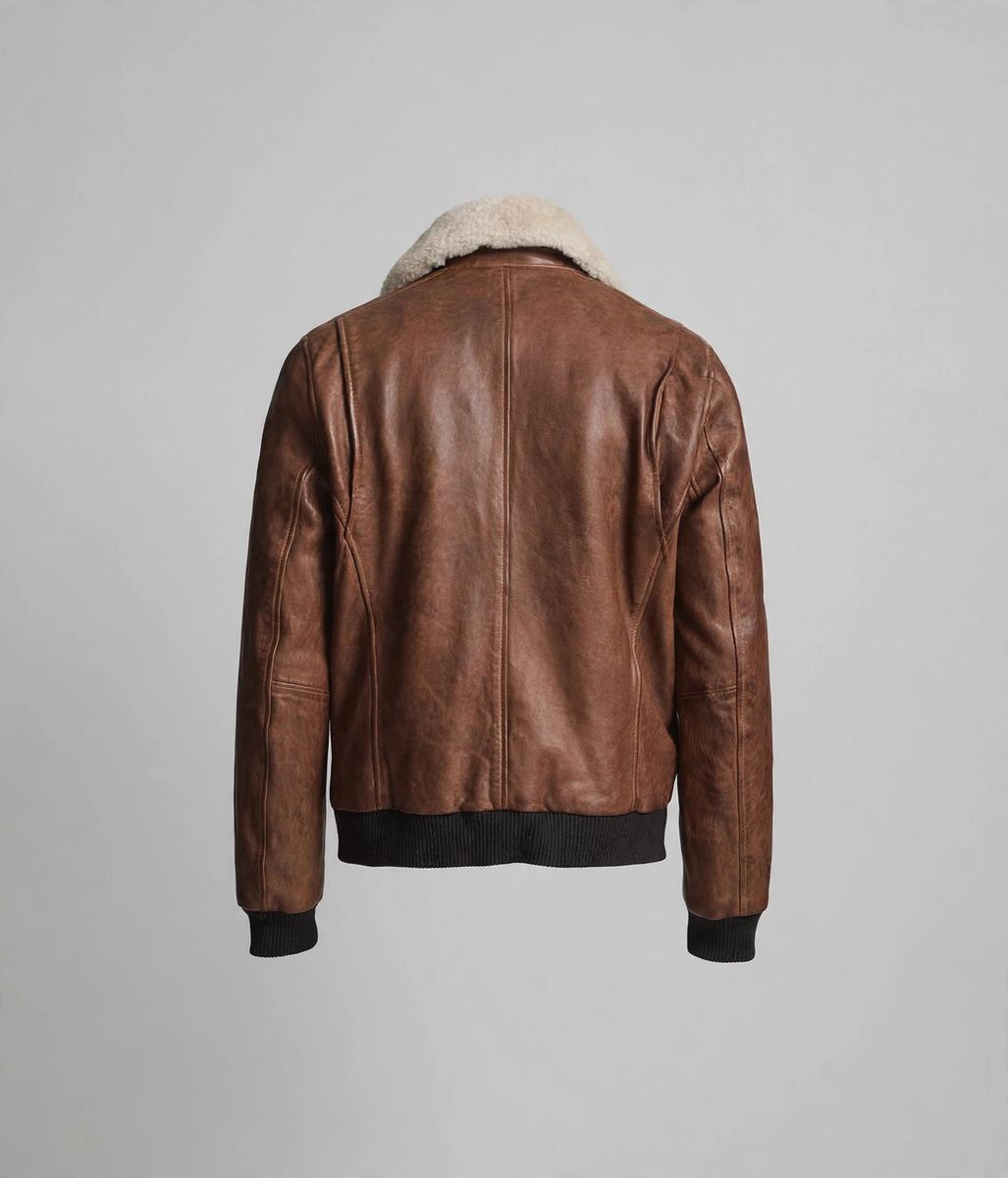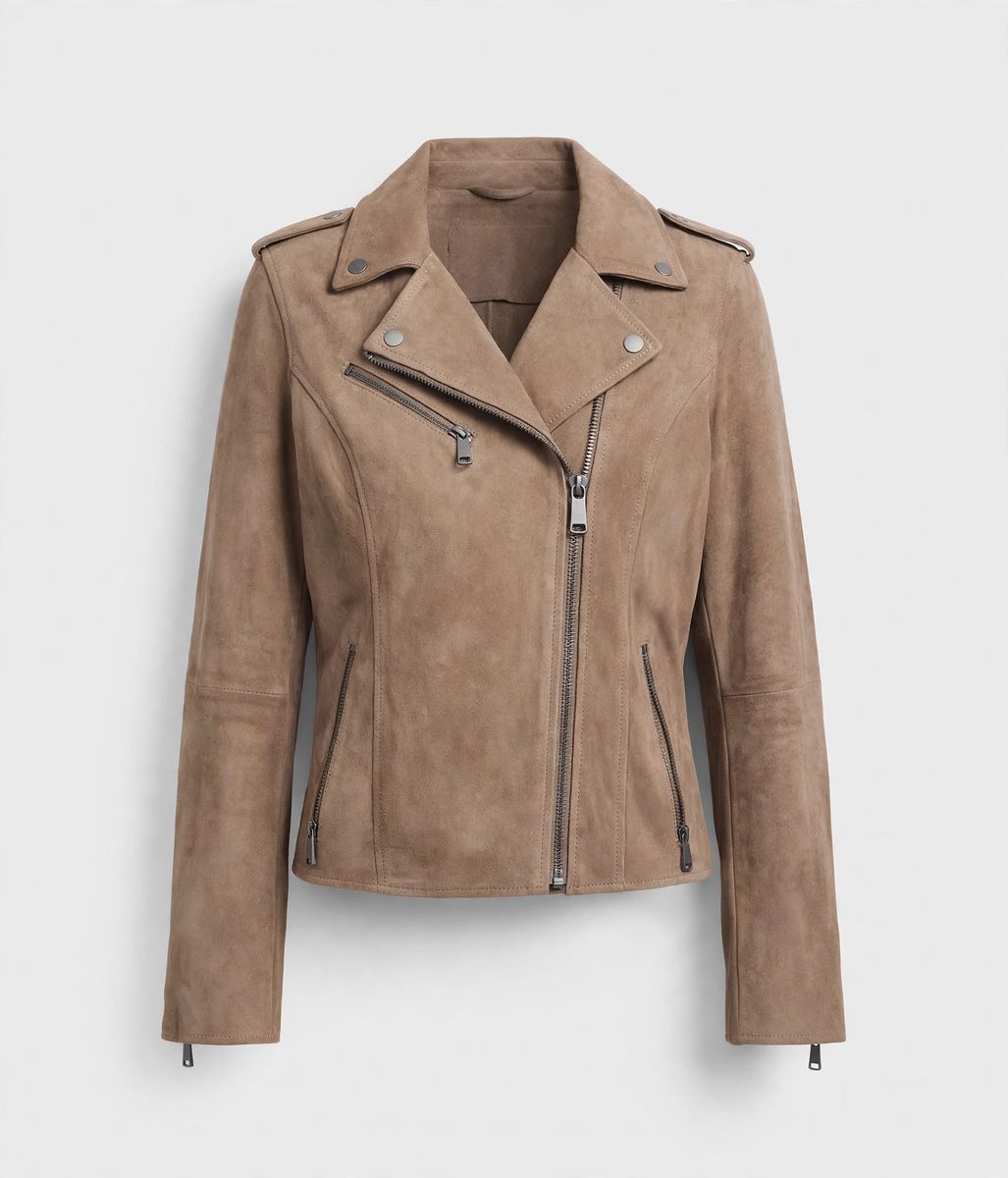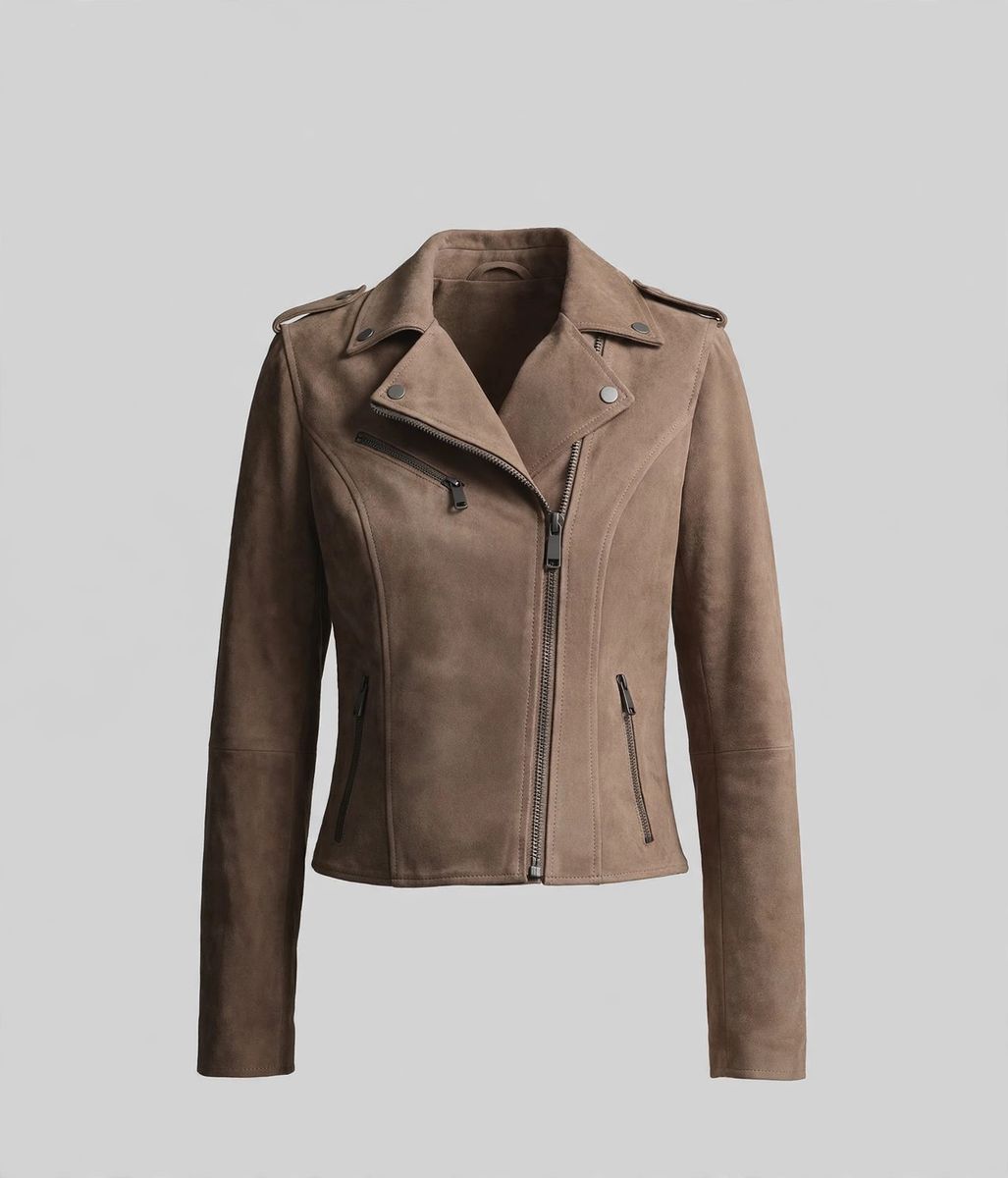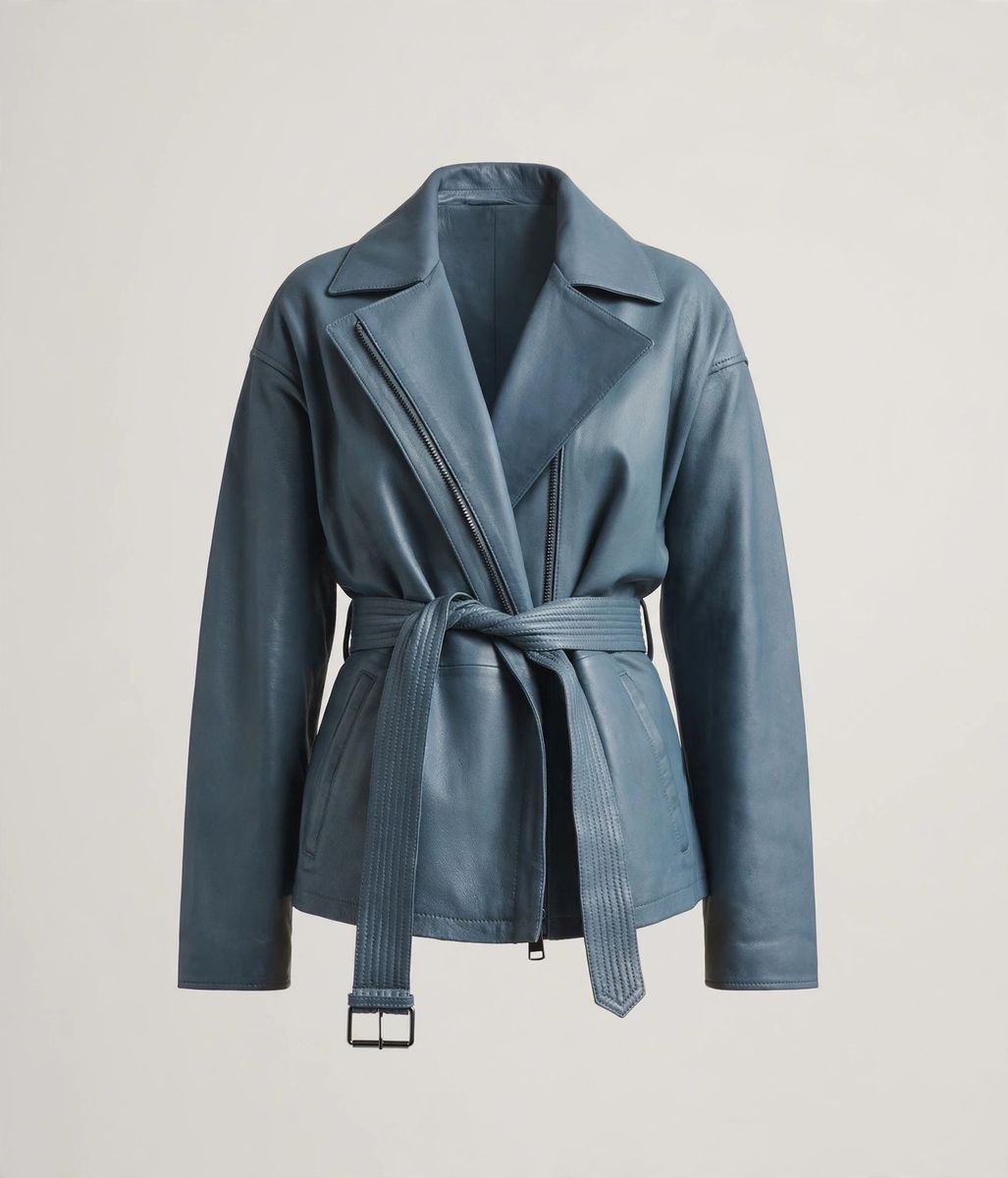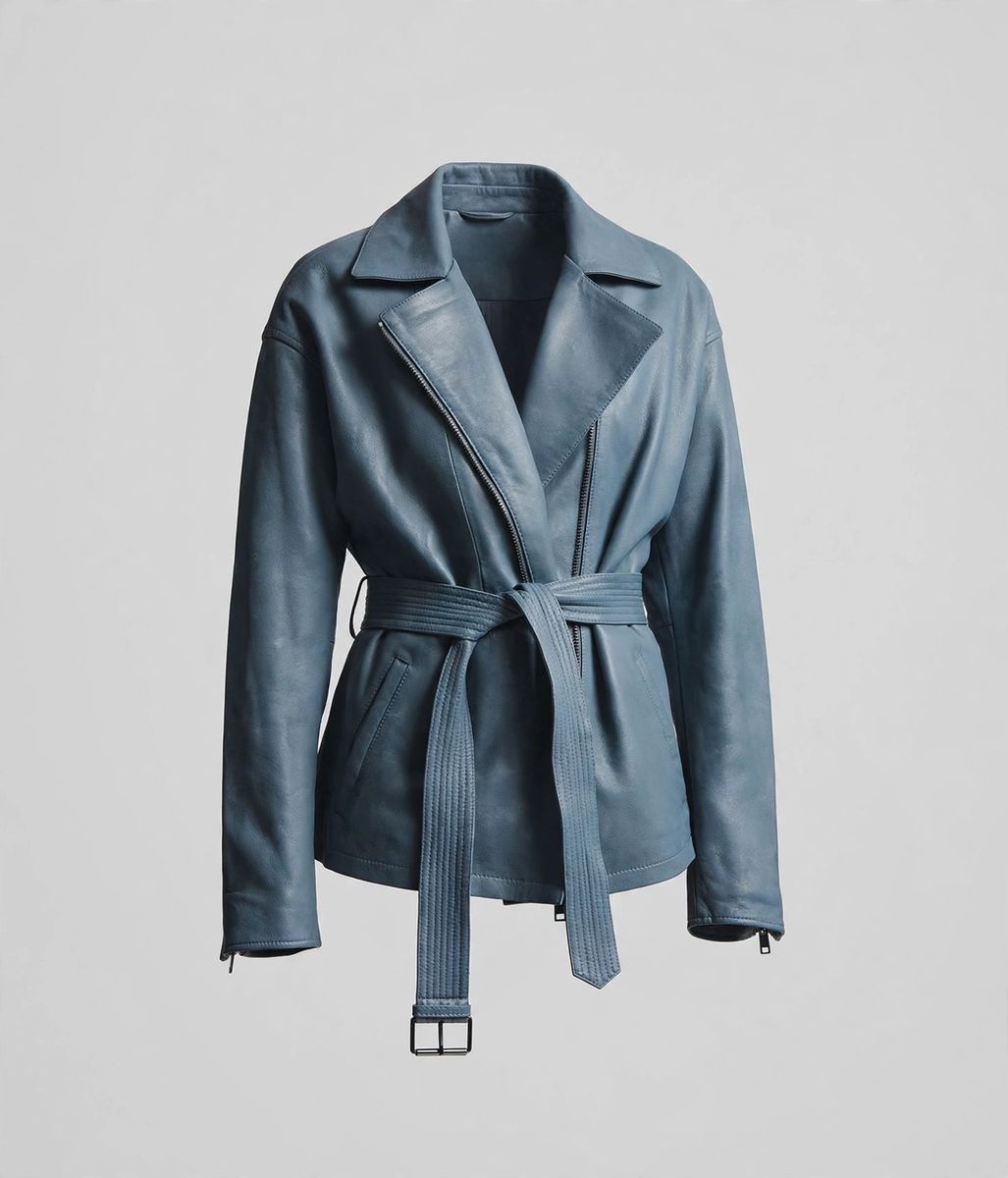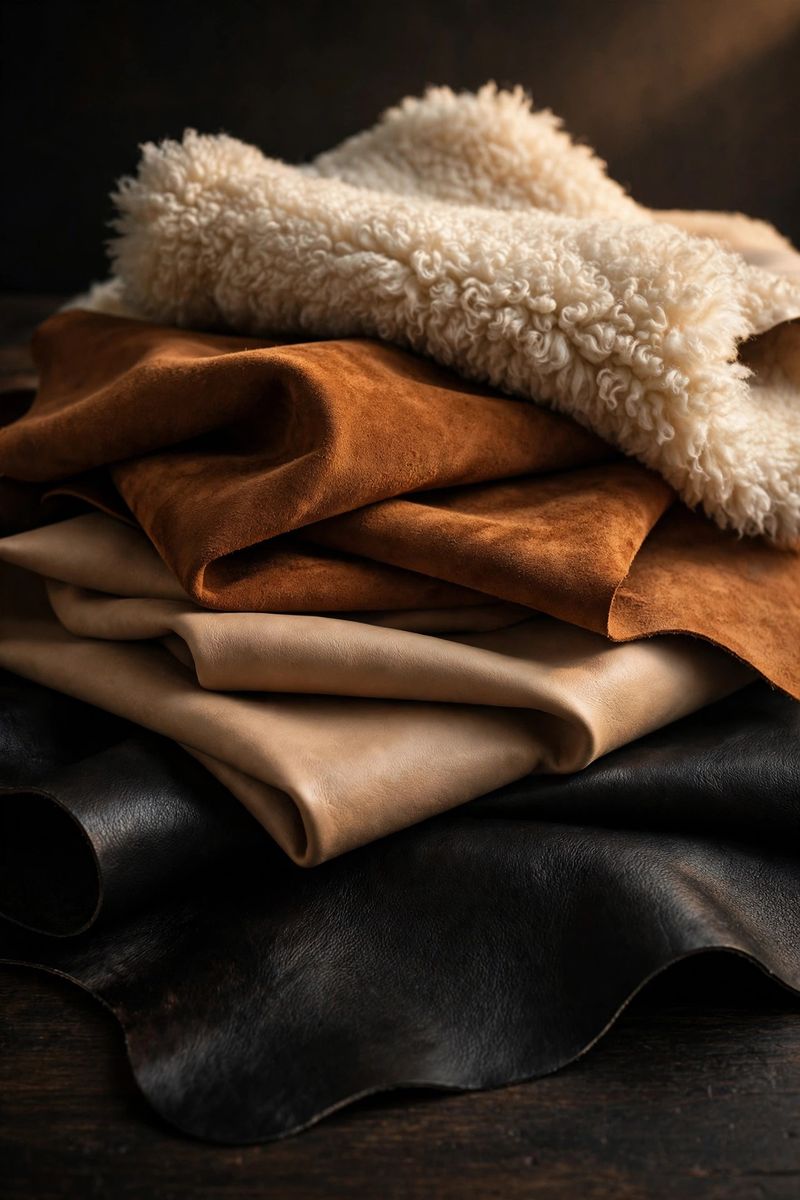
Walk into any leather shop and the labels start multiplying: sheepskin, lambskin, cowhide, goatskin, suede, nappa, shearling, "genuine leather", "top grain". Some of those words describe the animal, some describe the finish, and one of them — "genuine leather" — describes almost nothing at all. This guide untangles the vocabulary so you can judge a jacket by what it is actually made of, and pick the leather that suits how you will really wear it.
First, the animal: which hide is it?
Sheepskin
Sheepskin is the workhorse of quality jackets, and the leather most of our collection is cut from. It hits the sweet spot: soft and supple enough to wear all day, strong enough for years of daily use, with a fine natural grain that looks refined rather than rugged. If you want one jacket that does everything, sheepskin is the sensible default.
Lambskin
Lambskin is sheepskin's more delicate sibling — from younger animals, with a finer grain and a noticeably softer, almost buttery hand-feel. It drapes beautifully and is the leather of choice for dressier jackets and blazers. The trade-off is durability: lambskin marks more easily and is not the leather for a jacket that will be thrown over a motorbike every day.
Cowhide
Cowhide is the thickest and toughest of the common jacket leathers — the traditional choice for motorcycle jackets precisely because it resists abrasion so well. New cowhide can feel stiff and needs a real breaking-in period, but a cowhide jacket can outlast its owner. It is heavier across the shoulders, which some wearers love and others find tiring.
Goatskin
Goatskin has a distinctive pebbled grain, is naturally water-resistant, and is lighter than cowhide while staying surprisingly tough. It was the leather of classic flight jackets for good reason. It softens quickly and develops character fast.
Then, the finish: what has been done to it?
Suede
Suede is not a different animal — it is the underside of a hide, brushed to a soft, matte nap. Most jacket suede is goat or sheep. Suede's velvet texture is unmistakable and it drapes lighter than smooth leather, but it drinks water and stains more easily, so it asks for a protector spray and a little respect on rainy days. Our suede care guide covers the routine in full.
Nappa
Nappa is a finish, not an animal: a full-grain hide tanned to be exceptionally soft and smooth, usually sheep or lamb. It is the dressiest leather in a jacket wardrobe — the one that works with tailoring — and because it is full-grain, it is stronger than its softness suggests.
Shearling
Shearling is sheepskin with the wool left on: leather outside, natural fleece inside, one material doing both jobs. Nothing synthetic insulates quite like it, and because the fleece grows with the hide it never separates or pills. It is the warmest option in this guide and the one that needs specialist cleaning. If winter warmth is your priority, read our comparison of shearling vs faux shearling before you decide.
The grades, in plain language
- Full-grain — the top layer of the hide, untouched. The strongest, most breathable, and the leather that ages best. Nappa is usually full-grain.
- Top-grain — the top layer, lightly sanded and finished to remove marks. Slightly less character, very consistent appearance.
- Corrected / embossed — heavily finished to imitate a uniform grain. Looks perfect, feels less natural.
- "Genuine leather" — a legal term meaning only that the material contains some real leather, often from lower layers of the hide. It is a floor, not a compliment. What matters is the animal, the grain and the thickness — which is why we name the actual leather on every product, like the sheepskin in the Ace Bomber.
Thickness and weight: the number nobody mentions
Two jackets in the same leather can feel completely different, because hides are cut at different thicknesses. As a rough guide: fashion jackets sit around 0.7–0.9 mm, sturdy everyday jackets around 0.9–1.1 mm, and protective motorcycle cowhide at 1.2 mm and above. Thicker is tougher but heavier and slower to break in; thinner drapes better and suits dressier styles. Neither is "better" — but a paper-thin jacket sold as heavy-duty, or a board-stiff jacket sold as soft lambskin, tells you the description was written by someone who never held it.
How each leather ages
Leather is one of the few materials that improves with use, but each type ages differently. Sheepskin softens and takes a gentle sheen at the creases and cuffs. Cowhide develops the deepest patina and the most personal creasing. Suede darkens where hands touch it and lightens where the sun does — protect the colour by storing it in the dark. Nappa keeps its smooth finish longest if it is conditioned occasionally. Shearling's fleece can flatten where a seatbelt or bag strap presses, and revives with a gentle brush. Knowing how your leather will look in five years is part of choosing it: if you want a jacket that stays pristine, choose nappa; if you want one that tells stories, choose cowhide or sheepskin.
Which leather should you choose?
Match the leather to the life the jacket will live. Daily wear in all weathers: sheepskin or goatskin. Maximum toughness and a long break-in you will enjoy: cowhide. Dressy, tailored looks: nappa or lambskin. Texture and a lighter feel: suede, with a care routine. Serious winter warmth: shearling. And if a listing will not tell you which leather it is — only that it is "genuine" or "premium" — treat that silence as your answer, and read our guide on how to spot real leather before spending anything.