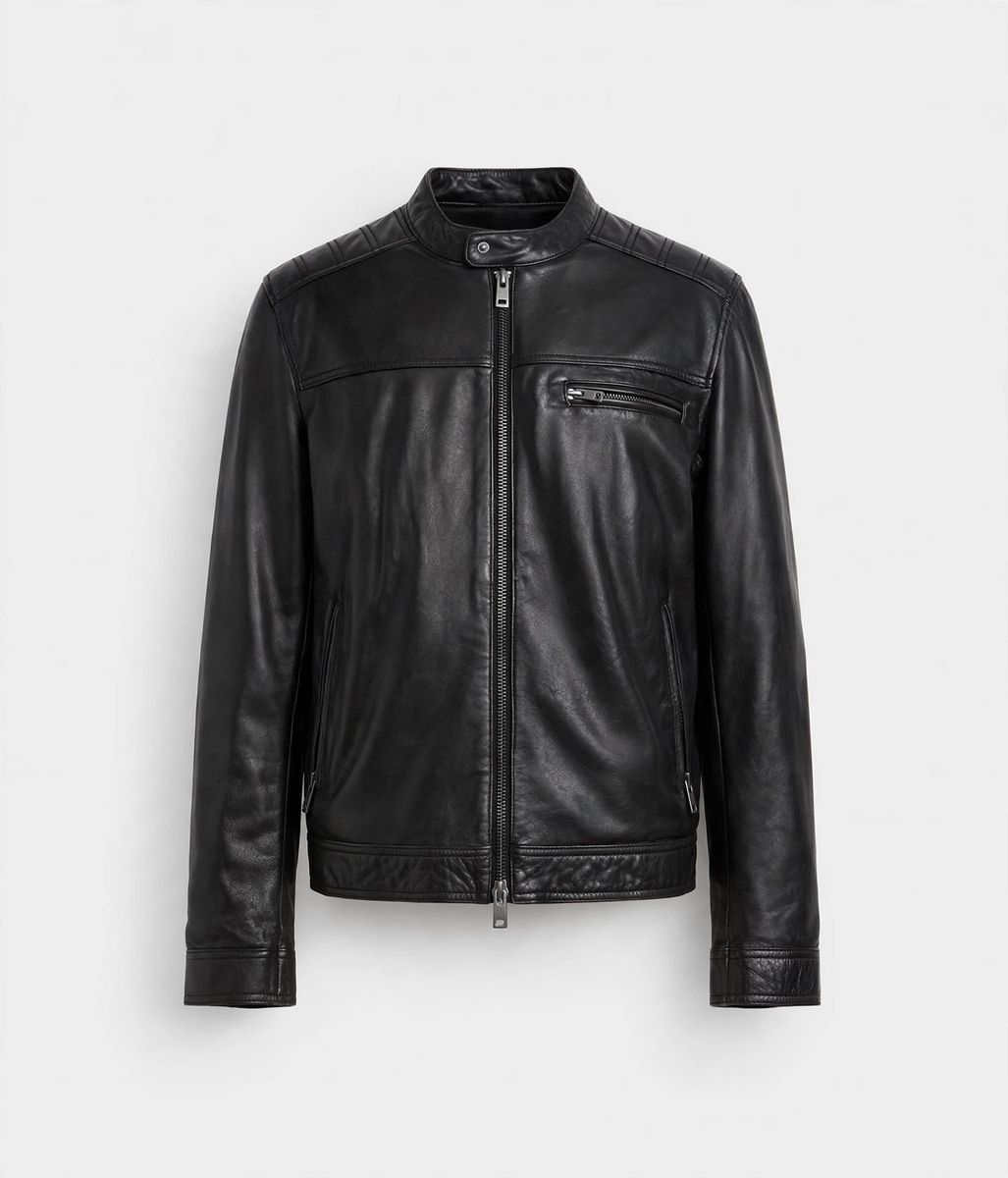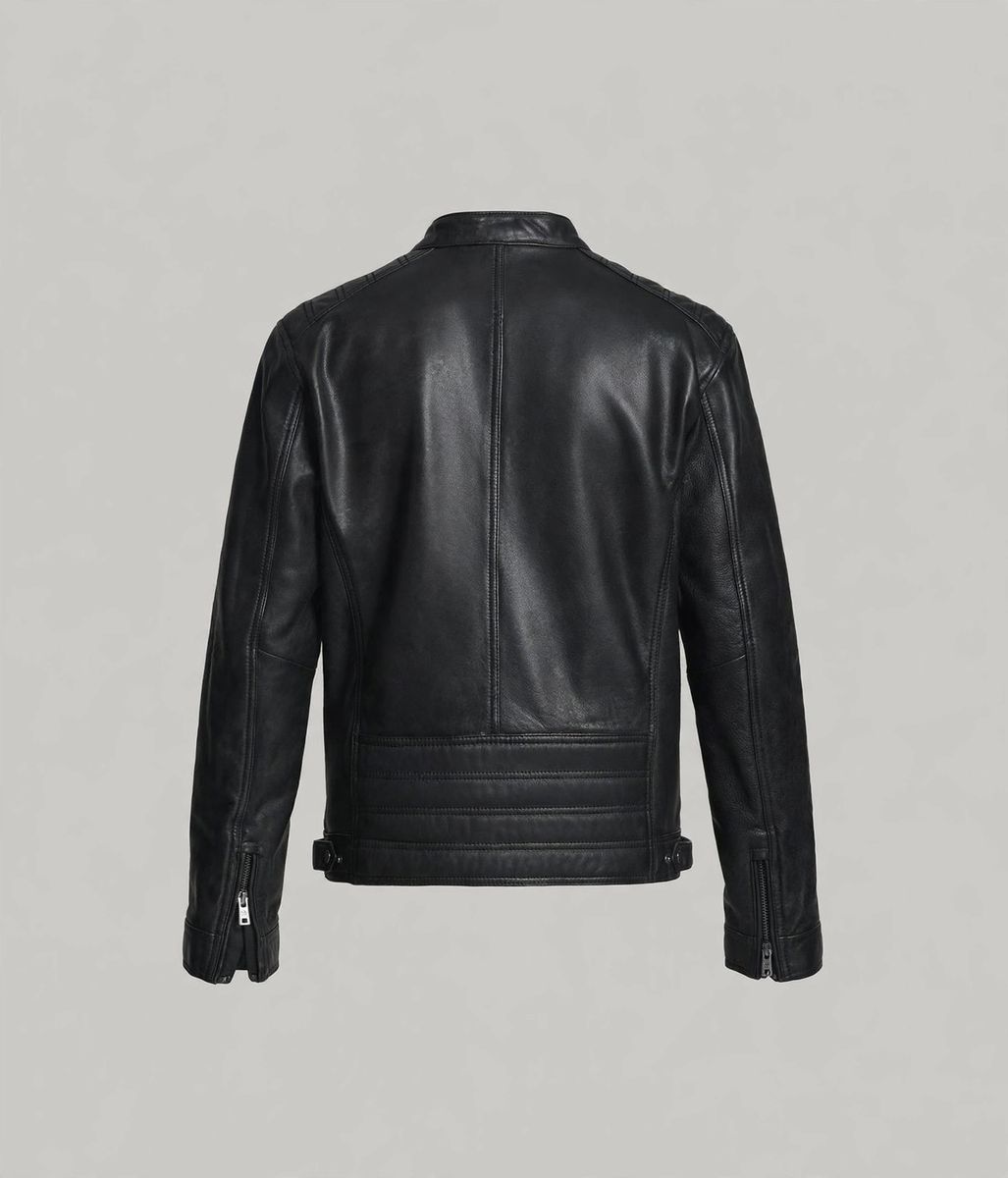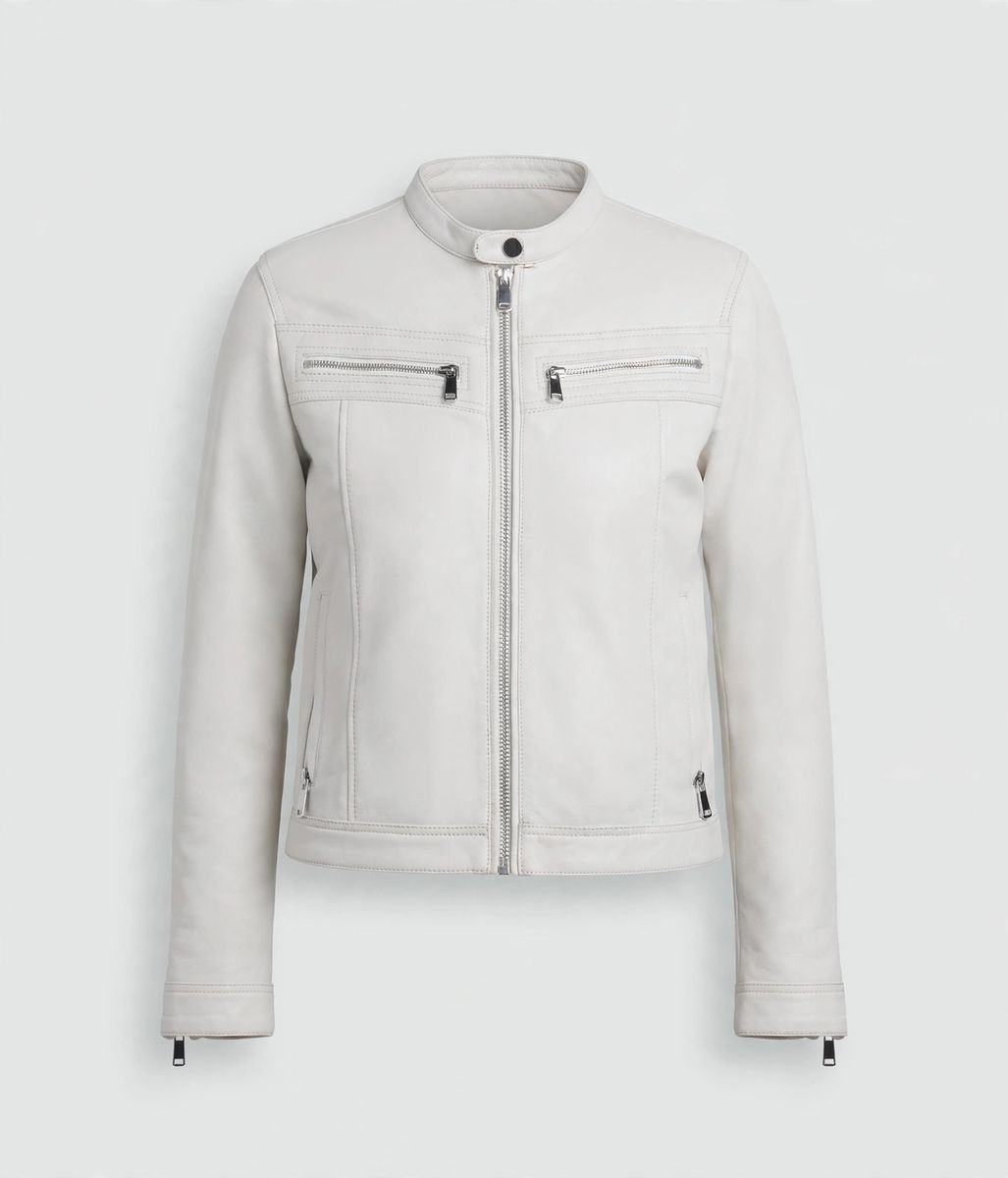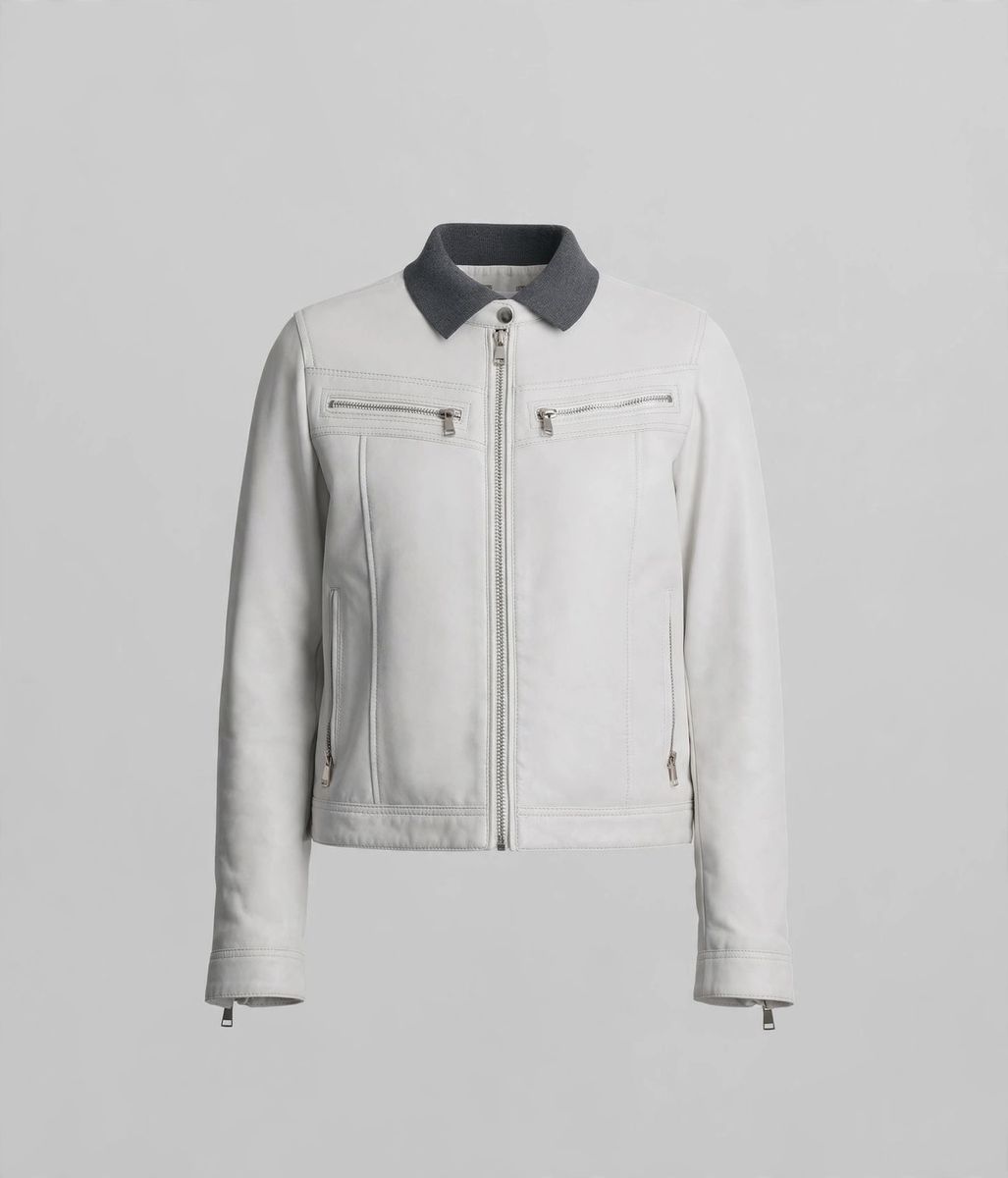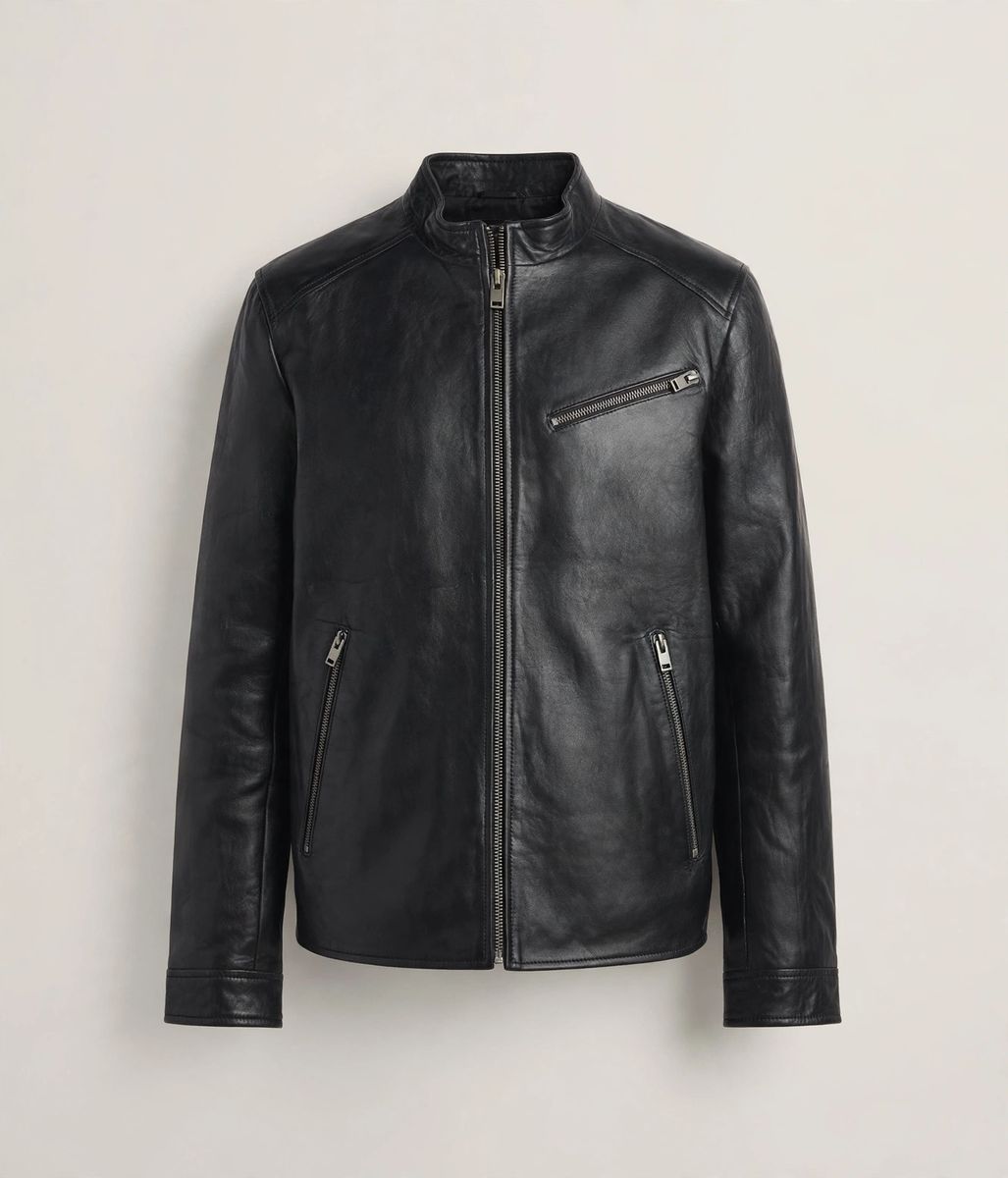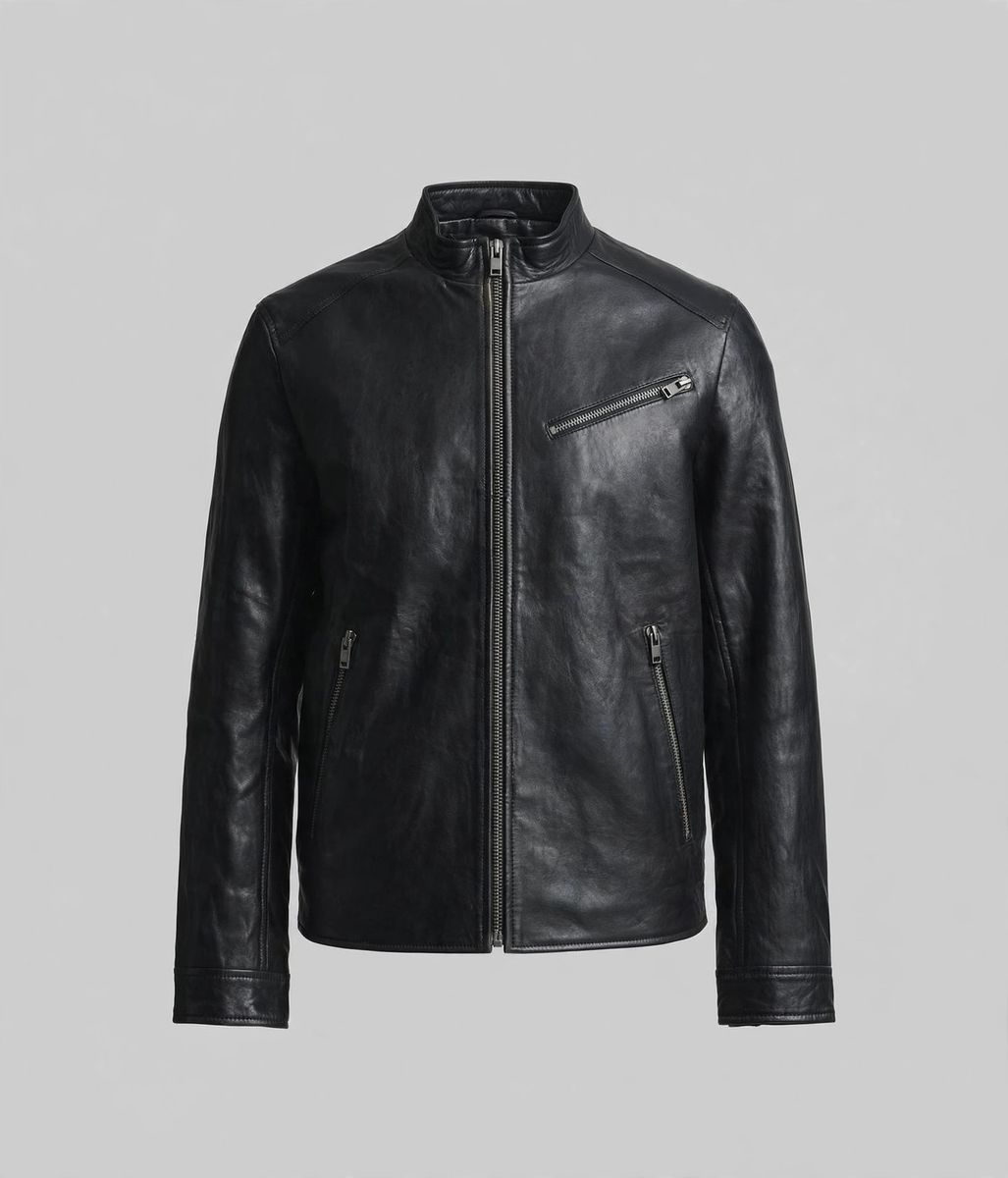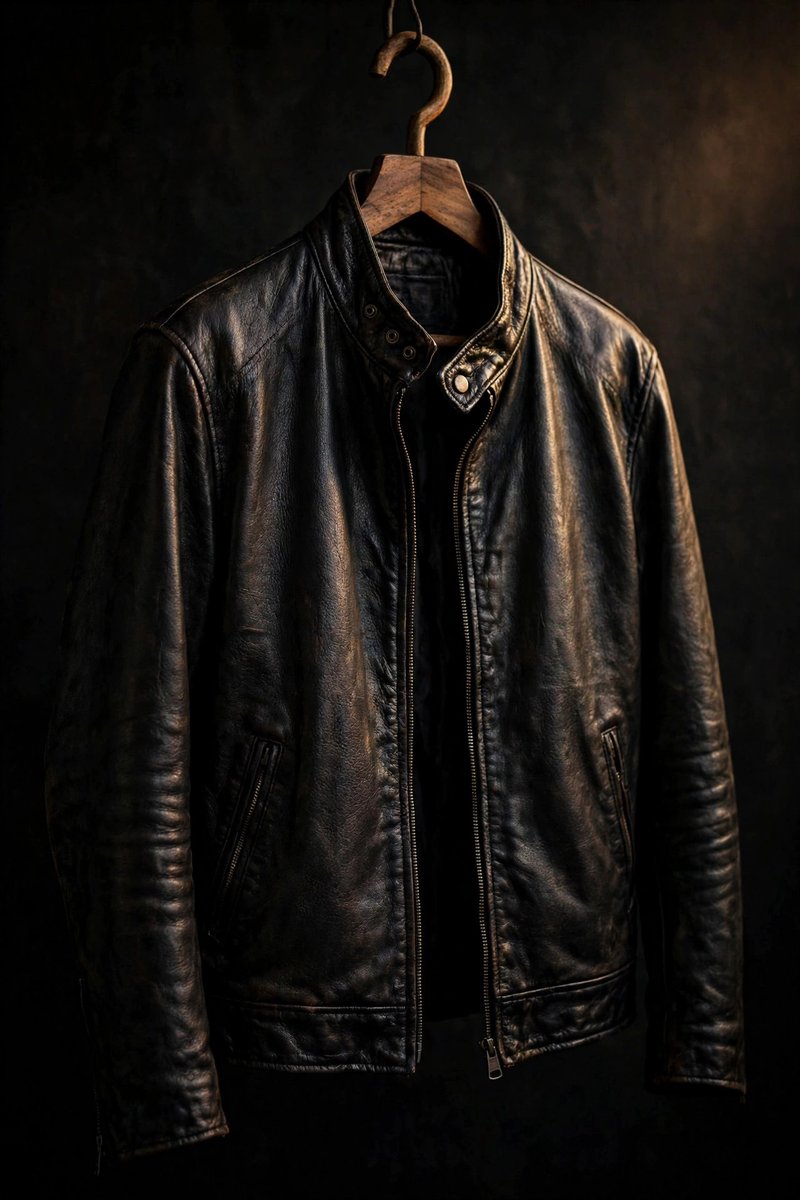
Of the three classic leather jackets, the café racer is the one that says the least and means it most. No lapels, no belt, no badges of chrome — just a straight zip, a small collar and a cut pared down to the essentials. That restraint was not a fashion decision. It was engineering, done by young riders in 1950s Britain who removed everything from their jackets that did not make them faster, and it produced the most versatile silhouette leather has ever had. This guide covers where the racer came from, exactly what defines one, how it should fit, and how to wear it now. If you are still choosing between the classic styles, start with our comparison of biker vs bomber vs racer — this article is the deep dive on the racer alone.
Born at the Ace Café: a short history
After the Second World War, Britain's new arterial roads filled with cafés that stayed open late, and those cafés filled with young motorcyclists. The Ton-Up Boys — named for "the ton", 100 mph — raced from café to café, sometimes literally racing a jukebox record: drop a coin in, and try to get to the next roundabout and back before the song ended. Their bikes were stripped-down machines, built from whatever made them lighter and faster, and their jackets followed the same logic.
The standard biker jacket of the day had flapping lapels, a belt and hardware that caught the wind. Racers removed all of it. What remained was a close-fitting jacket with a centre zip (less wind resistance, nothing to flap), a short stand collar that snapped shut, and a clean back with nothing to catch. American riders developed a near-identical jacket in parallel for flat-track and road racing. The café racer was never designed to be sold — it was designed to be fast — which is precisely why it has never gone out of style.
The anatomy of a café racer
- The stand collar is the signature: a short band of leather, usually with a single snap, that closes neatly around the neck. It should sit flat and meet your jaw without digging in.
- The centre zip runs straight up the front — the simplest, cleanest closure in leather, and the visual opposite of the biker's dramatic diagonal.
- Minimal hardware. Perhaps two chest or hand pockets with short zips, perhaps none. Every extra buckle on a "racer" is a small betrayal of the brief.
- A clean, plain back with no pleats, panels or logos shouting across it.
- A slim, straight body ending at the belt line, cut close because loose leather flaps at speed and looks sloppy at rest.
- Simple cuffs, usually zipped or snapped, with nothing dangling.
If a jacket has all of that, it is a racer whatever the label says. If it has lapels and a belt, it is a biker in disguise.
How a café racer should fit
Fit matters more on a racer than on any other style, because there is nothing to hide behind — no ribbed hem to forgive a loose body, no belt to cinch a waist. Work through it in this order:
Shoulders first. The seams must sit on your shoulder bones. Leather will not stretch across the back, so a racer that is narrow in the shoulders will never become comfortable. This rule outranks everything else, here and in our full size guide.
Chest: close, with a working zip. Fasten the jacket over the layer you will wear most — usually a tee or a fine knit. The zip should travel smoothly and the front should lie flat when you breathe deeply and reach forward, as if to handlebars or a steering wheel. A faint sense of being "held" is correct; pulling or puckering is not.
Length: at the belt. A racer ends at or just below the belt line. Longer looks like a different jacket entirely; shorter reads as a fashion crop, which is a legitimate women's style but a different one.
Sleeves: to the wrist bone. The original logic was gloves; the modern logic is that a racer's clean lines die if the sleeves bunch. Zipped cuffs can sit a fraction longer.
The collar test. Snap the collar shut. It should close without pressing on your throat and lie flat when open. If it strangles, the size is wrong — collars do not break in.
Buying one: the honest checklist
Because the racer is minimal, its quality has nowhere to hide. Leather: smooth, even grain with natural irregularity — sheepskin is the classic choice for its balance of softness and structure, and it is what most of our racers, including the Ethan Racer, are cut from. Zip: the front zip takes every strain on this design; it should be metal, weighty and smooth-running. Lining: it should be smooth enough that sleeves slide over a knit without gripping. Stitching: on a plain jacket, stitching is the decoration — look for straight, dense, even seams, especially around the collar and zip. And hold the jacket up: a racer should feel balanced and light, not flimsy. Thin, papery leather on a slim jacket will bag at the elbows and lose its line within a season.
How to wear it now
The racer's restraint is its styling gift: it sharpens whatever it is worn with instead of competing with it.
For men: the racer is the easiest leather jacket to dress up. Over a plain tee with slim jeans it is the modern classic; over a shirt or a fine roll-neck with tailored trousers and Chelsea boots, it passes in rooms a biker never would. Browse the men's collection and notice how little any of it needs — that is the point.
For women: the same minimalism works over dresses, where a biker's hardware can fight the outfit. A women's racer like the Cassandra over a midi dress or with high-waisted trousers and a fitted top is polished without effort. With denim and a white tee it is simply the cleanest casual jacket there is.
Colours: black is the default and the sharpest; brown and cognac soften the racer into something warmer and more vintage — our colours guide walks through the pairing logic.
Seasons and layering: getting ten months from a racer
Because it is cut close, the racer layers differently from the other classics — what goes under it matters more than what goes over it. In spring and autumn, the racer over a tee or a single fine knit is the whole outfit, and it is hard to beat. As temperatures drop, the layering that works is thin and warm rather than thick: a merino or thermal base, a fine-gauge jumper, then the jacket. A chunky knit under a slim racer spoils the line and strains the zip, so if you plan to wear one over serious knitwear all winter, say so when you size — our size guide garment measurements let you check the chest with layers honestly. Deep winter is the racer's honest limit: that is shearling and aviator weather, and no layering trick makes a slim jacket into a winter coat. Accept the ten-month season and the racer will be the most-worn jacket you own — the other two months belong to its warmer cousins in the shearling collection.
Sixty years on, the café racer remains what the Ton-Up Boys made it: the fastest-looking jacket standing still, and the one leather classic that works as hard in a smart wardrobe as it does on a Sunday road. If your style runs minimal, this is your jacket — start with the Classic Racer and the fit rules above, and you will not go far wrong.