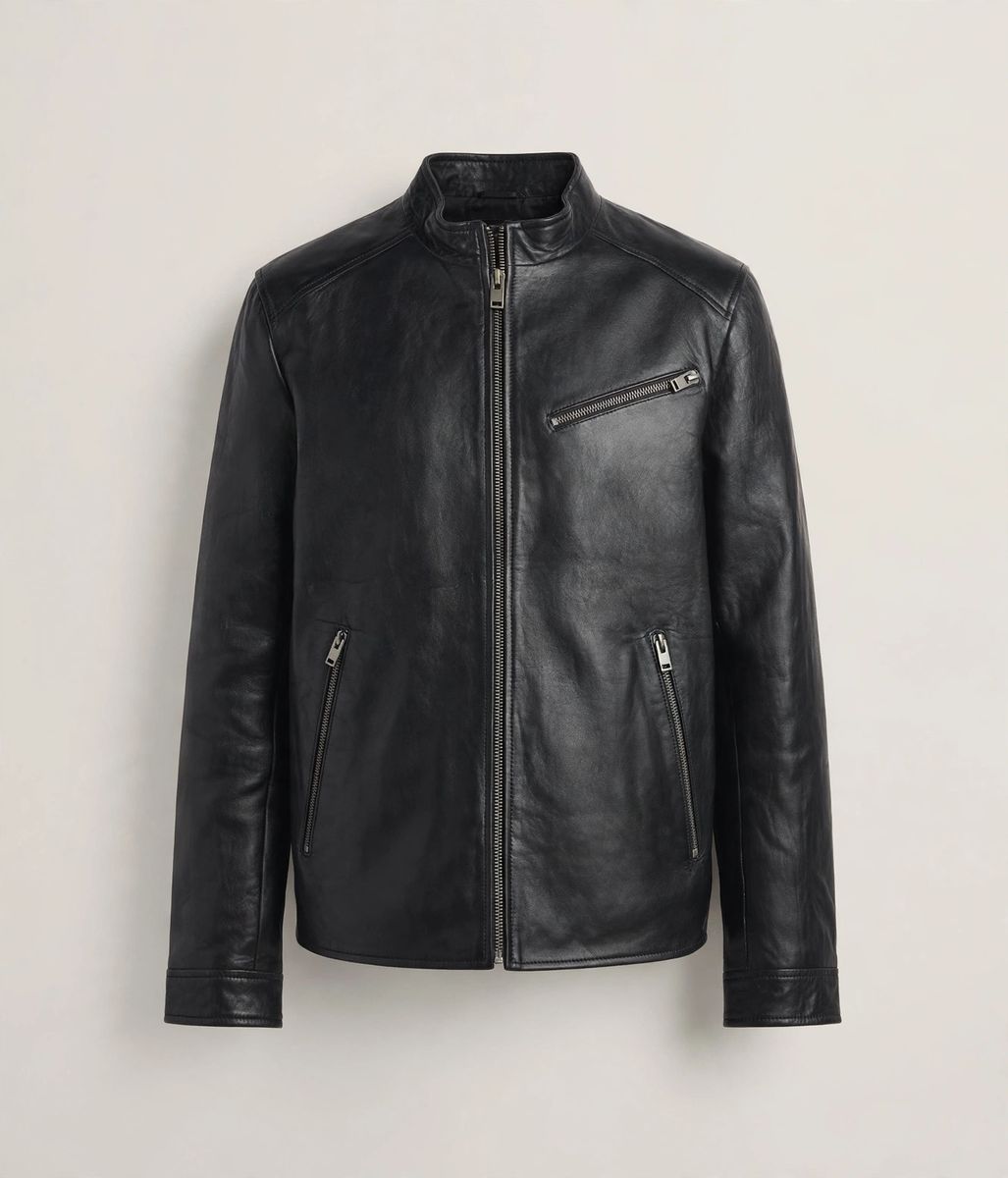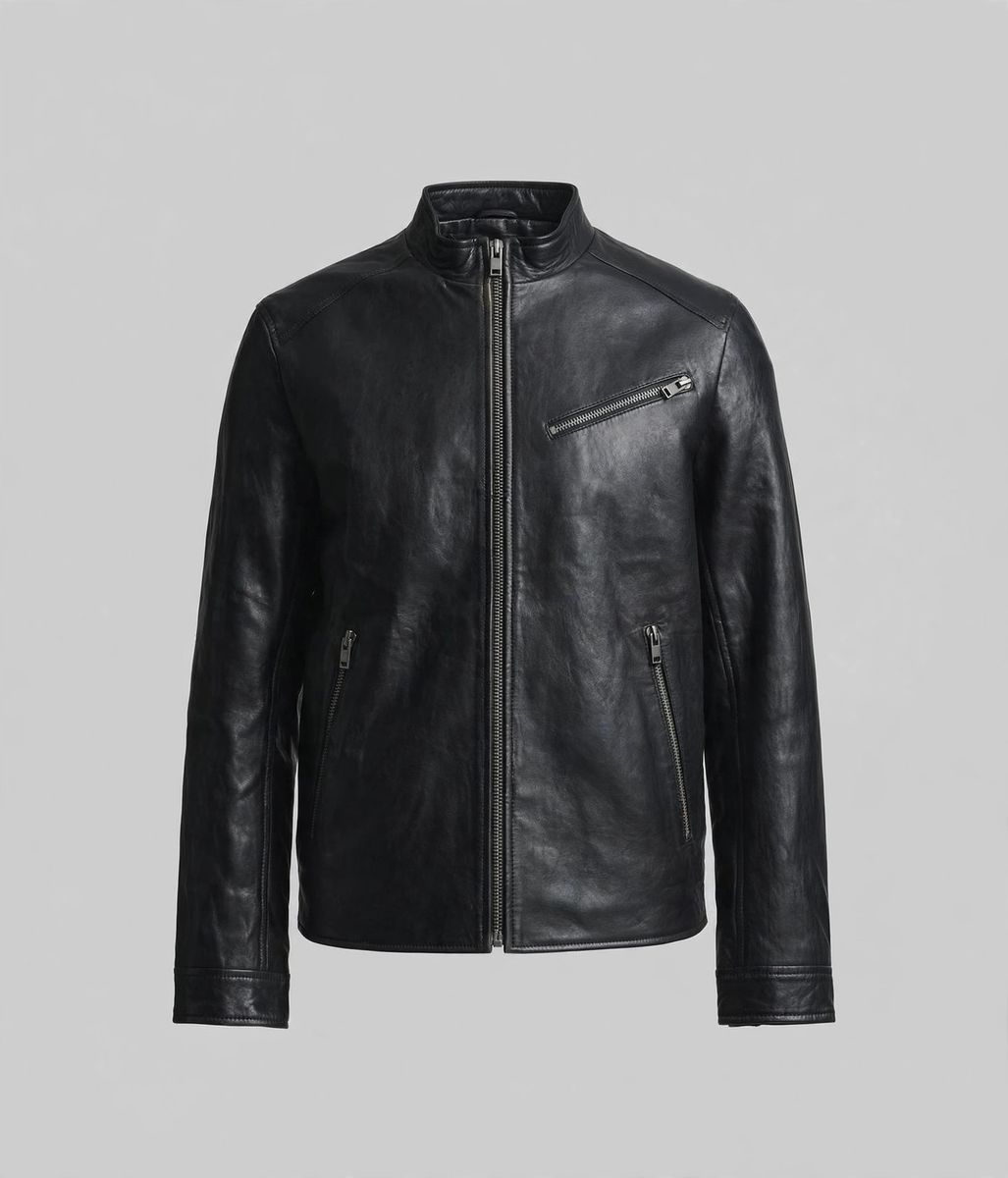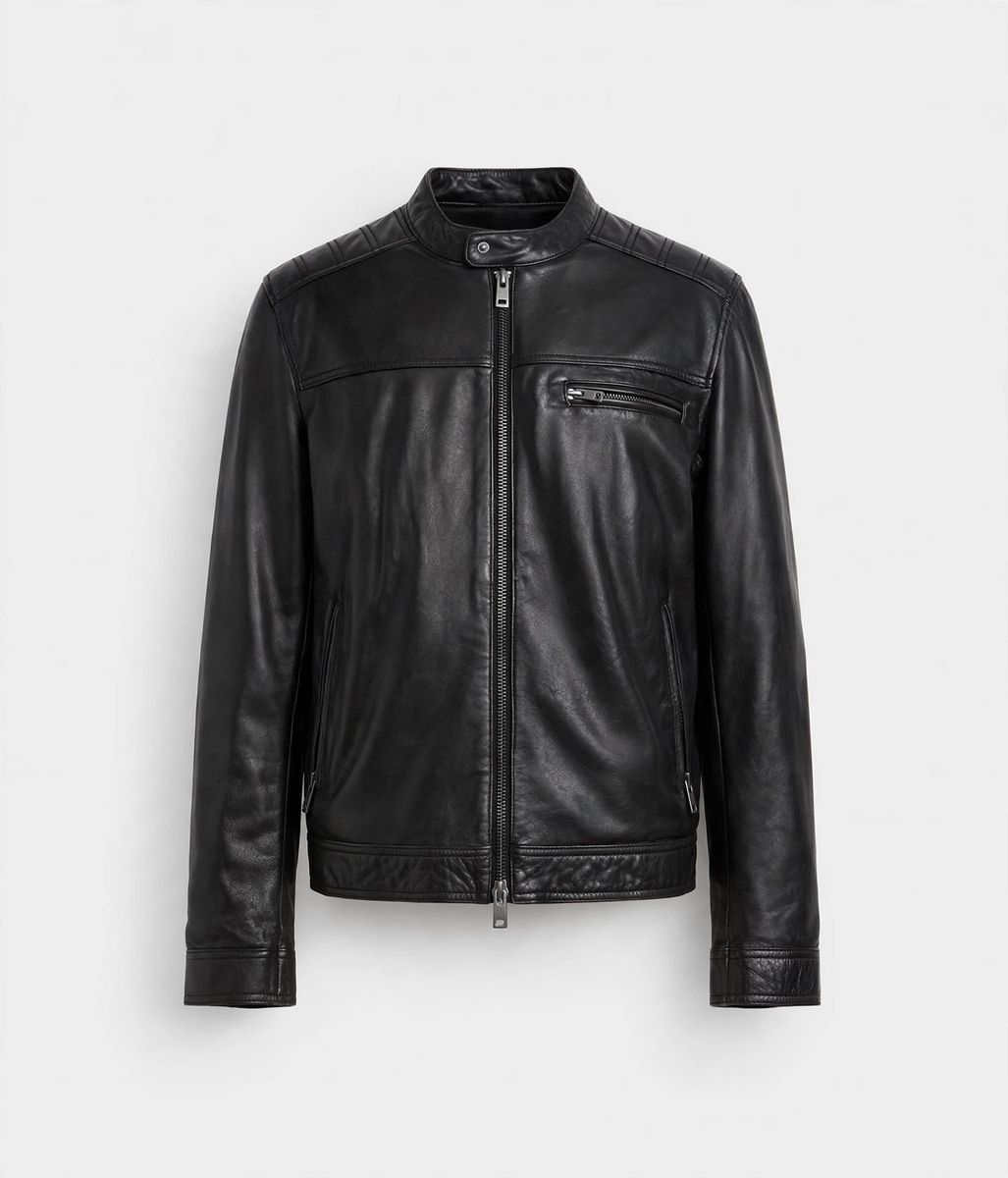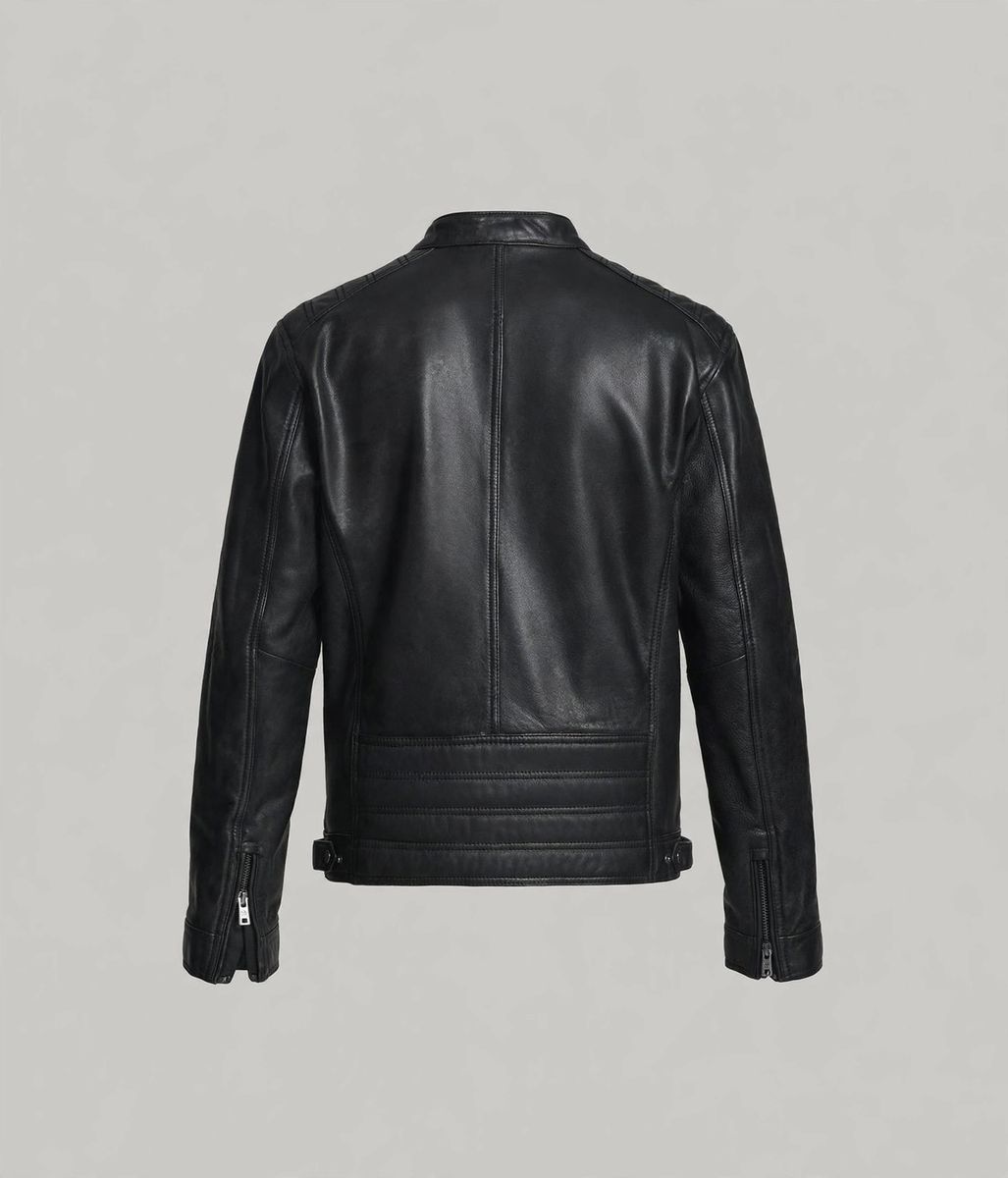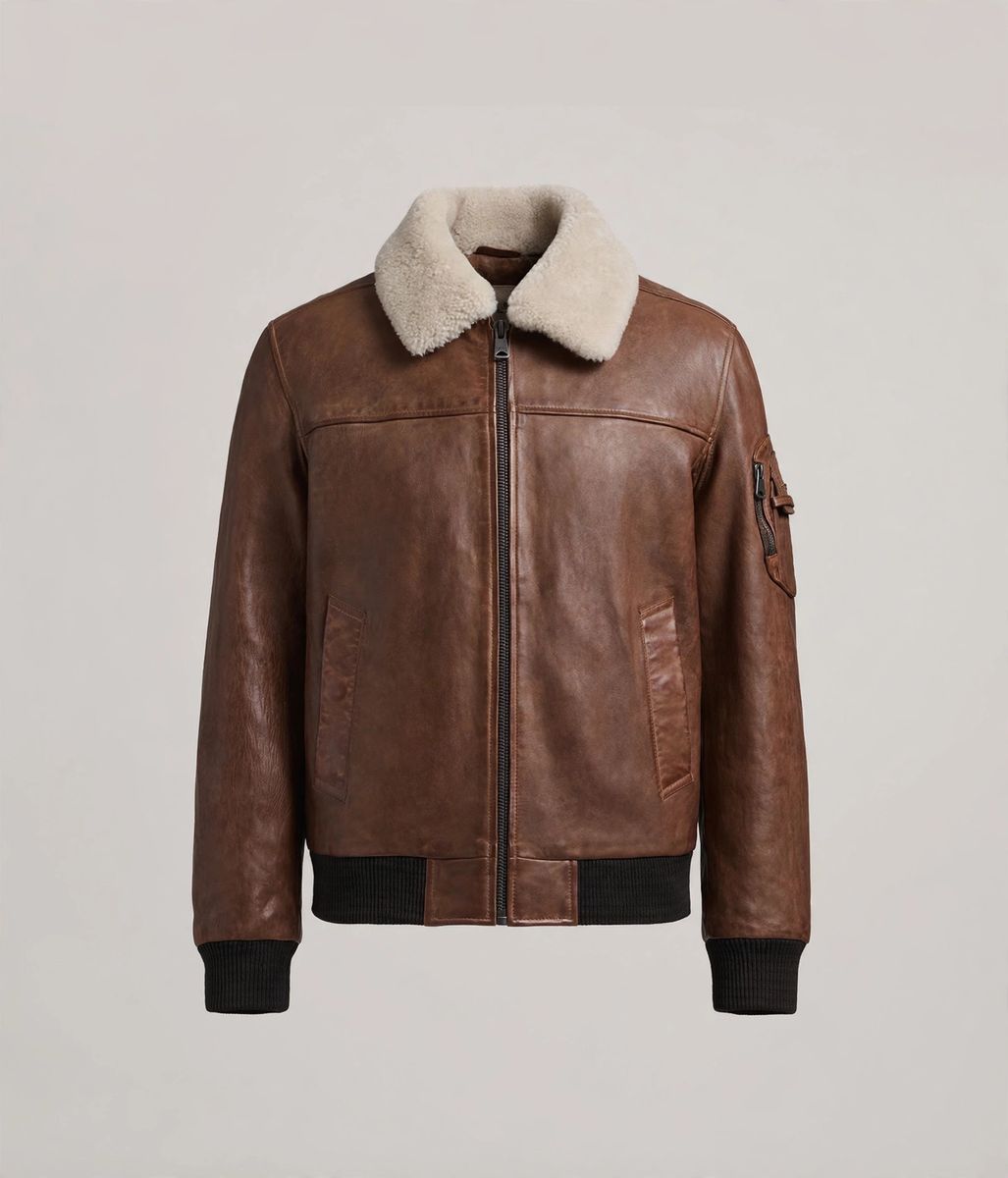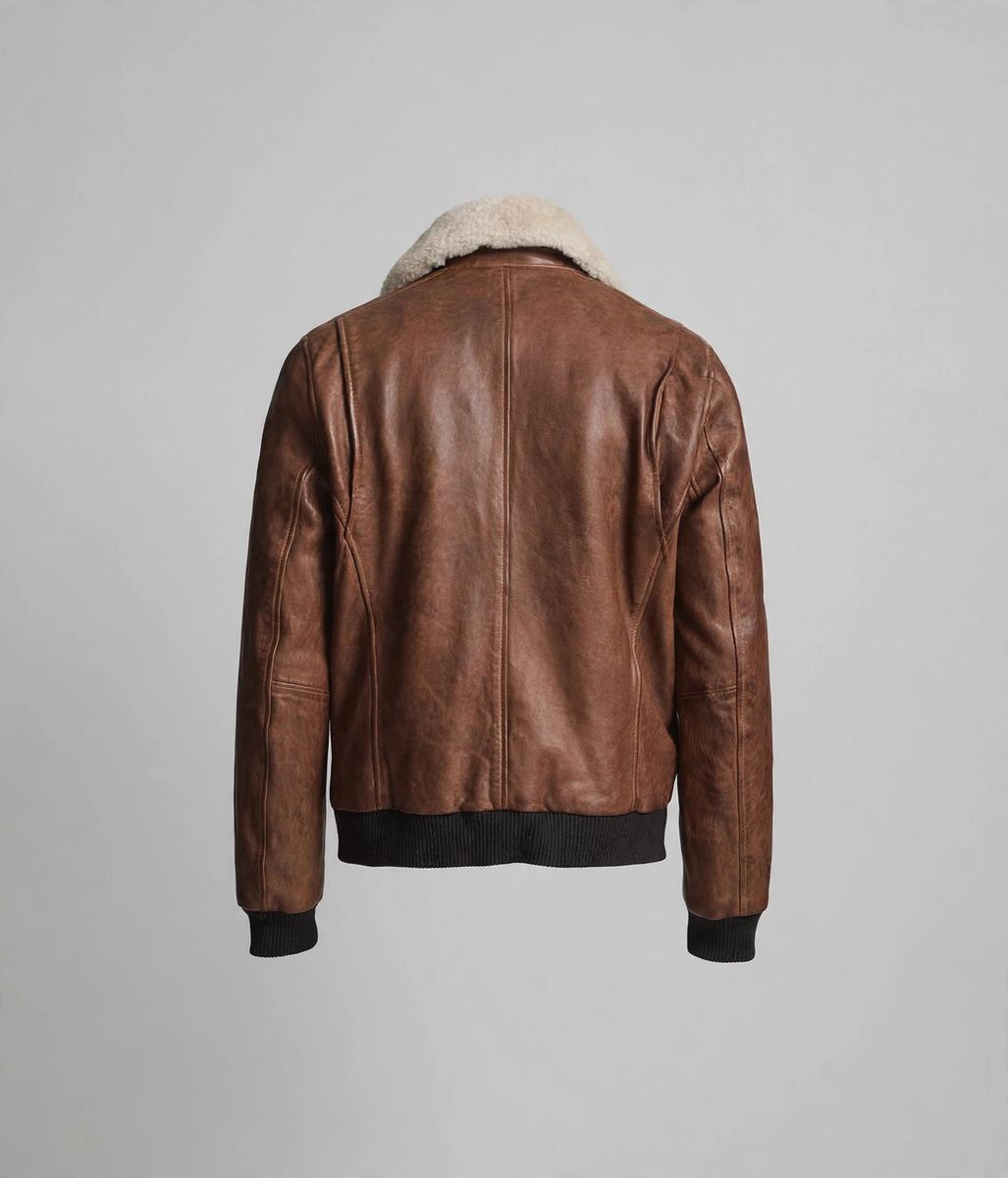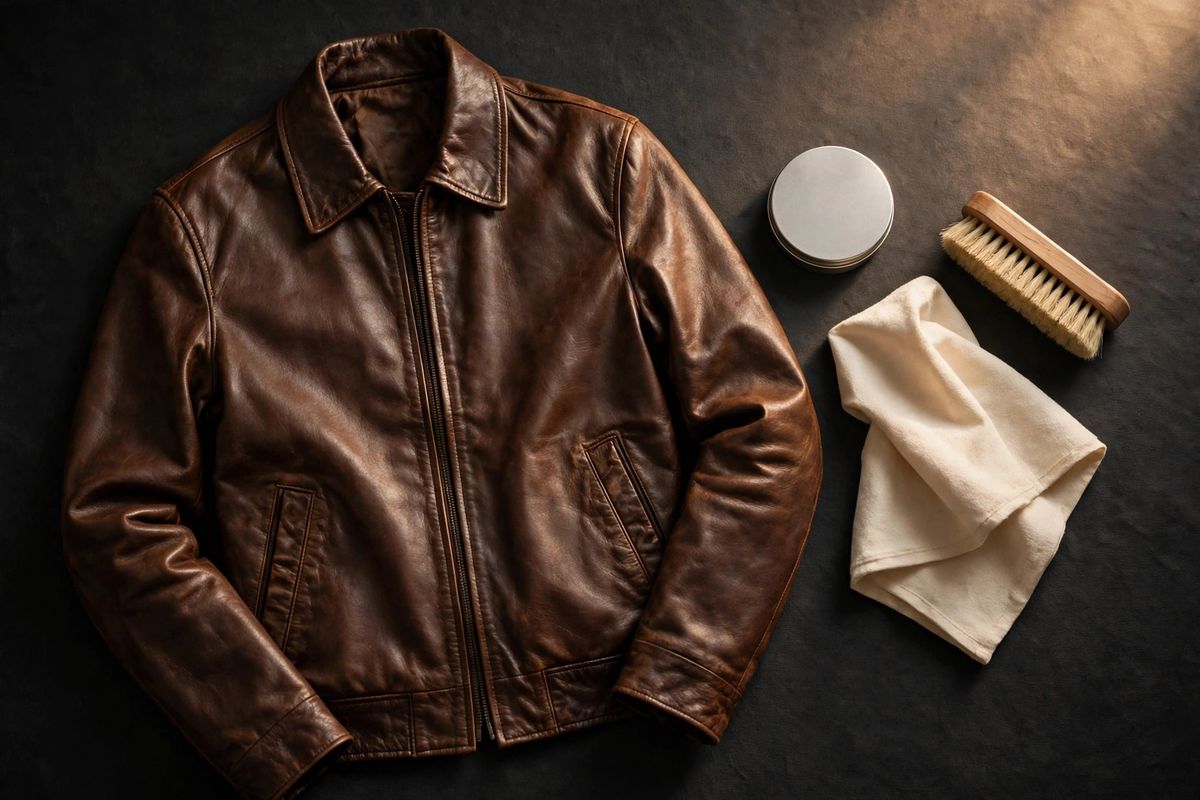
A good leather jacket should outlast trends, cars and possibly its owner — but only if it gets a small amount of the right care. The good news is that "the right care" is genuinely simple: leather mostly wants to be kept clean, occasionally fed, and stored like it matters. The bad news is that the wrong care — harsh cleaners, radiators, plastic bags — does real damage. Here is the complete routine, in the order you will actually use it.
Everyday care: the two-minute habit
Most leather damage is slow and boring: dust settling into the grain, body oils darkening cuffs and collars, and grime building up in creases. After every few wears, wipe the jacket down with a soft, dry cloth — a plain cotton cloth, nothing impregnated with polish or silicone. Hang it up after wearing rather than over a chair, and give it a day of rest between wears when you can, so the leather can dry out fully and return to shape. That tiny habit does more for a jacket's lifespan than any product you can buy.
Cleaning: less, and gentler, than you think
For general dirt, a cloth dampened with plain water — barely damp, never wet — is enough for smooth leather. Work in small circles, then buff dry. For a deeper clean once or twice a year, use a dedicated leather cleaner (not saddle soap on fashion leather, not baby wipes, and never detergents or solvents). Apply with a cloth, not directly to the jacket, and test first on an inside seam.
Stains need patience rather than force:
- Water marks — let them dry naturally; they usually fade as the leather evens out. See the rain section below.
- Grease — blot, never rub, then leave a little cornstarch or talc on the spot overnight to draw the oil out.
- Ink and dye transfer — this is a job for a specialist. Home solvents will take the finish off faster than the stain.
Suede is a different routine entirely — brushes and erasers, not water — and it is covered in our dedicated suede jacket care guide.
Conditioning: feeding the leather
Leather is skin; over time it loses the oils that keep it supple, and dry leather cracks. Conditioning replaces those oils. Two or three times a year is enough for a jacket worn regularly — over-conditioning makes leather limp and dark, so more is not better.
Choose a neutral conditioner made for garment leather, apply a small amount with a soft cloth in circular motions, let it absorb for 20–30 minutes, then buff off the excess. Always test on a hidden area first: most conditioners darken light leathers slightly, which is normal and usually evens out. Give special attention to the areas that flex — elbows, shoulders, and the fold lines at the front.
If your jacket gets soaked
It happens. The rules are simple: shake off the excess water, hang the jacket on a wide, padded hanger at room temperature, and let it dry slowly and naturally. Never use a radiator, hairdryer or direct sun — heat-dried leather dries stiff and can crack. Stuff the sleeves loosely with newspaper if they are dripping wet. Once fully dry (give it a full day), condition lightly, because the rain will have stripped some oils. A jacket treated this way recovers completely; a jacket rushed by a radiator may not. Our full guide to protecting leather from rain and water covers prevention, including protector sprays.
Smells, mould and other rescues
Leather absorbs the smells of its life — smoke, cooking, perfume. Fresh air is the first cure for all of them: hang the jacket outside in shade for a day. For stubborn odours, an open box of baking soda inside the (zipped) jacket in a garment bag for 48 hours absorbs a surprising amount. Mould — white or green fuzz from damp storage — is more serious: take the jacket outside, brush the mould off (wear a mask), wipe with a cloth dampened with a 50/50 mix of water and white vinegar, dry it thoroughly in moving air, then condition. If mould returns or the lining is affected, that is a specialist's job. Peeling or flaking, by contrast, usually means the finish — or bonded leather — is failing, and no cleaner will reverse it.
Storage: where jackets go to die (or don't)
More jackets are ruined in storage than in wear. The rules:
- Hanger: wide and padded, so the shoulders keep their shape. Wire hangers will eventually dent and distort them.
- Cover: a breathable cotton garment bag, never plastic — plastic traps moisture and invites mildew, leather's worst enemy.
- Place: cool, dry and dark. Heat dries leather out; sunlight fades it; damp grows mould on it.
- Shape: zip or button it closed so it hangs in its intended shape, pockets empty.
If a jacket has been stored for a season, hang it in fresh air for a few hours and condition it before wearing. And if the worst has already happened — cracks, peeling, mould — our guide to fixing a cracked or peeling jacket explains what is genuinely fixable and what is not.
Do these few things and the maths is on your side: a sheepskin jacket cared for like this is a ten-to-twenty-year garment. That is the entire point of buying real leather in the first place.