The most confusing word in the leather business is "genuine". It sounds like a promise; legally, it is close to a shrug — "genuine leather" only means a product contains some real leather, possibly from the cheapest layers of the hide, heavily processed. Meanwhile, good faux leather has become convincing enough to fool a glance. So how do you actually know what a jacket is made of? Use these seven tests, in roughly this order. No single one is proof on its own; together, they are conclusive.
1. The label test — read it like a lawyer
Start with the materials label, but read it precisely. "100% leather", "sheepskin", "lambskin" or "cowhide" are specific claims. "Genuine leather" is vague. "Leather-look", "man-made", "PU", "vegan leather" (which is plastic, whatever the marketing suggests) and "bonded leather" (leather fibres glued together — the particleboard of leather) all mean something else. A seller who names the animal and the cut is telling you something; a seller who hides behind adjectives is too. Our types of leather guide decodes the full vocabulary.
2. The touch test
Real leather feels alive: warm to the touch, slightly irregular, and it gives under your fingers like skin — because it is skin. Press a fingertip into it and the surface wrinkles finely around the pressure, then recovers. Faux leather feels cooler, more plasticky, and either does not wrinkle or wrinkles in a uniform, mechanical way. Run your palm across a large panel: real hides vary subtly in texture; plastic is eerily perfect.
3. The smell test
This one is nearly foolproof. Real leather smells rich, warm and slightly sweet — the famous "leather smell" that car interiors and saddlery shops trade on. Faux leather smells of plastic, vinyl or chemicals. Perfumed finishes can mask it briefly, but the base note is always there. If a jacket smells like a new shower curtain, believe your nose.
4. The pore test
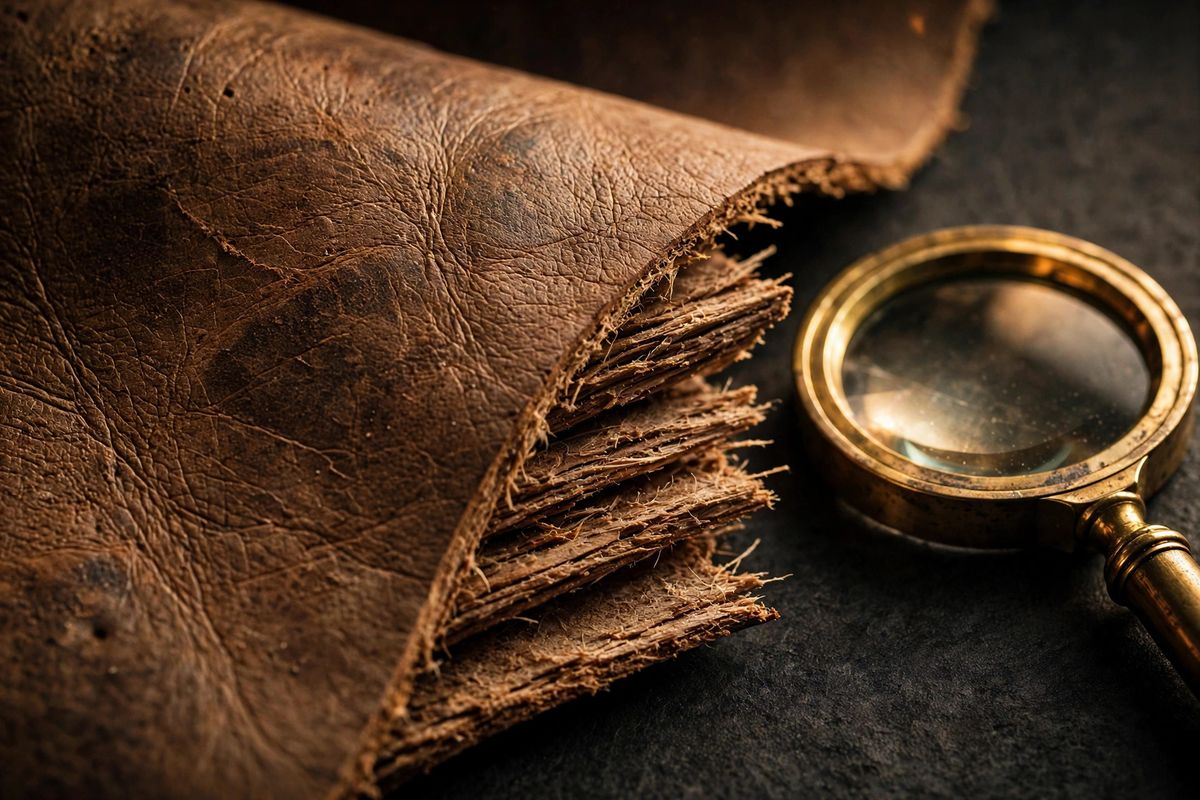
Look closely at the surface, ideally in good light. Real leather has pores — tiny, irregularly spaced holes and a grain pattern that never repeats, because no two animals are alike. Faux leather's "grain" is printed or embossed: look at a large area and you will find the pattern repeating, and the pores (if any) are uniform in size and spacing, like a printed texture. A phone torch held at an angle makes this surprisingly easy to see.
5. The edge test
Find an unfinished edge — inside a pocket, at a seam allowance, or where the lining meets the shell. Real leather's edge looks fibrous and layered, like the edge of skin. Faux leather's edge reveals its construction: a fabric or foam backing with a plastic film on top. This is the test shop assistants least enjoy, which tells you something about its reliability.
6. The water test
Put a single drop of water on a hidden area. On real leather, the drop slowly darkens the surface as it absorbs (wipe it off after a few seconds). On faux leather, the drop sits on the surface and rolls off, because plastic does not absorb. Use a tiny drop on an inconspicuous spot — on very light, unfinished leather, even water can leave a temporary mark.
7. The flex and price tests
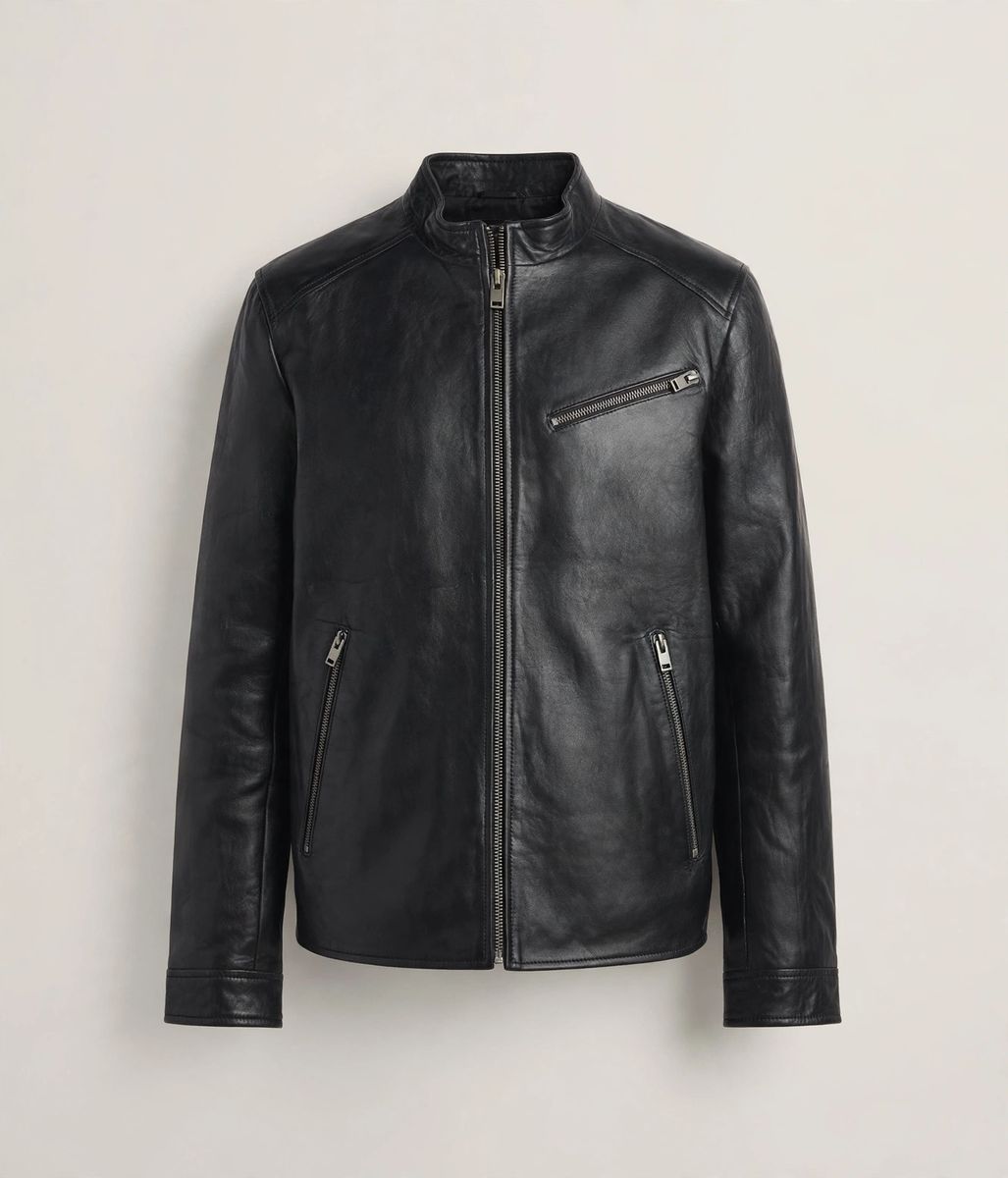
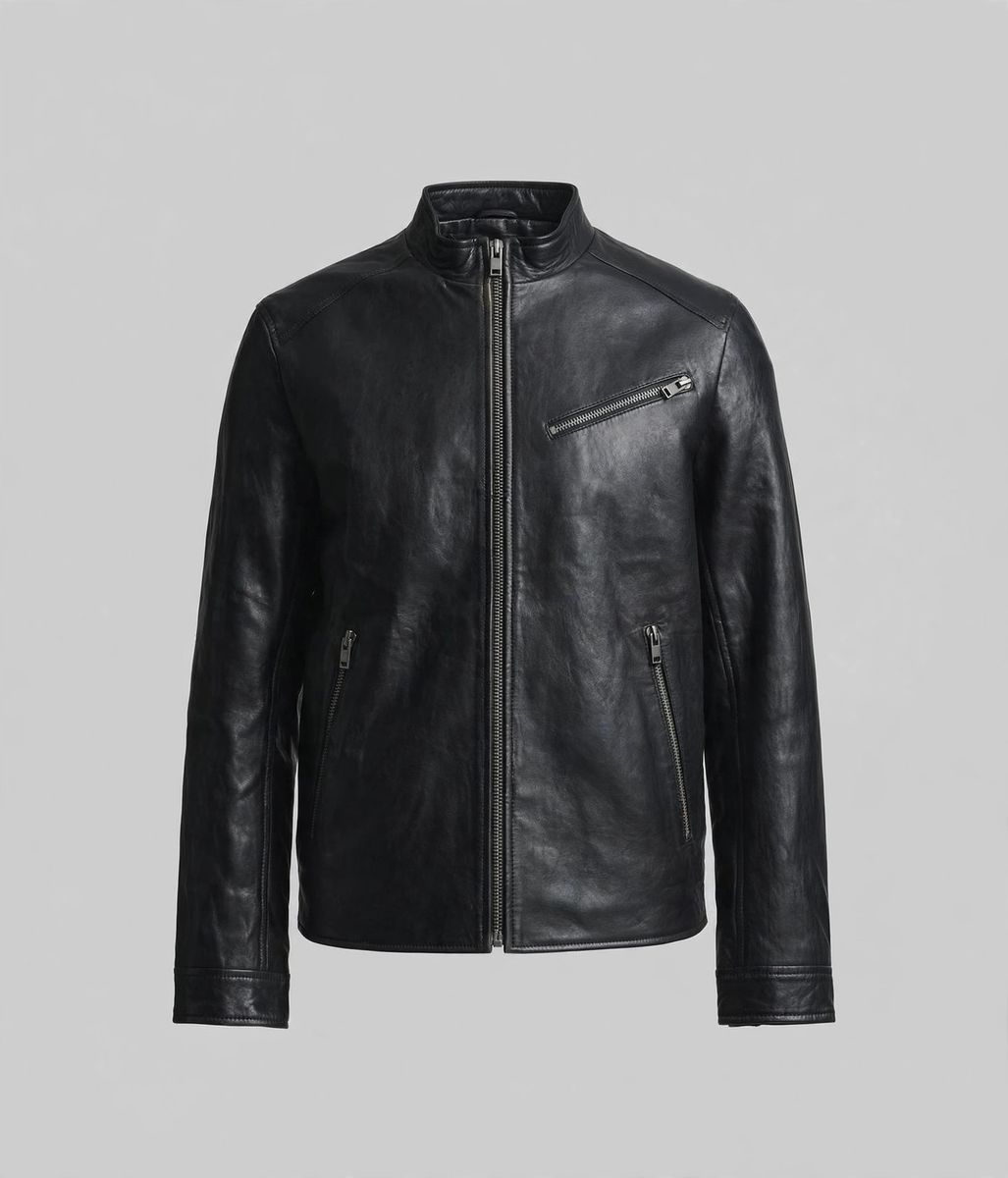
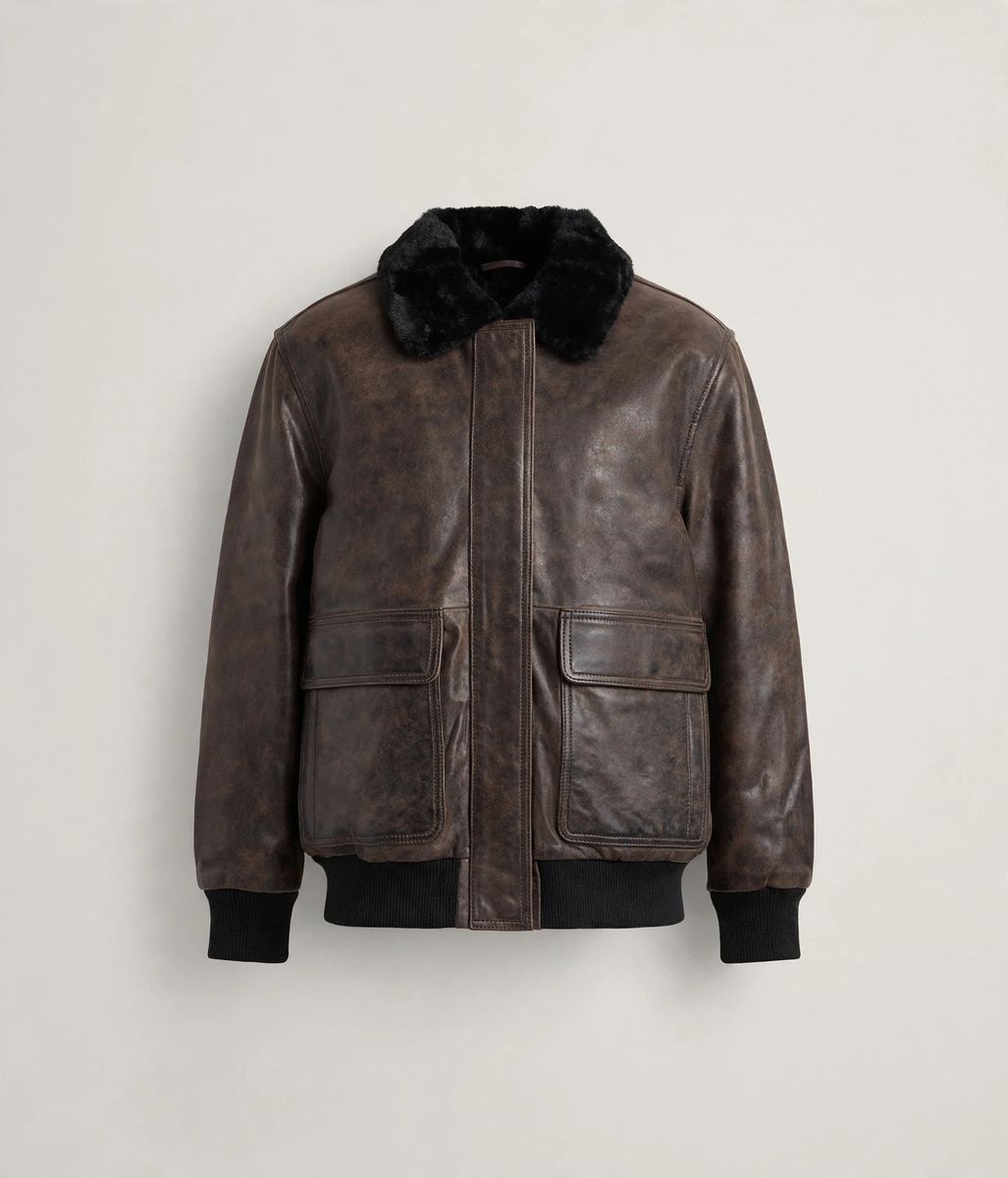
Bend the leather: real leather creases finely and the colour in the crease stays consistent; heavily coated or bonded material may lighten or crackle at the fold, and cheap faux can crease in sharp, plasticky lines. Then apply common sense about price: a full jacket uses several large skins plus skilled labour. A "real leather jacket" at the price of a pair of jeans is telling you, in numbers, what it is. Real leather jackets sit in a recognisable price band — our own start with pieces like the Classic Racer — and a price far below the band is information, not a bargain.
Buying online: the tests still work
You cannot smell a jacket through a screen, but online buying has its own evidence. Zoom into the product photos: real leather shows irregular grain and pores at high zoom; printed faux shows a repeating pattern. Read the full materials line, not the headline — reputable sellers state the animal and the percentage. Check the weight if listed: a real sheepskin jacket has substance (typically well over a kilogram); a suspiciously light "leather" jacket is usually synthetic. Read reviews for the words "plastic", "shiny" and "smell" — other buyers run the nose test for you. And finally, buy where returns are real: order, run the touch, edge and water tests at home, and send it back if it fails. Our own returns policy exists for exactly this kind of honest checking — a seller confident in their leather does not fear your fingertip test.
Putting it together
Run three or four of these tests and the answer is never in doubt. Keep the receipt and the return window in mind while you do them — every test here is non-destructive when done as described (a single water drop on a hidden seam, a fingertip press, a look inside a pocket), so a reputable seller's returns policy stays intact. And buy from sellers who make the tests unnecessary: specific materials on the label, the animal named on the product page, honest descriptions of faux where faux is used (we sell both, and label them plainly). Real leather is not magic — it is a natural material with natural irregularities. Once you know how to read them, you will never be fooled by a label again.