A man in a well-fitting leather jacket looks like the jacket was made for him. A man in a badly fitting one looks like he borrowed it — and leather, unlike knitwear or denim, will not quietly fix the problem over time. It has almost no stretch across the shoulders and chest, it never shrinks to you, and it gives back only a little ease as it breaks in. That is why fit is the whole game with this purchase. This guide covers the five fit points in the order you should judge them, the inch-level guidance for each, and how the rules flex by style and by build. It is the men's companion to our women's fit guide; for the measuring-tape basics and size charts, use our main size guide and the size chart page alongside it.
Fit point 1: the shoulders — the non-negotiable
Everything starts here, because the shoulders are the one part of a leather jacket that cannot change — not with wear, not with a tailor. The shoulder seams should sit exactly on the edges of your shoulder bones. Seams drooping down your upper arm mean the jacket is too big, whatever the chest feels like; seams pulling inward, with the leather straining when you fold your arms, mean it is too small. Put the jacket on, zip it up, and fold your arms across your chest: you should feel the leather hold you, not fight you. If the shoulders are wrong, stop there — no other measurement can rescue the jacket.
Fit point 2: the chest — close, with a working zip
Zip the jacket fully over the layer you will wear most often. The front should lie flat with no horizontal pulling across the chest and no puckering along the zip. You should be able to slip a flat hand between the jacket and your chest — snugly, not loosely. In numbers: most men are comfortable with about 2 to 4 inches of ease over their actual chest measurement in a slim style, and 4 to 6 inches in a relaxed bomber. Take a deep breath and reach forward as if driving. The jacket will lift slightly; it should not ride up past your belt or bind across the back. Our men's collection product pages list garment measurements for exactly this comparison — measure a jacket you already own that fits, and compare like with like.
Fit point 3: the sleeves — to the wrist bone
Sleeves should end at your wrist bone, where the hand begins. This is the detail most often wrong, because men accept long sleeves on leather the way they would not on a suit. Sleeves covering half the hand make the whole jacket read a size too big; sleeves ending an inch above the wrist look outgrown. Two adjustments to know: leather sleeves develop creases at the elbow and effectively settle roughly a quarter-inch shorter with wear, so a sleeve that is a fraction long on day one is fine. And on bikers, zipped cuffs are designed to sit slightly longer over gloves — a fraction, not a fold.
Fit point 4: the length — at the belt
For the three classic short styles — biker, bomber, racer — the hem should finish at your belt line or just below it, covering the belt but not the seat. On most men that is a back length of roughly 24 to 27 inches depending on height and size. Too short and the jacket looks cropped when you raise your arms; too long and it reads as a coat that lost its way, and it will bunch when you sit. Sitting is the real test: zip up and sit down. The hem should not dig into your thighs or push the collar into your jaw.
Fit point 5: the waist and hem — shaped, not strangled
A leather jacket should follow your outline without clinging to it. On bikers, the belt or side adjusters should close at your natural waist without the front gaping open above them. On bombers, judge the ribbed hem instead: it should sit on your hips and stay there when you move, gripping lightly — if it rides up to your waist, the body is too short or too tight; if it hangs loose and straight, the jacket is too big and the bomber's shape is lost. On racers there is no adjustment at all, which is why the chest and waist measurements matter most on that style.
How fit changes by style
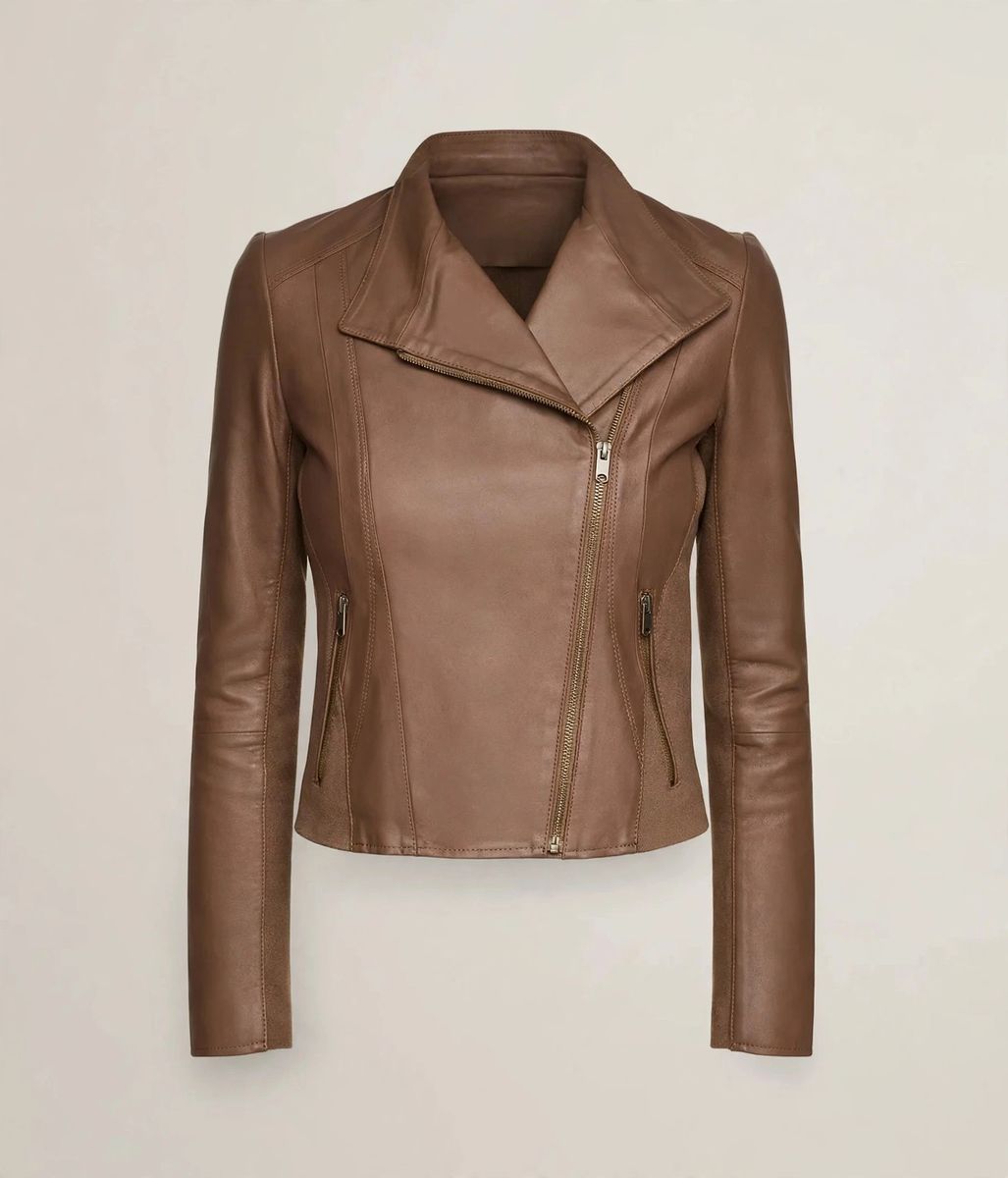
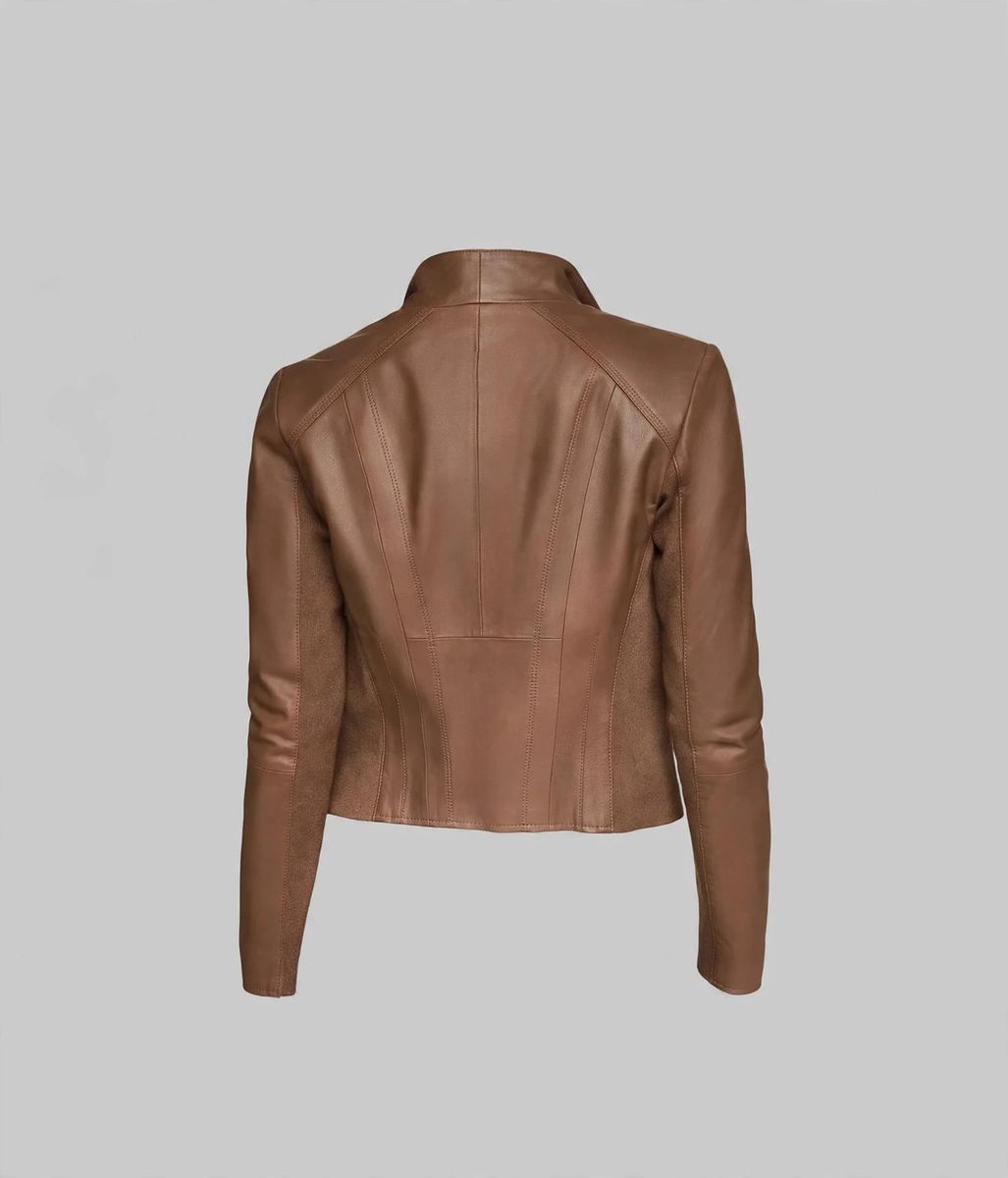
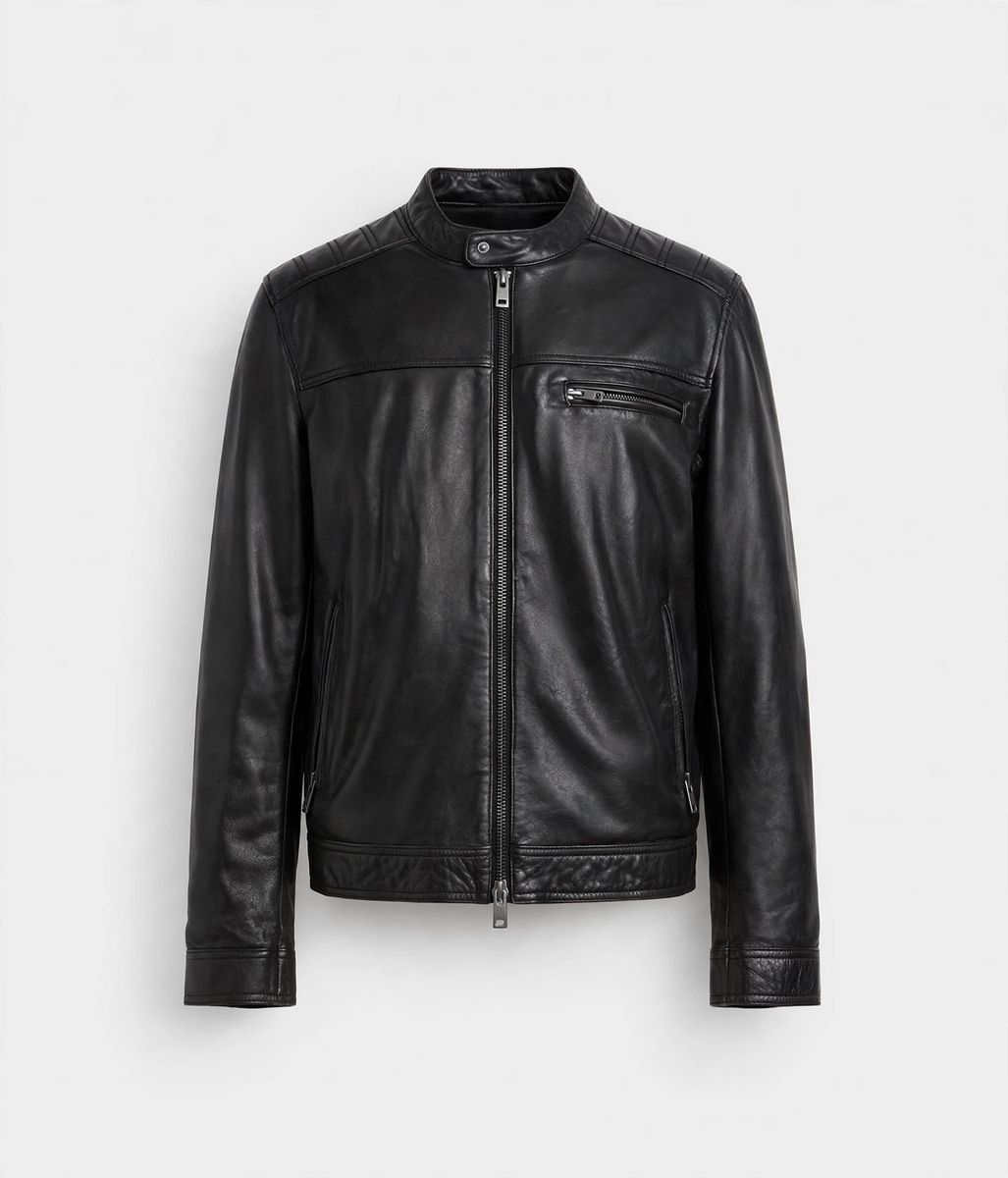
Biker / moto: the closest structured fit of the classics. Shoulders exact, chest close, hem at the belt. A jacket like the Felix Moto should feel like light armour — present, never restrictive.
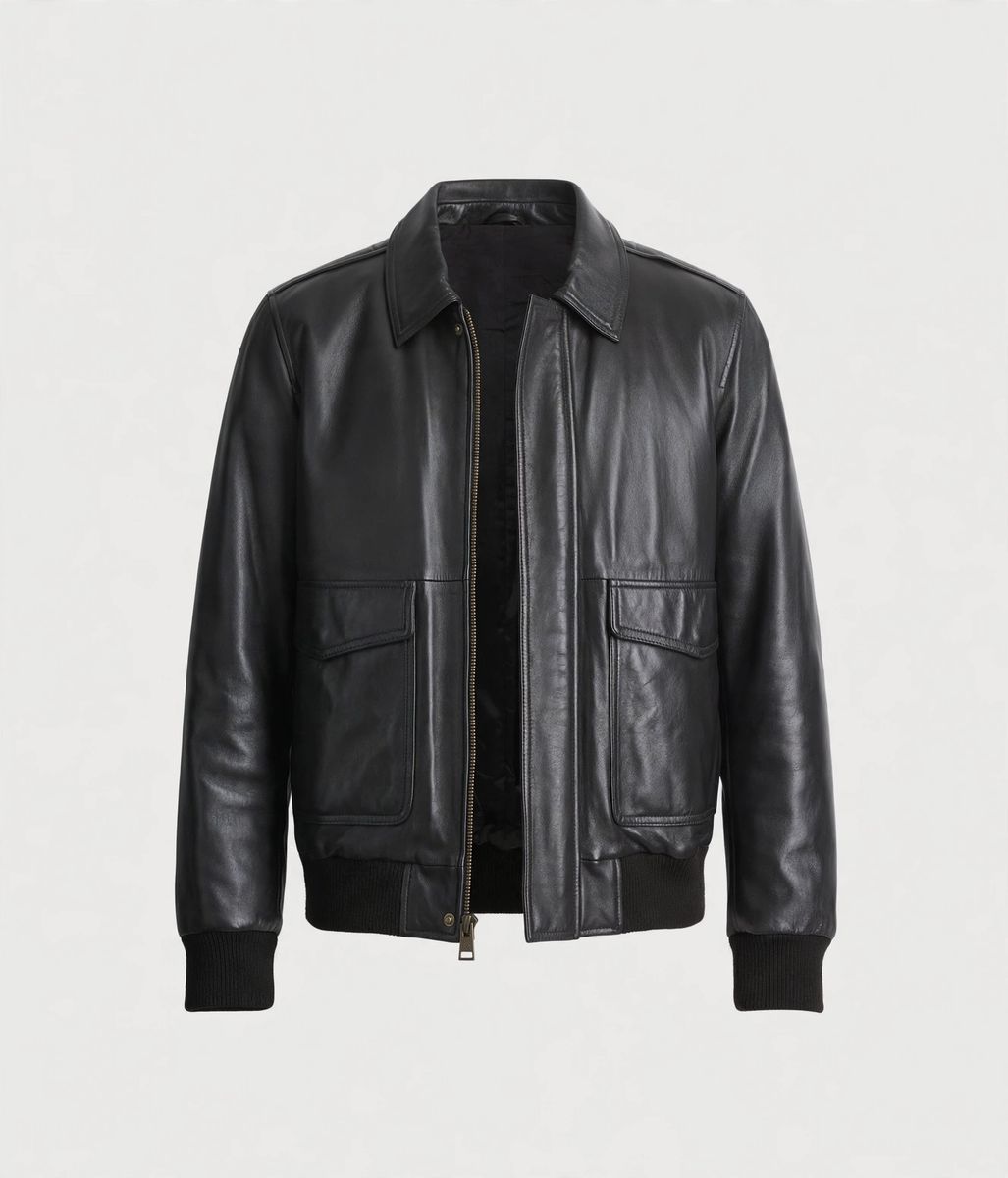
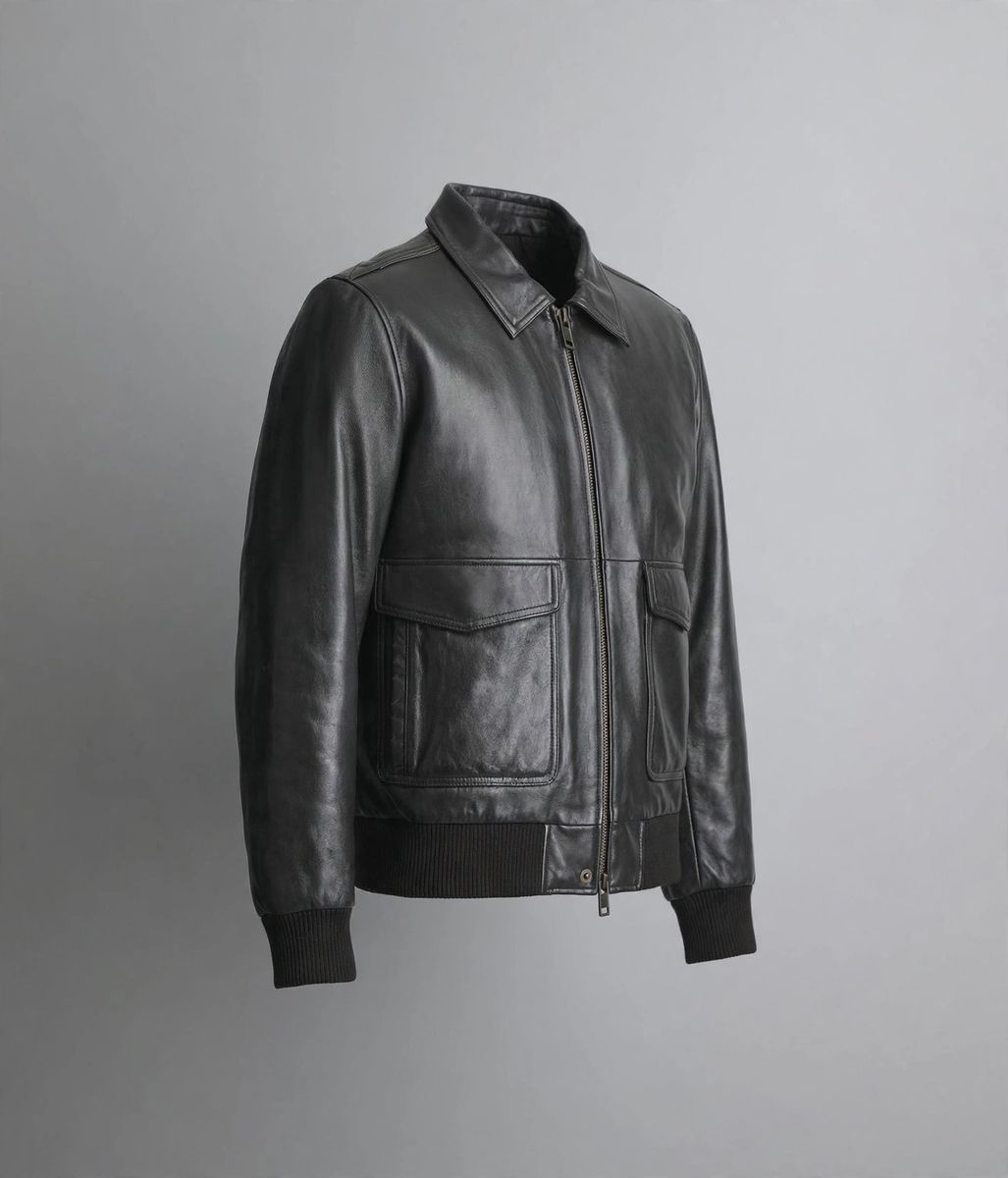
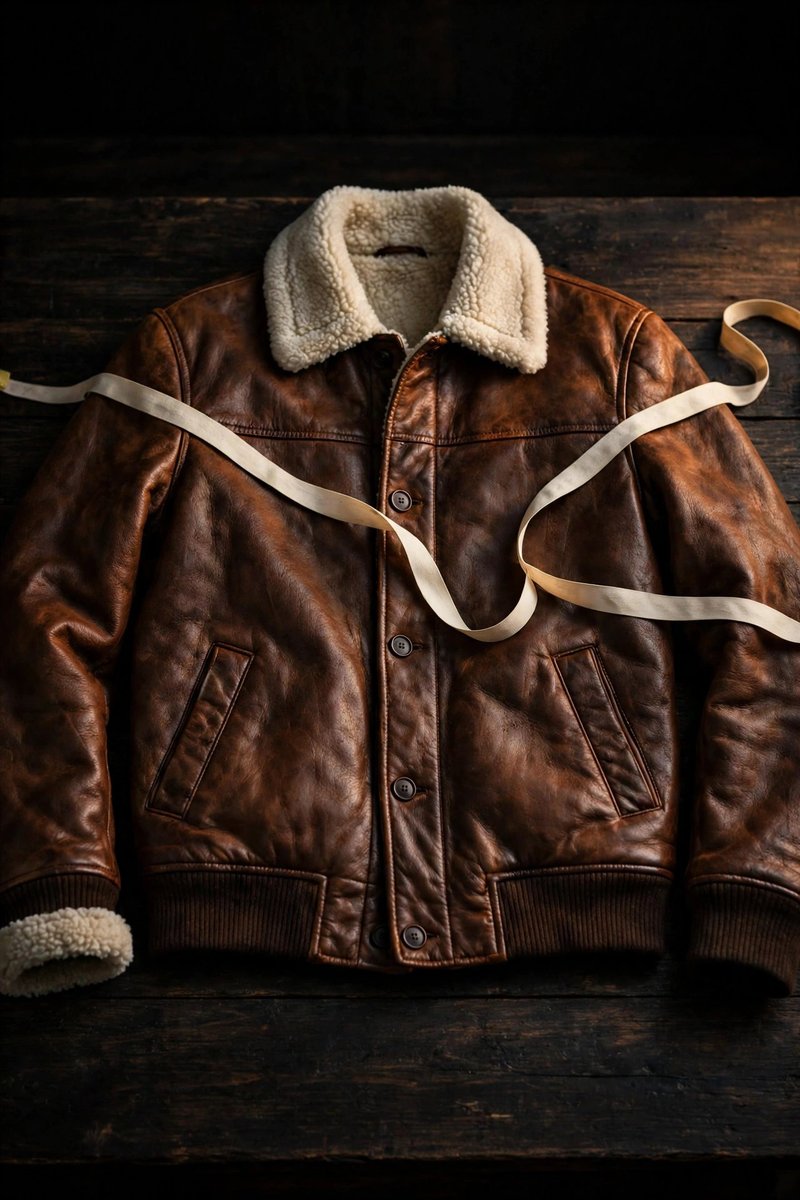
Bomber: the most forgiving. The ribbed hem creates the shape, so the body can carry room for knitwear. Judge it by shoulders and hem behaviour, not by pinching the body fabric. The Chris Bomber is the reference fit.
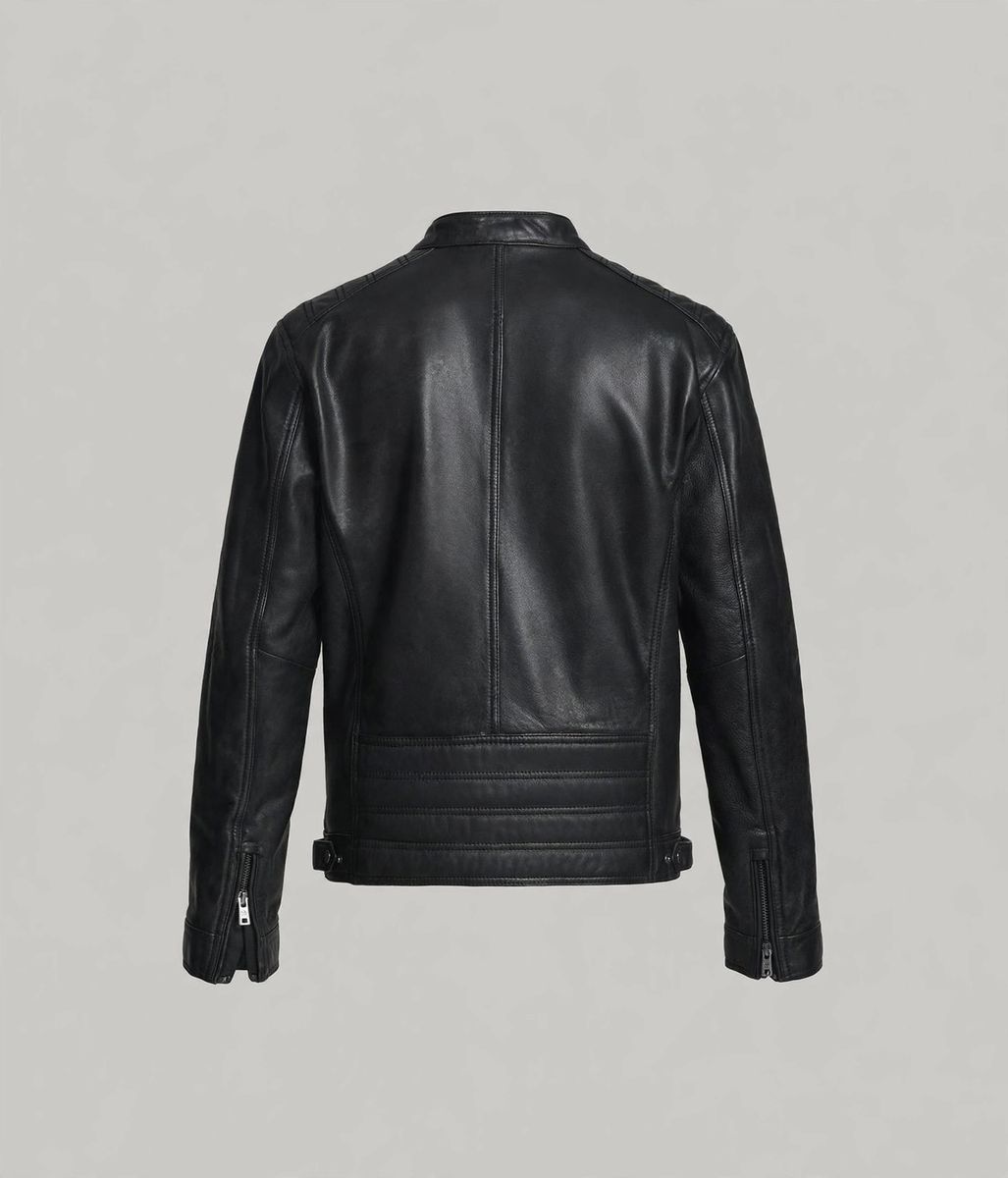
Racer: the slimmest cut. It follows the body like tailoring, and the stand collar should meet your jaw without pressing your throat. If you are between sizes in a racer like the Ethan, take the larger.
Long styles: trenches and car coats should fall below the knee or to mid-calf, close at the waist without the front pulling, and leave genuine room for layers — length is the decision, covered in our trench styling guide.
Fit by build
Broad and athletic builds: your enemy is the shoulder-to-waist ratio — jackets cut for your chest can billow at the waist. Structured bikers and belted styles give the shape back; avoid sizing up for shoulders and drowning the rest. Big-and-tall cuts, like our Chris Big & Tall Bomber, exist precisely because standard grading fails here; our plus-size guide goes deeper.
Slim builds: racers and slim bikers are cut for you. Avoid relaxed bombers a size too big — the ribbed hem cannot create shape that the body underneath does not suggest.
Tall builds: watch body length and sleeve length before anything else; a jacket that fits your chest but ends above your belt will always look borrowed. Look for back lengths at the top of the range and check sleeve measurements on the product page, not just the size letter.
Shorter builds: cropped and standard short styles worn at the correct length will lengthen your proportions; long hems do the opposite. Keep the hem at the belt, sleeves exact, and the fit close.
The five mistakes that ruin a good jacket
- Buying for the body you plan to have. Leather outlasts resolutions. Buy for the body in the mirror; the jacket will still fit when it changes, because you bought the right size for now.
- Judging fit in a t-shirt when you will wear knitwear. Try it over your thickest usual layer, or at least account for it in the ease.
- Accepting drooping shoulder seams because the chest feels fine. The chest can be lived with; shoulders cannot be fixed.
- Assuming it will stretch to fit. It will mould and ease — it will not gain a size. Our break-in guide explains exactly how much change to expect.
- Ignoring the sit test. You will sit in this jacket — in cars, cafés, offices — far more than you will pose in it. If it fights you seated, it fails.
Judge any jacket in that order — shoulders, chest, sleeves, length, waist — over your real layers, sitting and reaching, and you will get the fit that makes people assume the jacket was made for you. Because in every way that matters, it will have been.