A leather jacket is the least forgiving purchase in your wardrobe — and the most rewarding when you get it right. Unlike a knit or a denim jacket, leather has almost no stretch across the shoulders and chest, so a jacket that is one size too small will never "break in" to fit you; it will simply stay uncomfortable. A jacket that is too large will never shrink to you either. This guide walks you through measuring properly, understanding how each style should fit, and the few situations where sizing up is the smart move.
Start with your own measurements, not your usual size
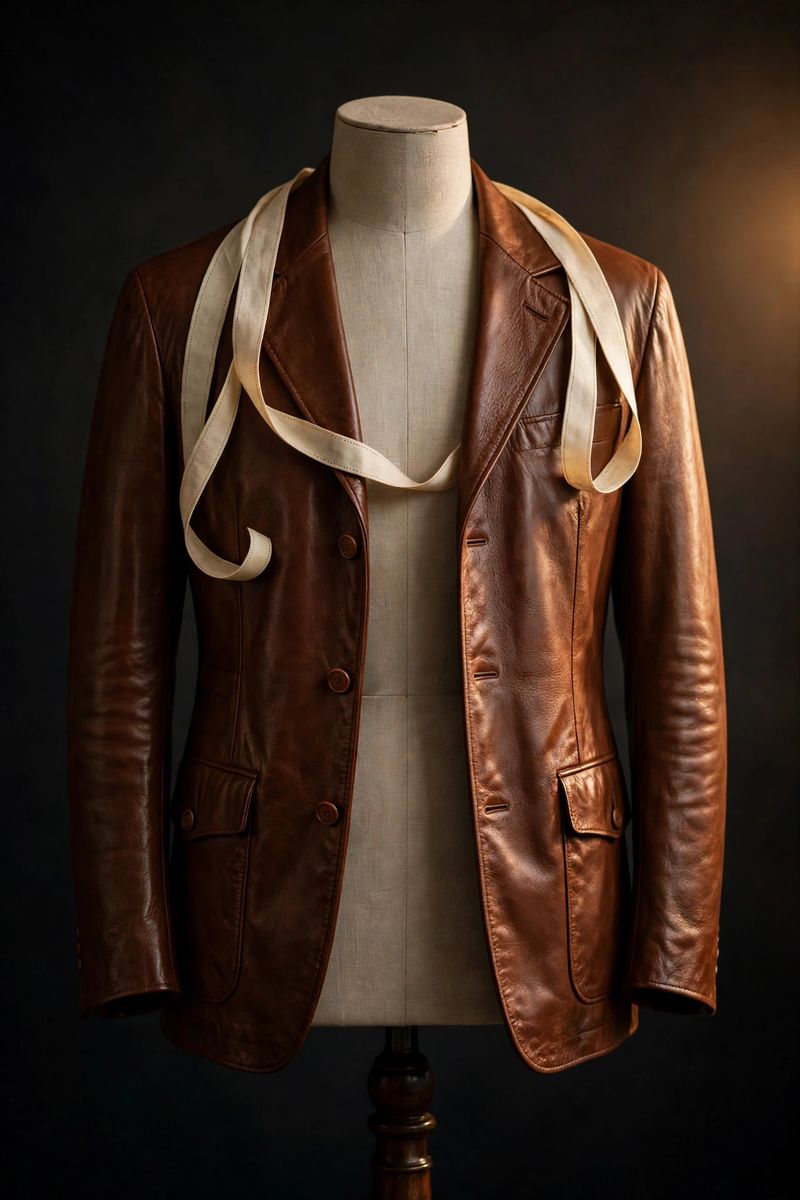
Sizes vary between brands more than most people realise, and a "medium" in one label can be a full size different in another. Before you order anything, take three measurements with a soft tape, over a light shirt:
- Chest — around the fullest part, under the arms, tape flat but not tight. This is the single most important number for a leather jacket.
- Shoulders — from the edge of one shoulder bone straight across the back to the other. Leather cannot stretch here, so this is your hard limit.
- Waist — around your natural waistline, where a belted jacket or a hem will actually sit.
Write the numbers down in inches or centimetres and compare them with the size chart on the product page rather than trusting the letter on the label. If you fall between two sizes on the chart, the sections below tell you which way to go for each style.
How each style should fit
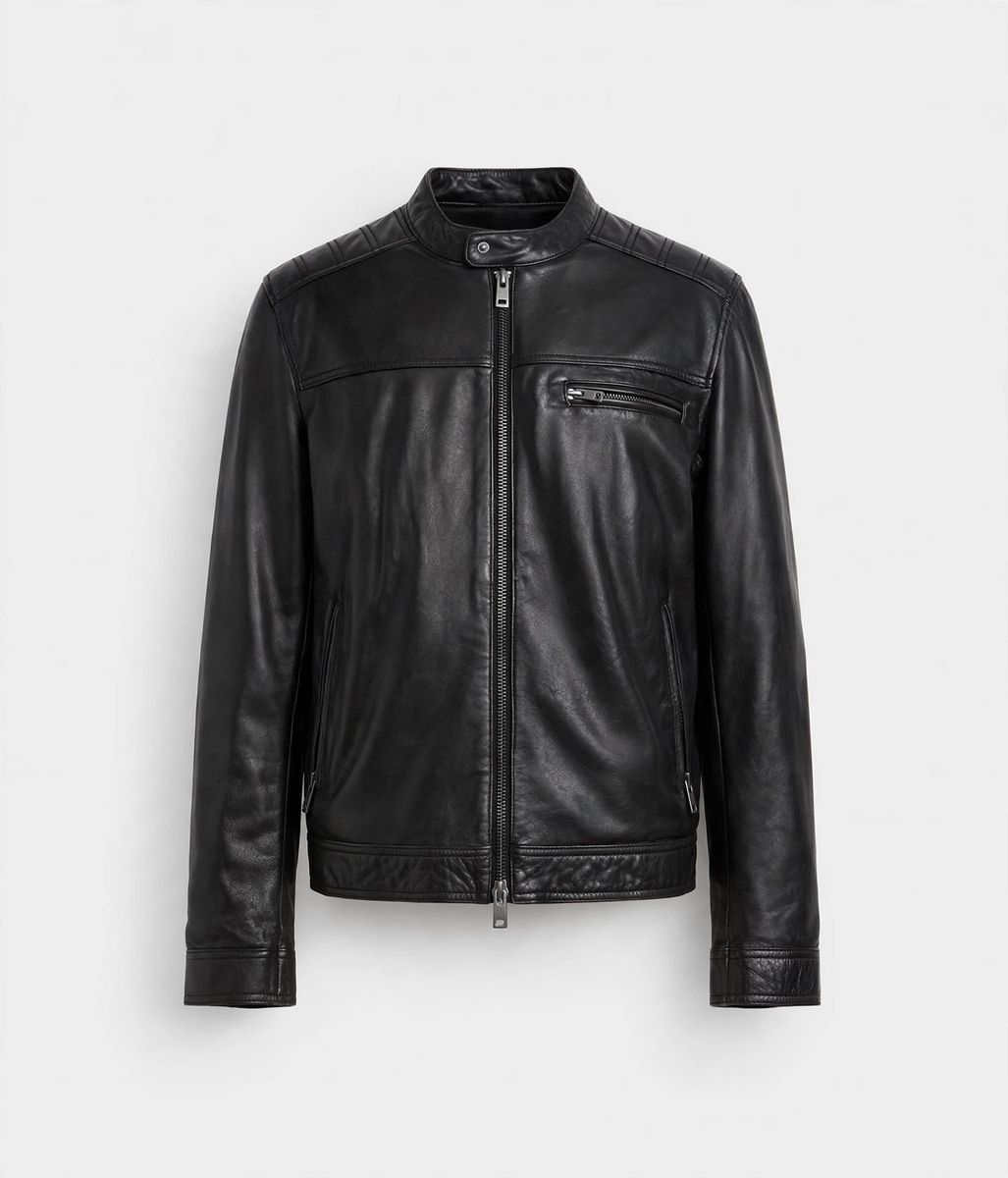
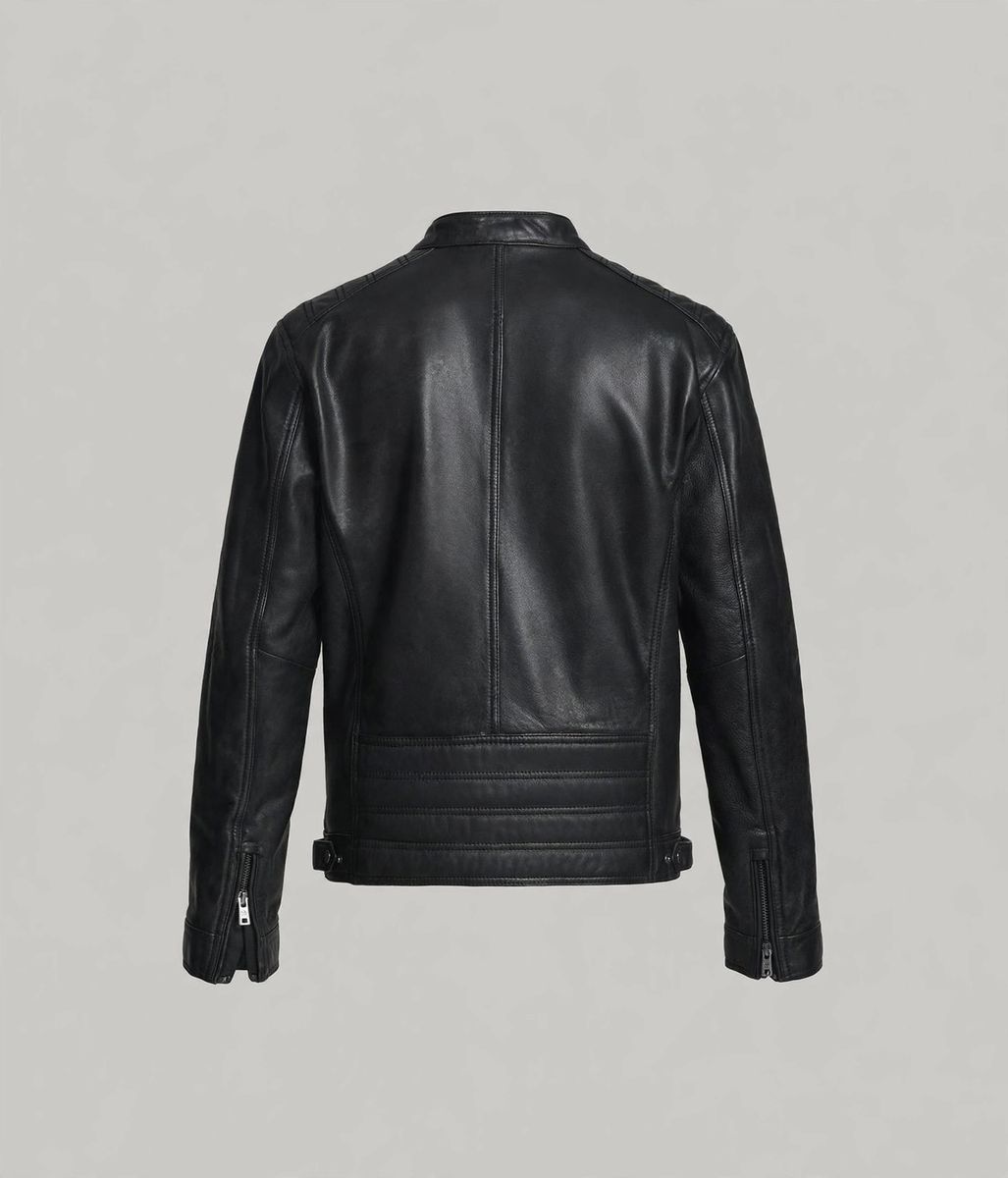
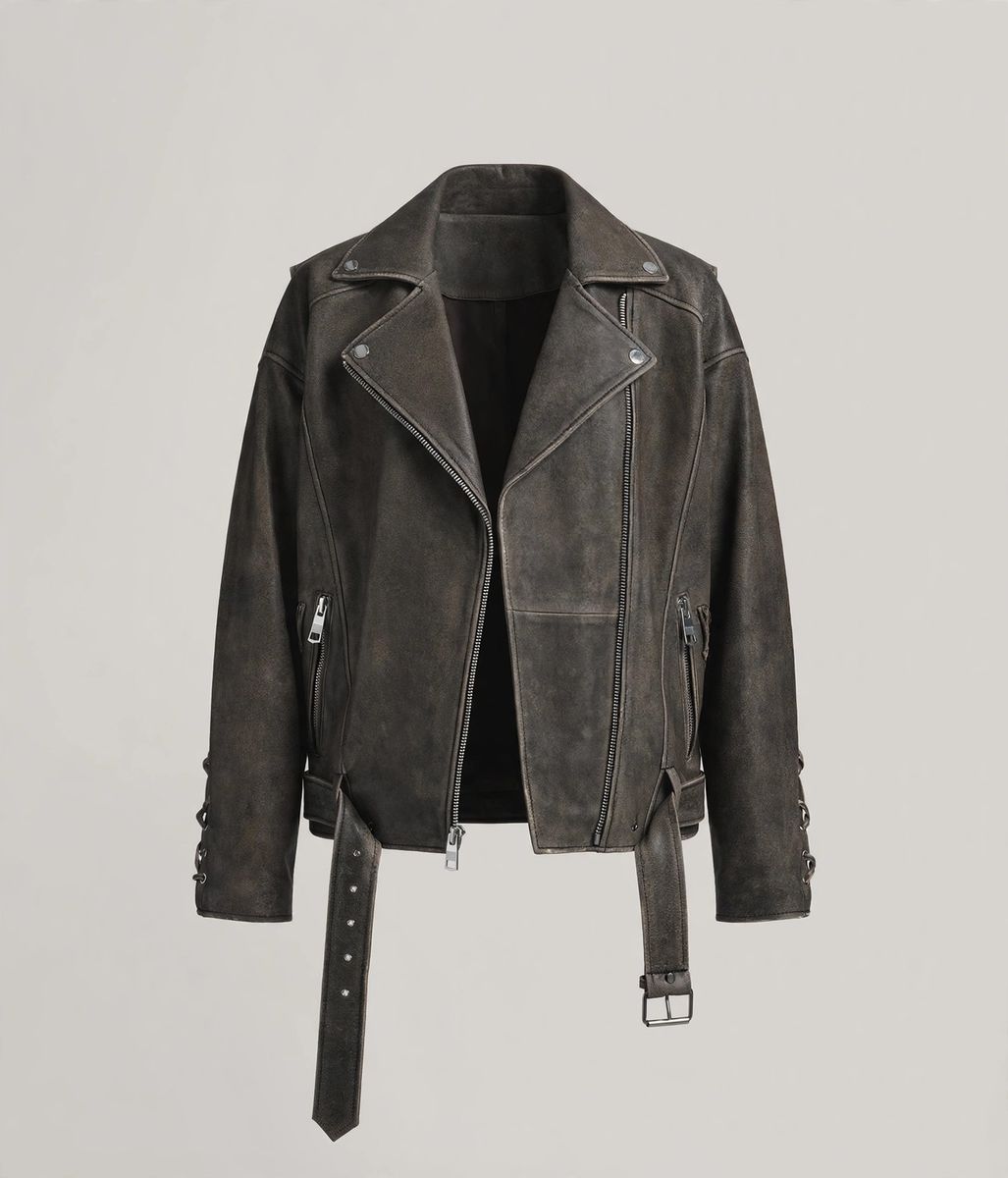
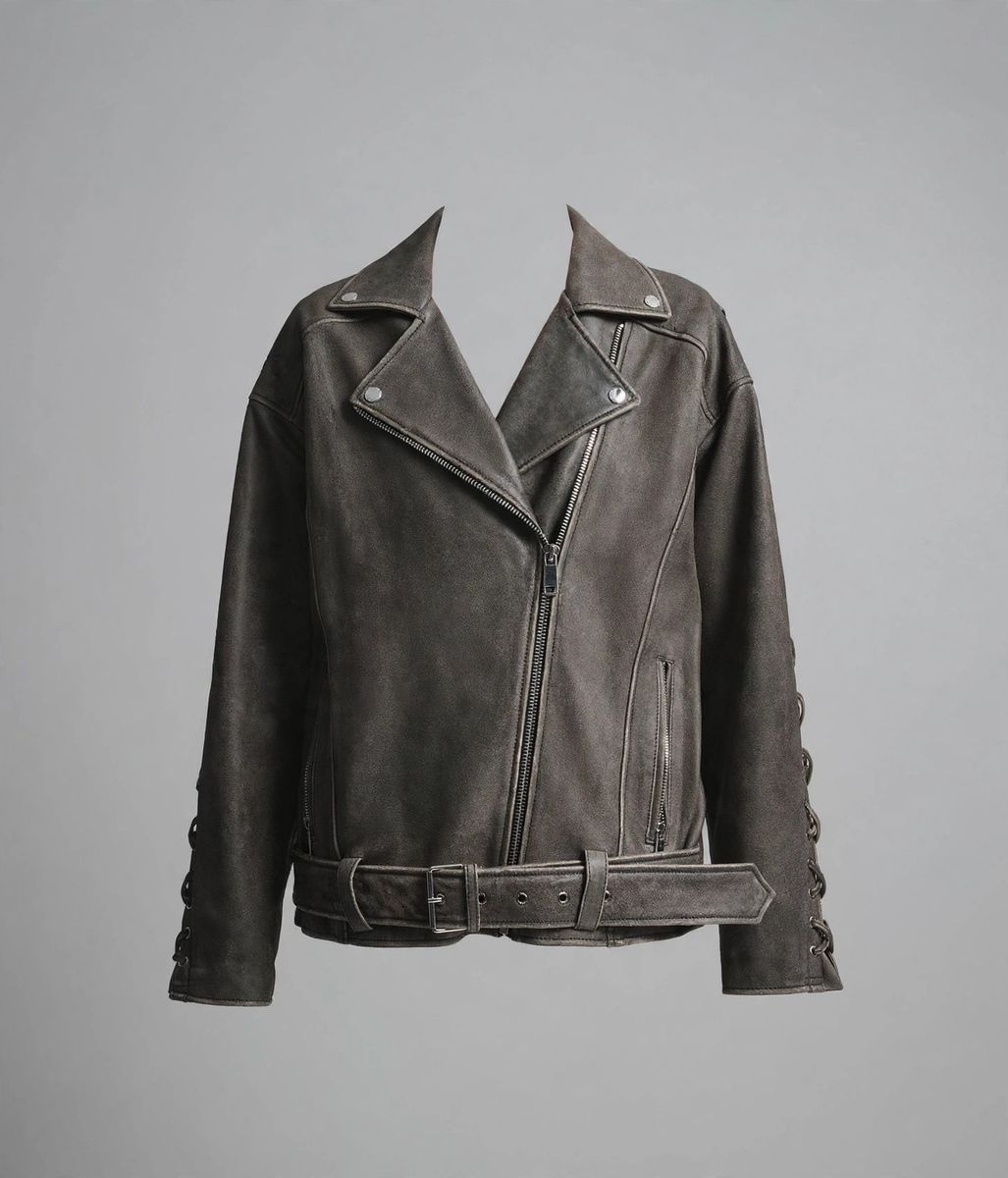
Biker and moto jackets
A moto jacket should sit close: the shoulder seams on your shoulder bones, the chest zipped without pulling, and the hem at or just below the belt line. You should be able to raise your arms to riding or driving position without the whole jacket lifting. Close does not mean tight — if the zip strains when you take a deep breath, go up a size.
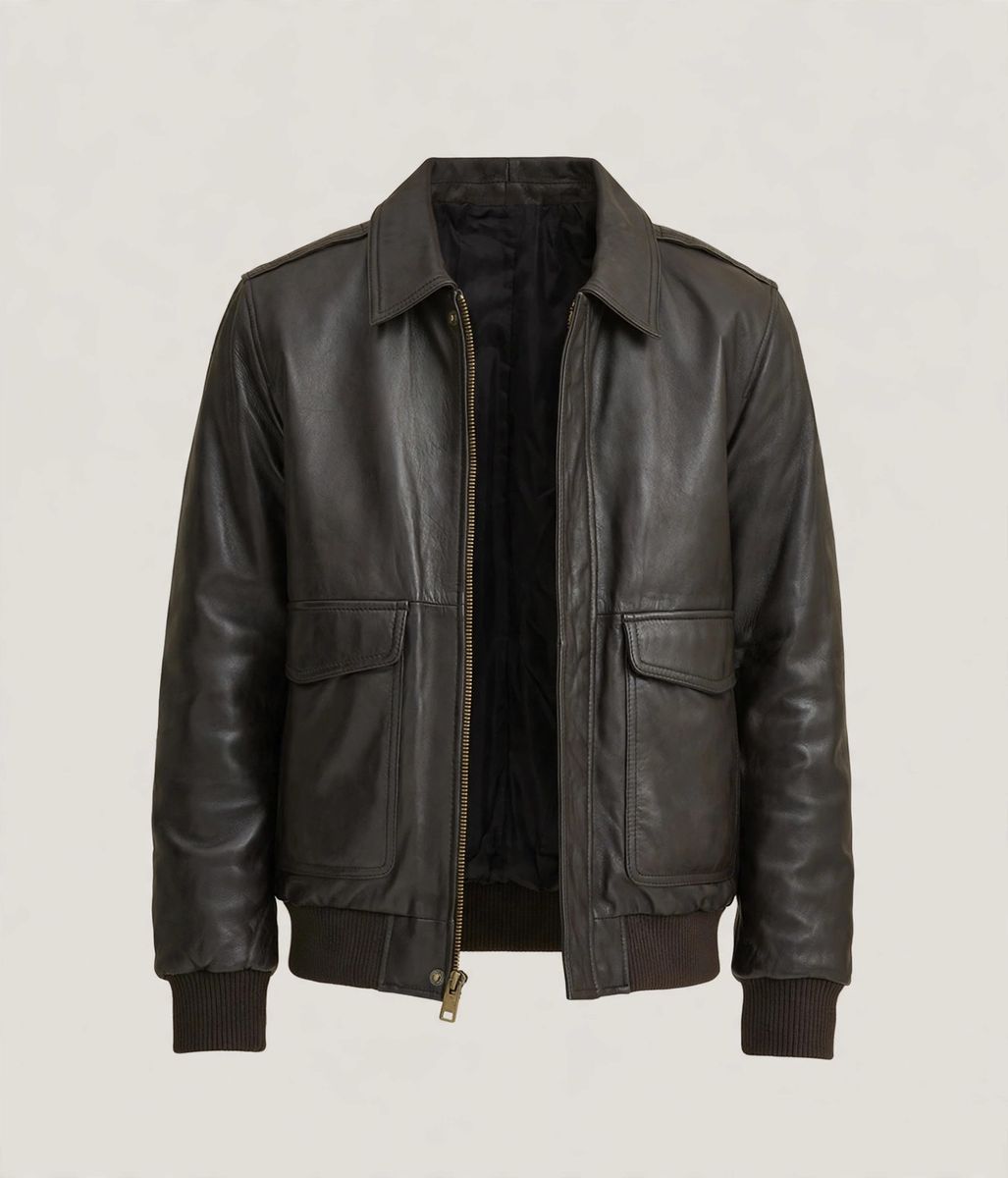
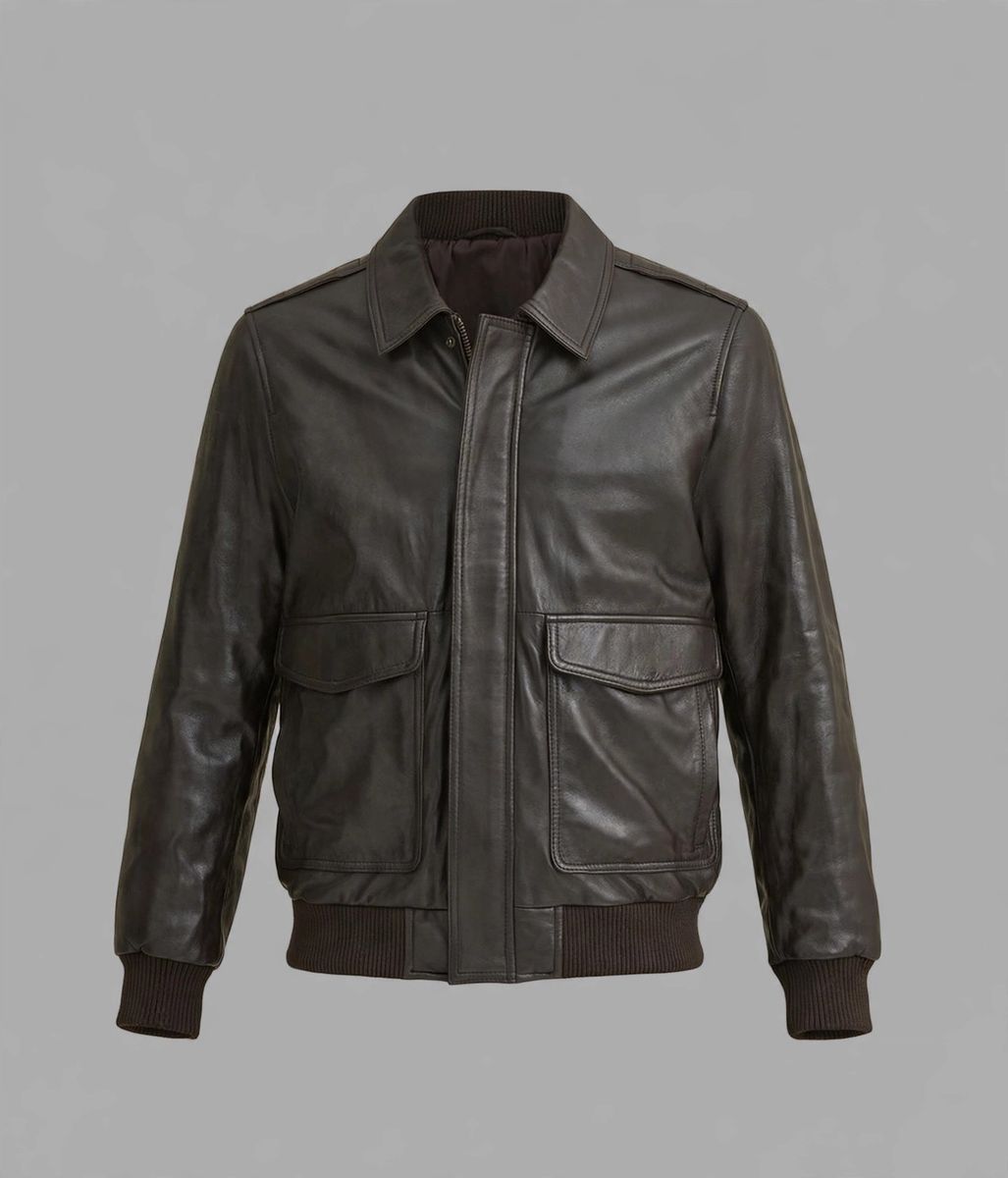
Bomber jackets
Bombers are the most forgiving style. The ribbed hem does the shaping, so the body can carry a little more room — useful if you layer jumpers underneath. Judge a bomber by the shoulders and the hem: the ribbing should sit on your hips, not ride up to your waist.
Racer jackets
Racers are cut slim and minimal, so they follow the body closely. The stand collar should meet your jaw without pressing on it, and the sleeves should end right at the wrist bone. Because there is no belt or ribbing to adjust the fit, the chest measurement matters most here.
Trench coats and long jackets
Length is the fit decision with a trench coat: it should fall below the knee or at mid-calf, never awkwardly at the knee itself. The belt should close at your natural waist without the front pulling open, and you need enough room through the body for the knitwear you will actually wear under it.
The four fit tests before you keep it
When your jacket arrives, run these checks in the first ten minutes — while our 7-day exchange window is open:
- The zip test. Zip it fully over the thickest layer you plan to wear. It should close without you holding your breath.
- The hug test. Cross your arms and touch opposite shoulders. A little resistance is normal in new leather; pain or a seam straining is not.
- The sit test. Sit down and lean forward, as if at a desk or on a bike. The hem should not dig in, and the back should not pull hard across the shoulders.
- The reach test. Reach both arms forward and up. Sleeves will ride up slightly — that is normal — but the jacket body should stay roughly in place.
When to size up — and when not to
Size up if you are between sizes and wear thick layers, if you have broad shoulders relative to your chest, or if the style is a slim racer or scuba cut. Do not size up "for growing room" in a close-fit style: leather relaxes around the body by roughly half a size over the first weeks, but the shoulder width and sleeve length never change. A jacket that swims on you on day one will still swim on you in year five.
Women buying a cropped or oversized style should judge by the shoulder and bust rather than the waist — oversized cuts are designed with room through the body, so your usual size is usually right. For a full walkthrough of women's cuts, see our guide to finding your perfect fit.
The mistakes almost everyone makes
- Judging by the mirror alone. A jacket can look perfect standing still and fail the moment you sit, reach or drive. Always run the movement tests above.
- Buying for the body you plan to have. Leather does not do "aspirational sizing". Buy for your measurements today; a jacket that fits now will still fit if you change, within reason, because of that half-size of natural relax.
- Ignoring sleeve length. Sleeves should end at the wrist bone. Unlike the body, sleeves do not relax shorter — too-long sleeves are a tailor's job, and on zipped cuffs they often cannot be altered at all.
- Measuring over a thick jumper. Measure over what you will actually wear most often. Measuring over a chunky knit and then wearing the jacket over t-shirts gives you a jacket that is always slightly too big.
A note on big, tall and plus sizes
If standard sizing has never quite worked, look for ranges cut specifically for your proportions rather than simply scaled up — a big-and-tall bomber like the Chris Big and Tall Bomber adds length where you need it instead of just width. Our plus-size fit guide covers what to look for in detail.
Get the size right and a leather jacket stops being a purchase and becomes a fixture — the thing you reach for without thinking. Take ten minutes with a tape measure now, and you will not need the exchange. Though if you do, it is there.