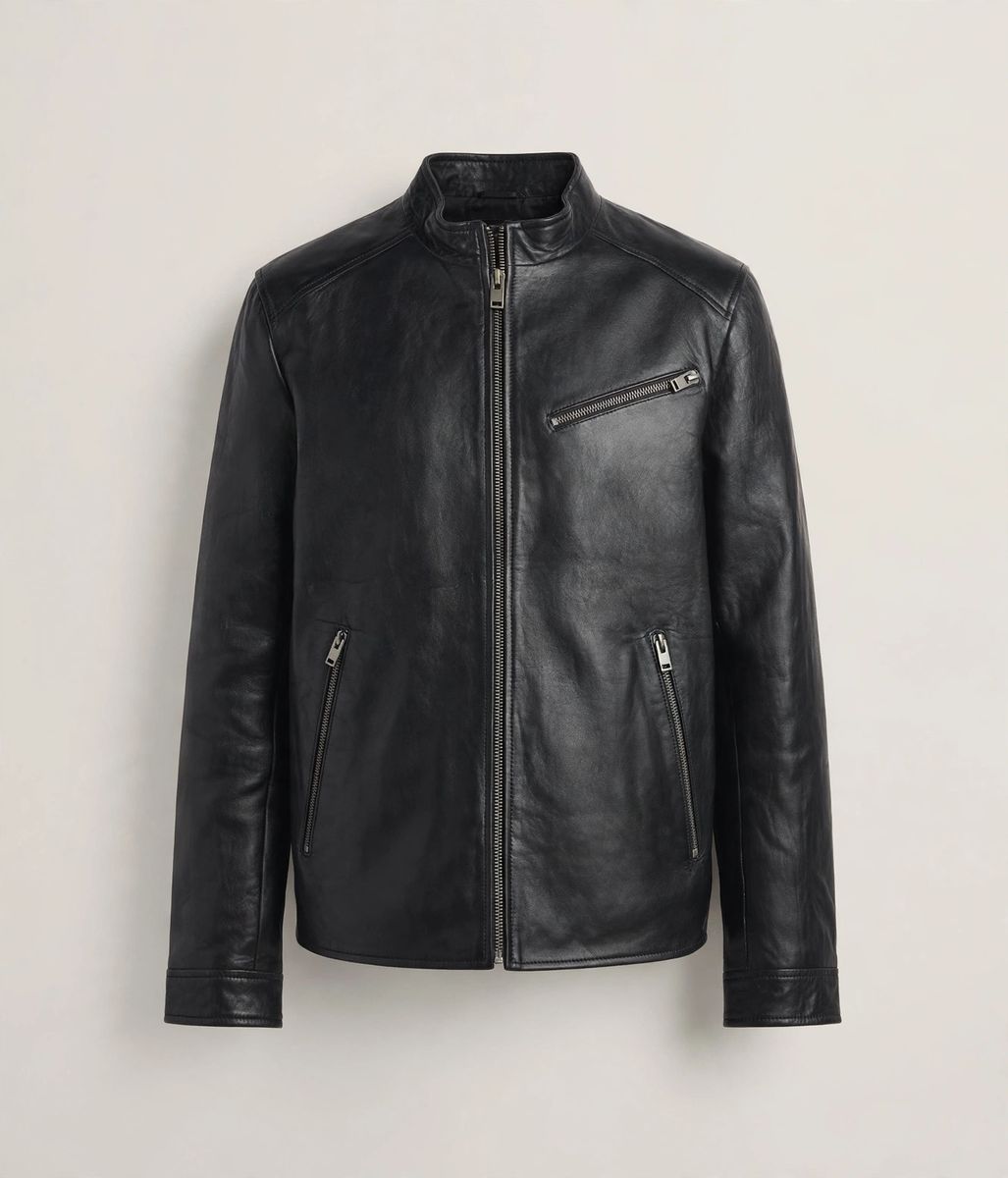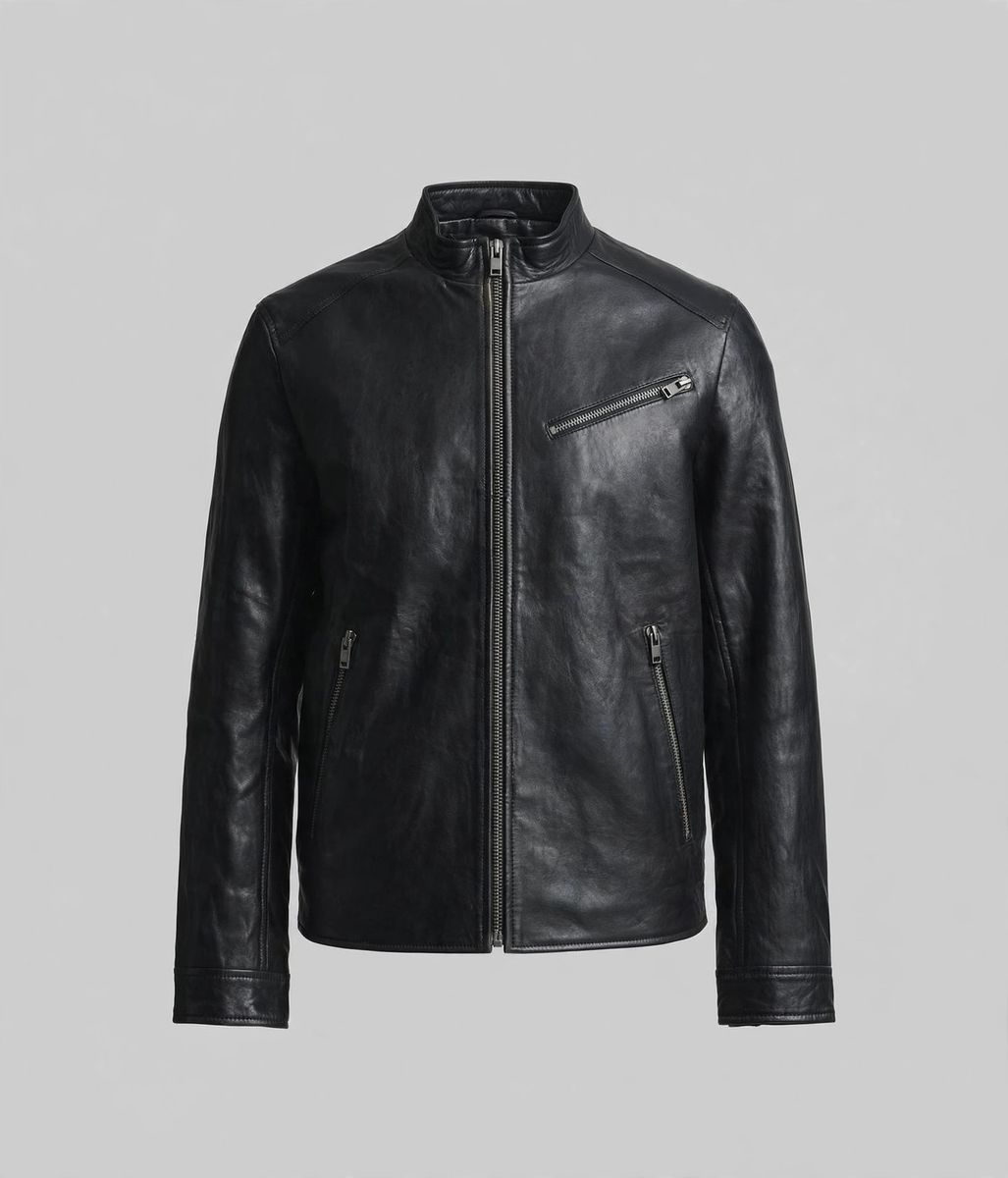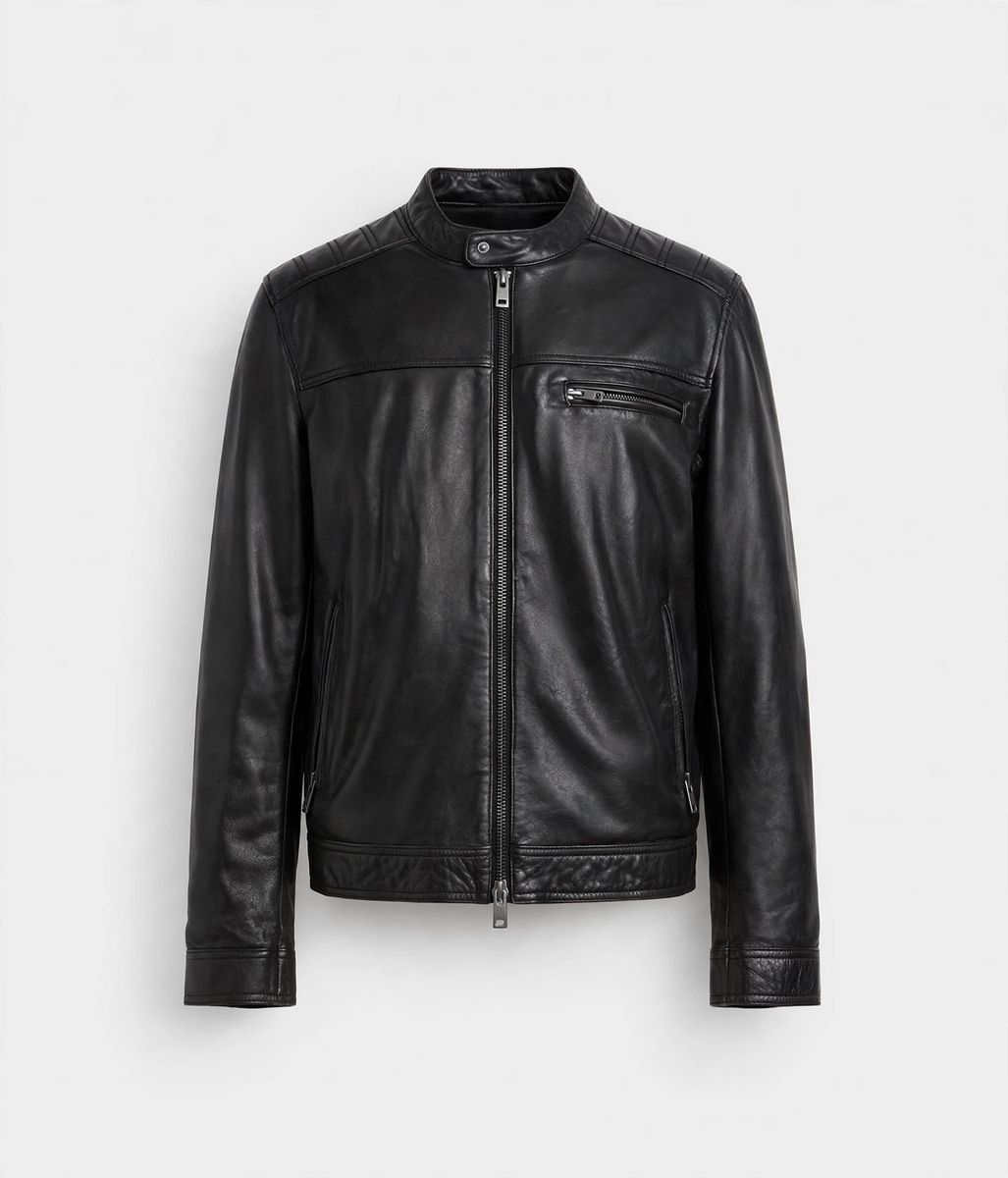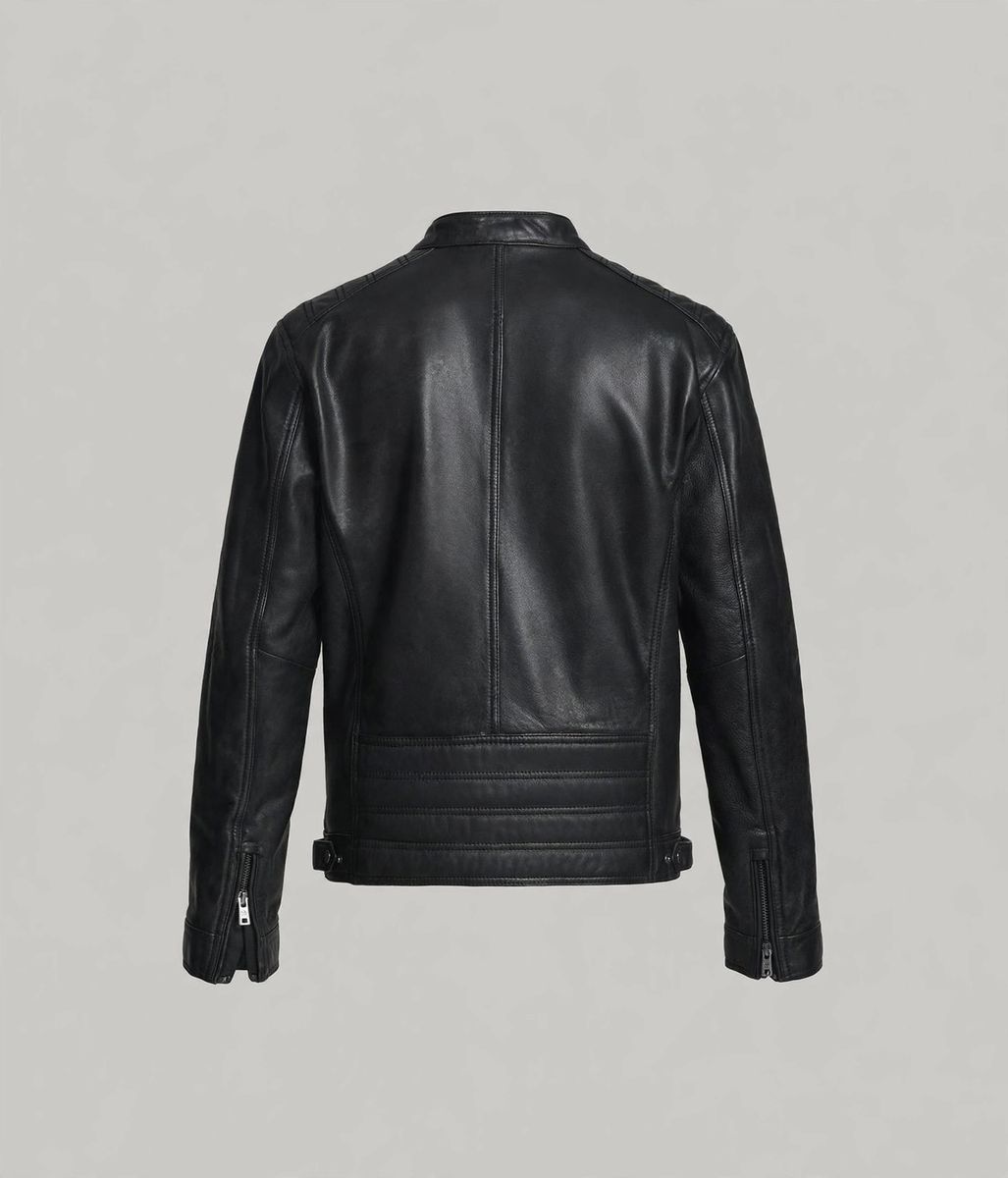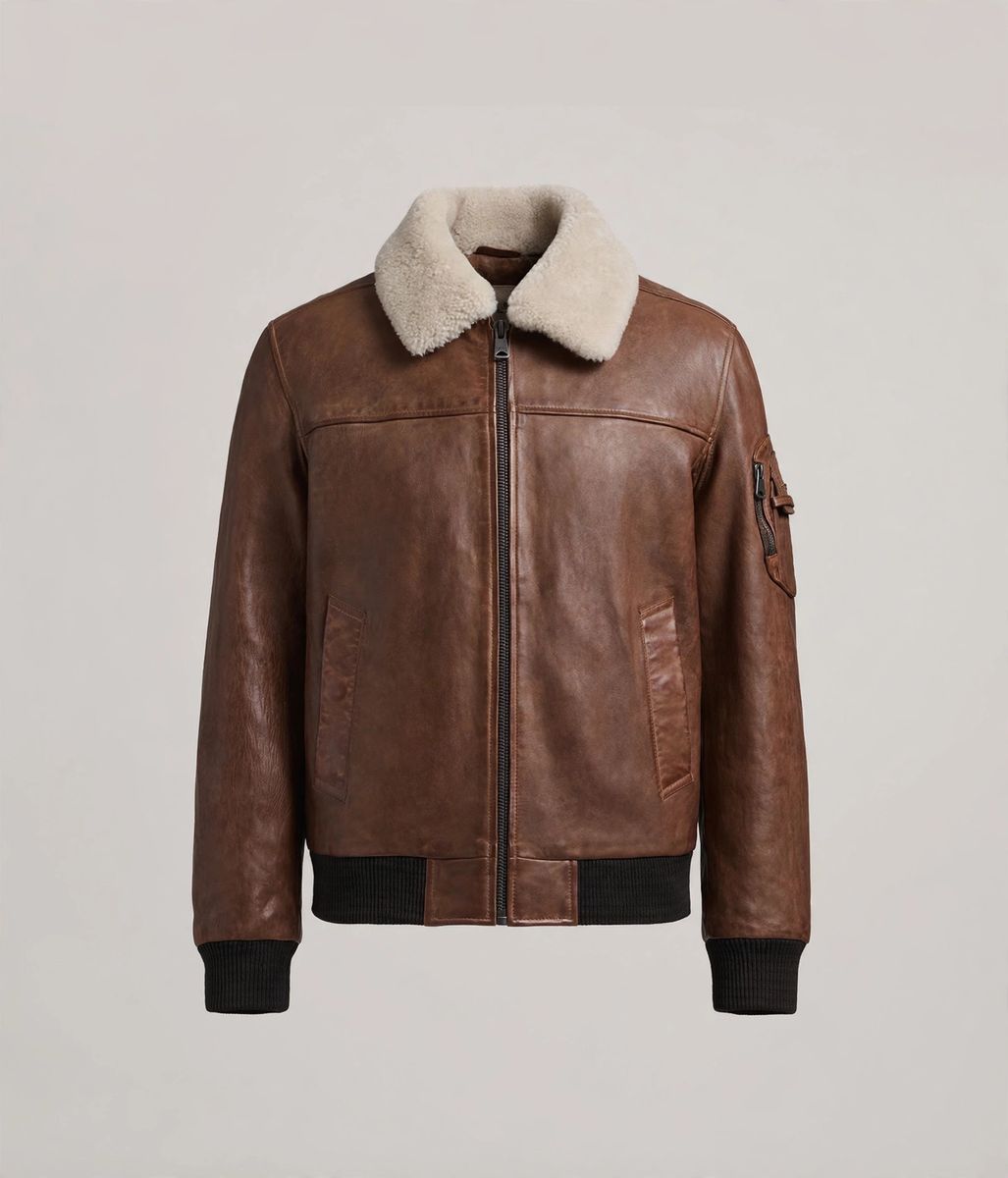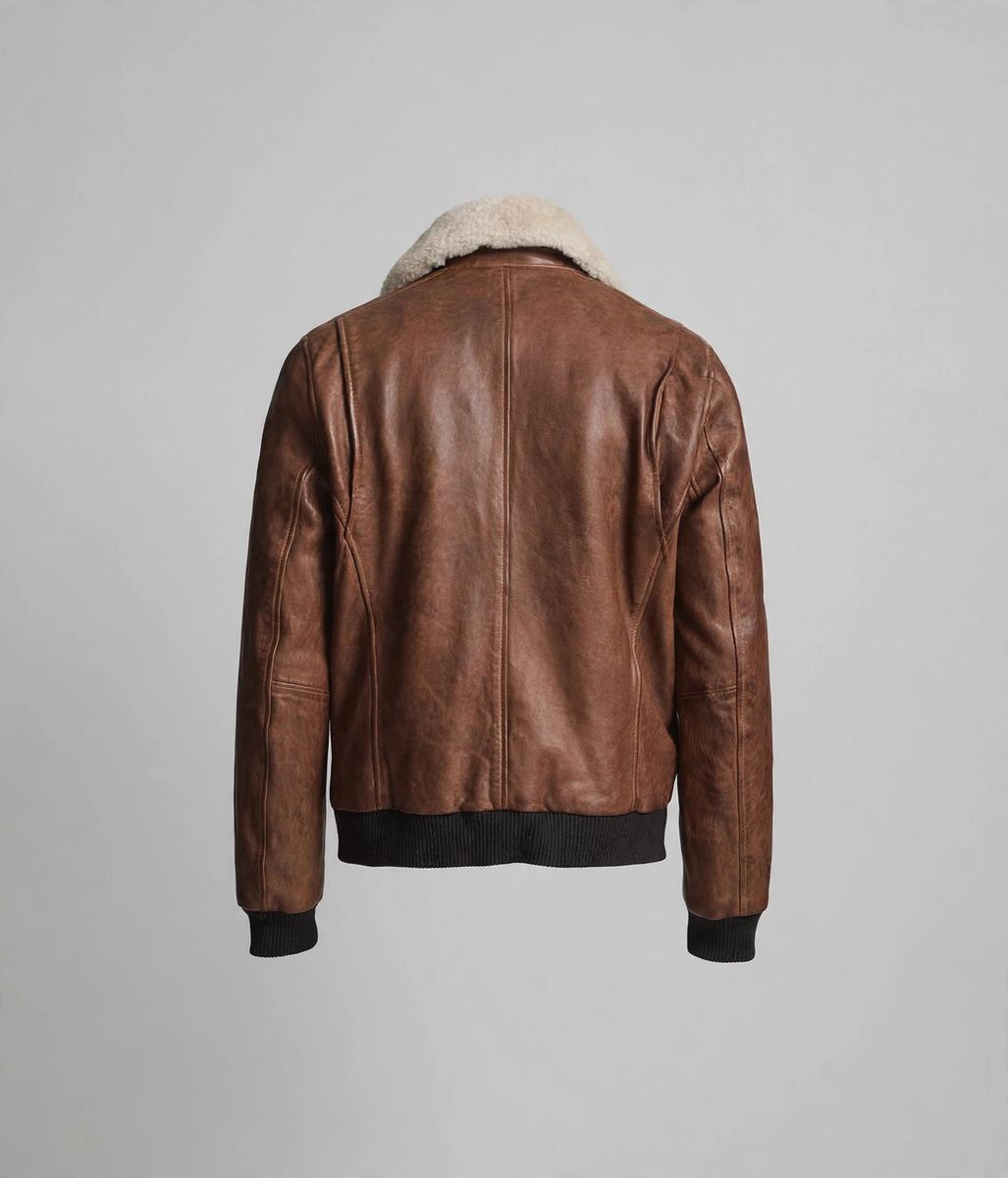
A new leather jacket is supposed to feel a little stiff. The leather has been cut, stitched and finished, but it has not yet learned the shape of a body — your body. Breaking in is simply the process of teaching it: creases form where you bend, the shoulders settle, the front moulds to your chest, and within a few weeks the jacket stops feeling like a product and starts feeling like yours. Done properly, it needs nothing but wear. Done badly — and the internet is full of bad advice — it can damage a jacket permanently. Here is the safe route.
The only method that always works: wear it
Wear the jacket, a lot, in normal life. Wear it around the house in the evenings. Wear it to drive, to walk, to sit at your desk. Bend your elbows, reach for things, sit in it. The combination of body heat, movement and time is what relaxes the fibres, and it does so exactly where your body needs it — something no shortcut can replicate, because no shortcut knows your shape.
Most sheepskin jackets feel noticeably softer after 20–30 hours of wear and fully settled after a season. Thick cowhide takes longer — sometimes a full winter — but rewards the patience with the deepest, most personal fit of any leather. If the jacket fits correctly (see our size guide), stiffness is temporary. If it does not fit — too tight across the shoulders, too short in the sleeve — no amount of breaking in will fix it, and you should exchange it instead. That is what our 7-day exchange is for.
Gentle helpers that are actually safe
- Condition lightly. A small amount of leather conditioner on stiff areas (elbows, shoulders, front panels) feeds the fibres and makes flexing easier. Small is the operative word — you are assisting the process, not soaking the jacket.
- Flex it by hand. While watching television, gently bend and roll the sleeves and body panels. Think of it as pre-wearing the creases.
- Hang it right between wears. A wide, padded hanger keeps the shoulders in shape while the leather rests. Never ball a new jacket up to "soften" it — you will create creases where you do not want them, permanently.
The tricks to avoid (please)
- Soaking it in water, or wearing it in the shower. This one refuses to die. Water strips the leather's oils, and as it dries the fibres lock unevenly — the jacket can end up stiffer, shrunken in patches, and water-marked. Any softness gained is the softness of damaged leather.
- Rubbing alcohol, solvents or "softening" hacks. These attack the finish and the dyes. The jacket may feel softer because you have partially dissolved its surface. That is not breaking in; that is erosion.
- Heat — radiators, hairdryers, tumble dryers. Heat dries leather from the inside out and is the fastest route to cracks. Nothing about breaking in should involve heat beyond your own body.
- Weights, stretching devices, or lending it to a bigger friend. Leather stretches where it is forced, permanently, and rarely where you want. A stretched shoulder never comes back.
- Excessive conditioner or oils. Drowning leather in oil makes it limp, dark and greasy, and can rot stitching over time. If a little is good, a lot is worse.
Style by style: what to expect
Bombers settle fastest — the ribbed hem and cuffs do the shaping, so the body just needs to soften, usually within the first couple of weeks. Racers start the firmest because they are cut close with minimal panels; give them a month of regular wear before judging the fit. Bikers crease first at the elbows and across the back, and the lapels take a set — decide early whether you wear them snapped or open, because the leather will learn that shape. Suede barely needs breaking in at all; it arrives soft and only asks for protector spray before its first outing (see the suede care guide). Shearling starts bulky and slims as the fleece compresses where your body presses it — this is normal and desirable; the jacket is quite literally moulding its insulation to you.
What "broken in" should look like
You will know it is working when: the front zip runs smoothly without the jacket pulling; creases appear at the elbows and across the back shoulders; the collar sits the way you like it without being arranged; and the jacket holds a hint of your shape when it is on the hanger. The surface develops a gentle sheen where it is handled most — that is the beginning of patina, and it is the visual signature of a jacket that is becoming yours. Our leather care guide covers the conditioning routine that keeps it that way.
One part nobody mentions: the hardware breaks in too. A new zip may feel notchy for the first dozen uses — run it up and down a few times (empty, gently) and it will smooth out; a tiny rub of graphite from a pencil on the teeth helps a stubborn one. Snaps and buttons loosen slightly with use, which is normal. What is not normal is a zip that separates from the bottom or teeth that misalign — that is a manufacturing fault, not a breaking-in stage, and it should go straight back under warranty or exchange rather than being wrestled with.
A final reassurance: if your new jacket feels firm for the first fortnight, nothing is wrong. Leather is one of the last materials that asks a little patience from its owner — and pays it back for years.