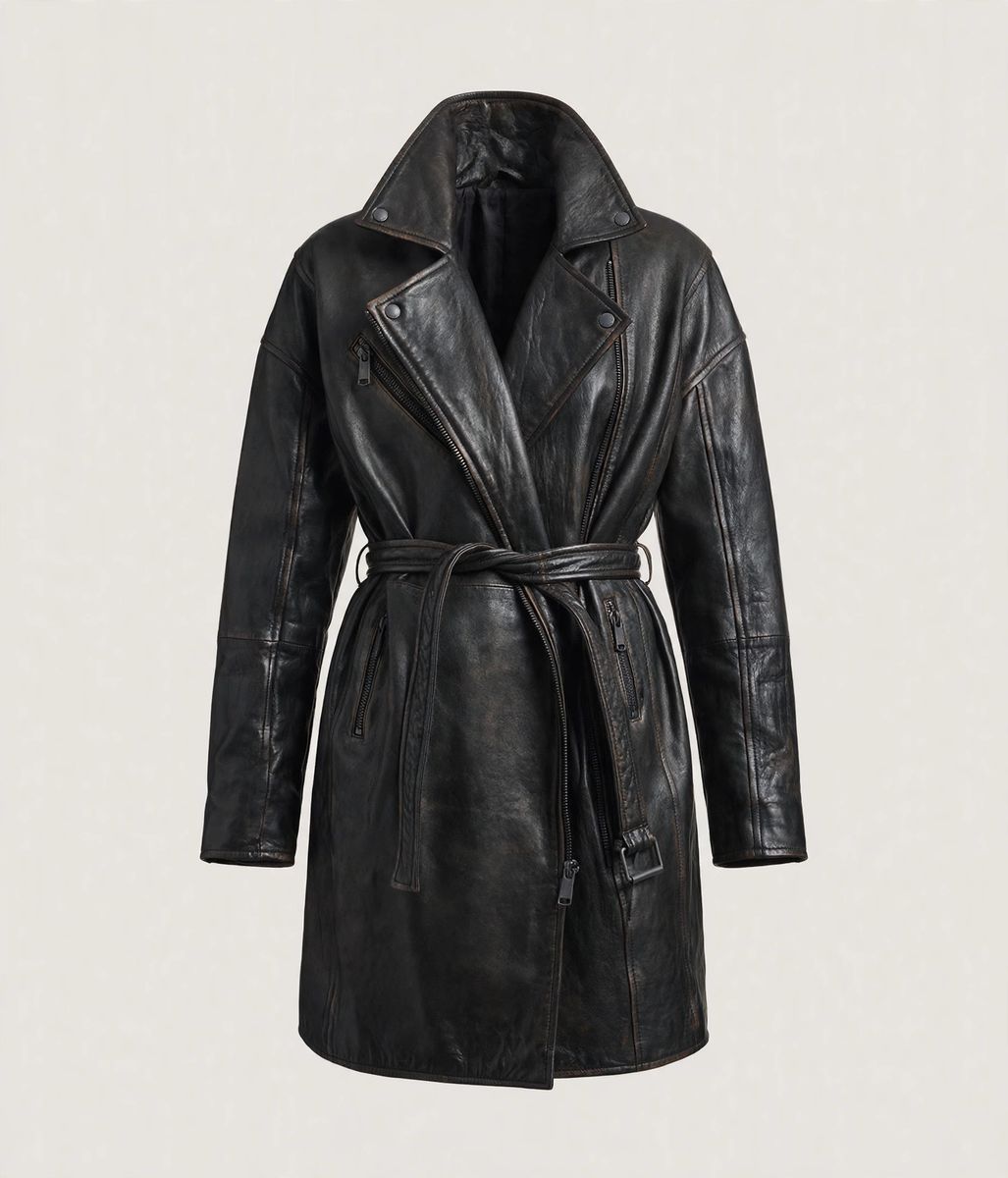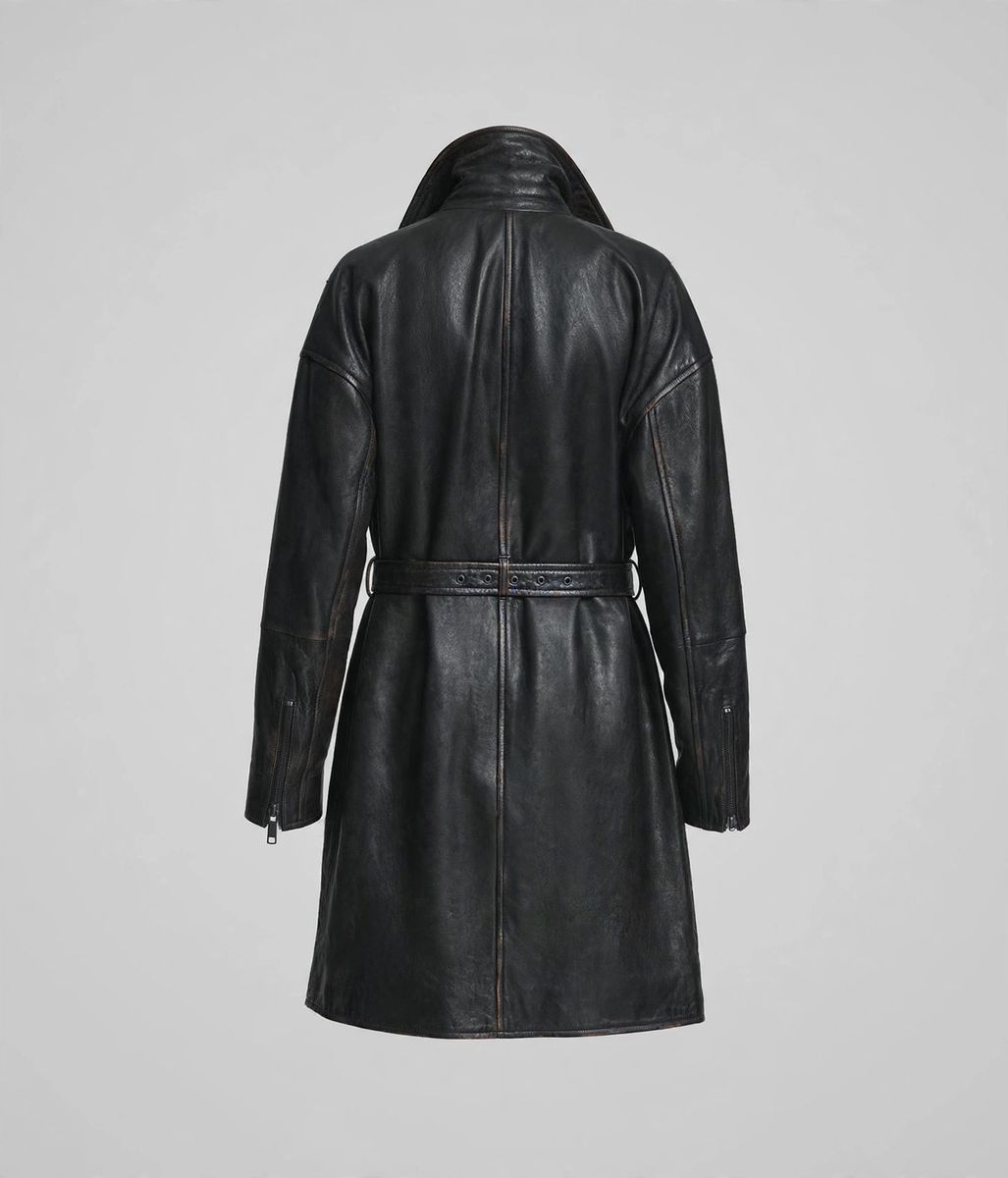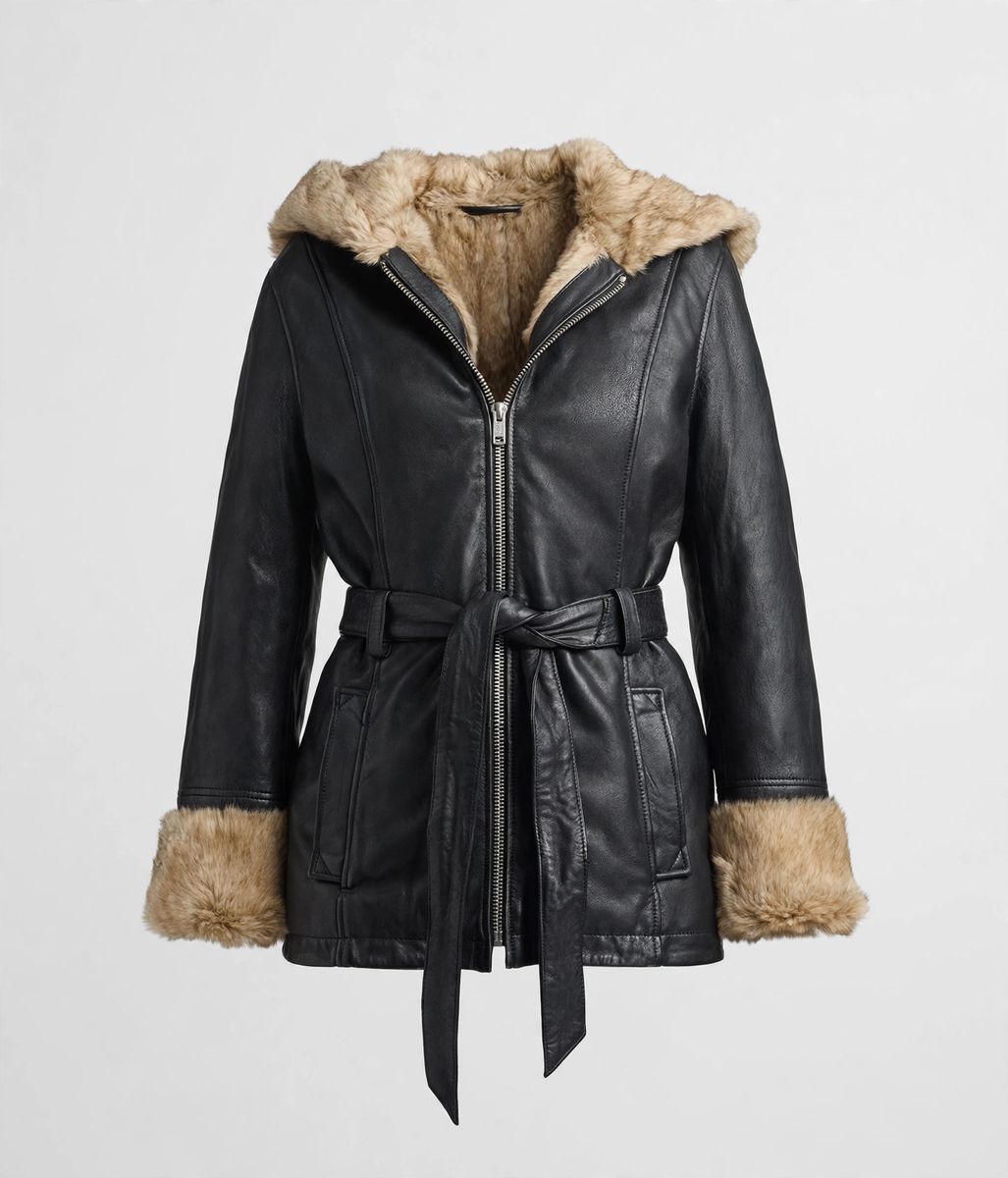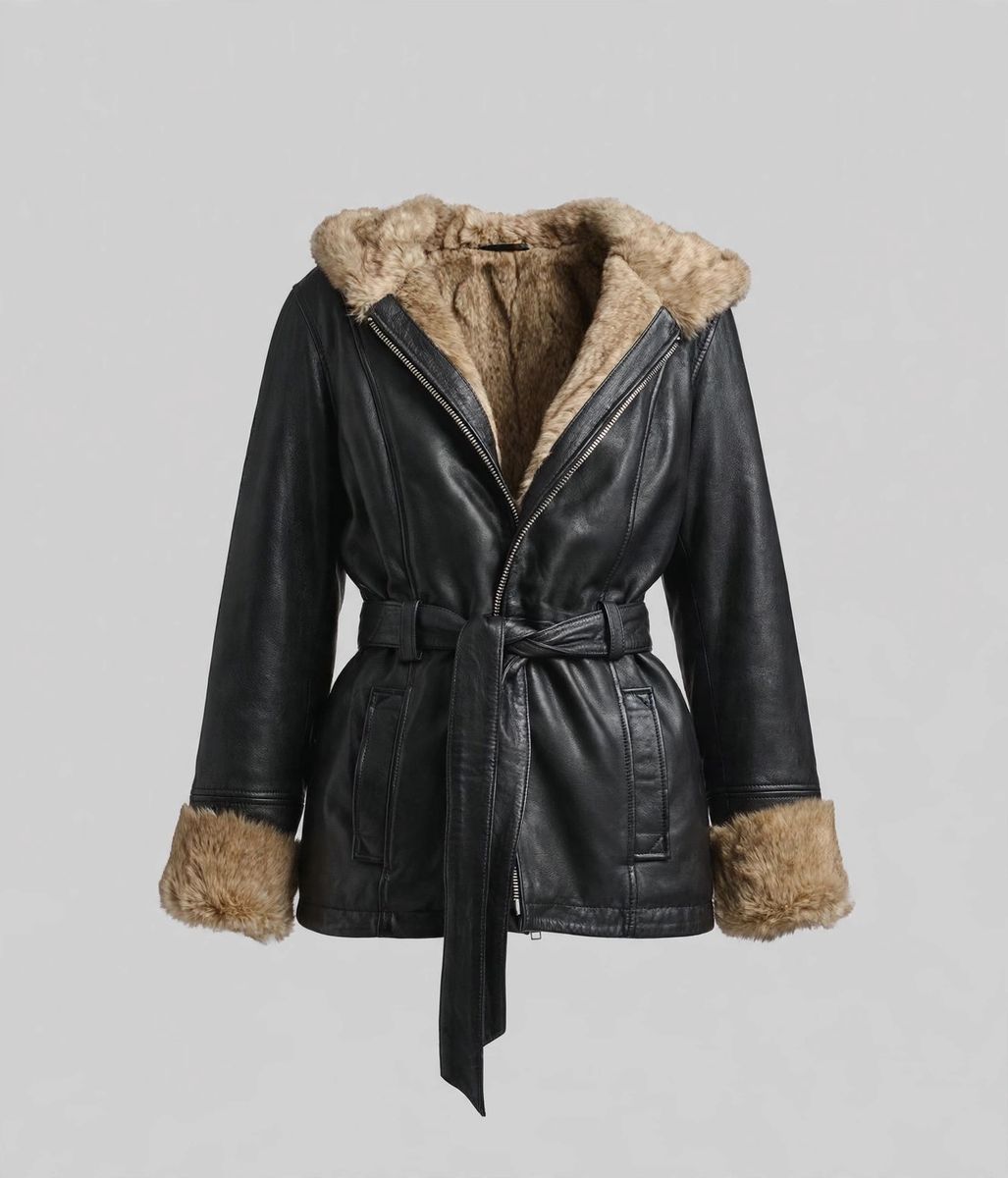
A leather trench coat is the most commanding garment in the family: part coat, part tailoring, it changes an outfit's temperature the moment it goes on. It is also the easiest to get wrong — too long, wrongly belted, or worn over the wrong proportions, it can swamp the wearer. Get the few rules right, though, and nothing else in the wardrobe delivers this much presence for this little effort.
Length: the first decision
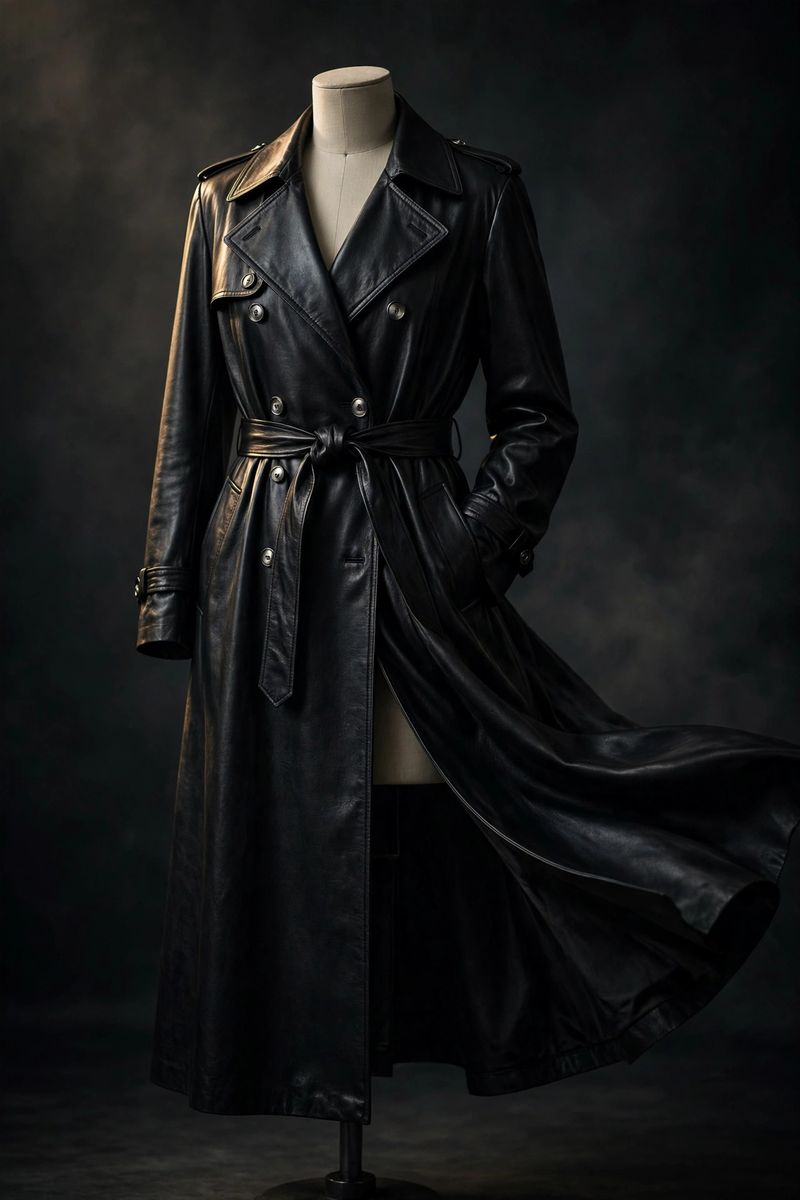
A leather trench should end below the knee or at mid-calf. That is the elegant zone, and it is not negotiable in the way other lengths are: a trench that ends exactly at the knee looks undecided, and one that ends at mid-thigh is not a trench at all, just a long jacket. Against your height: taller frames carry mid-calf easily; petite frames should choose the shorter end of the zone (just below the knee) and a style whose proportions — collar, belt position, pocket placement — are scaled to them, not simply a long coat in a small size. When you walk, the coat should swing from the belt, not drag or tangle around your legs.
The belt: worn three ways
- Buckled properly at the natural waist — the classic, most tailored look, and the one that gives the coat its hourglass or structured line.
- Tied in a soft knot — more relaxed, slightly undone, excellent over knitwear.
- Open, belt tied behind — the coat worn as a frame for the outfit underneath; tie the belt at the back so it does not flap, and let the coat hang in clean lines.
What not to do: leave the belt dangling unbuckled while the coat is closed (visual noise), or belt it so tight the leather pulls into folds across the front — the belt defines the waist, it does not compress it.
What goes underneath
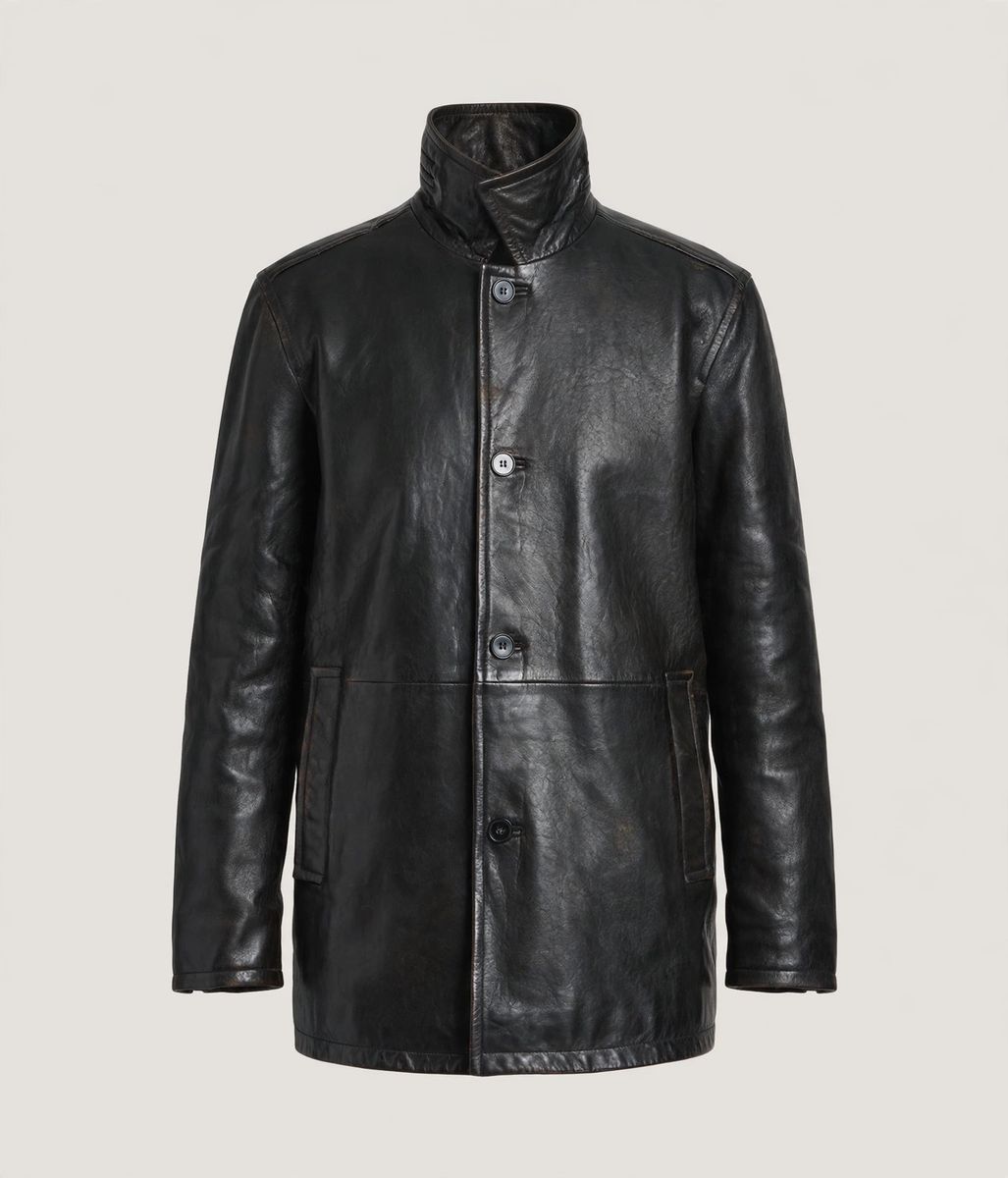
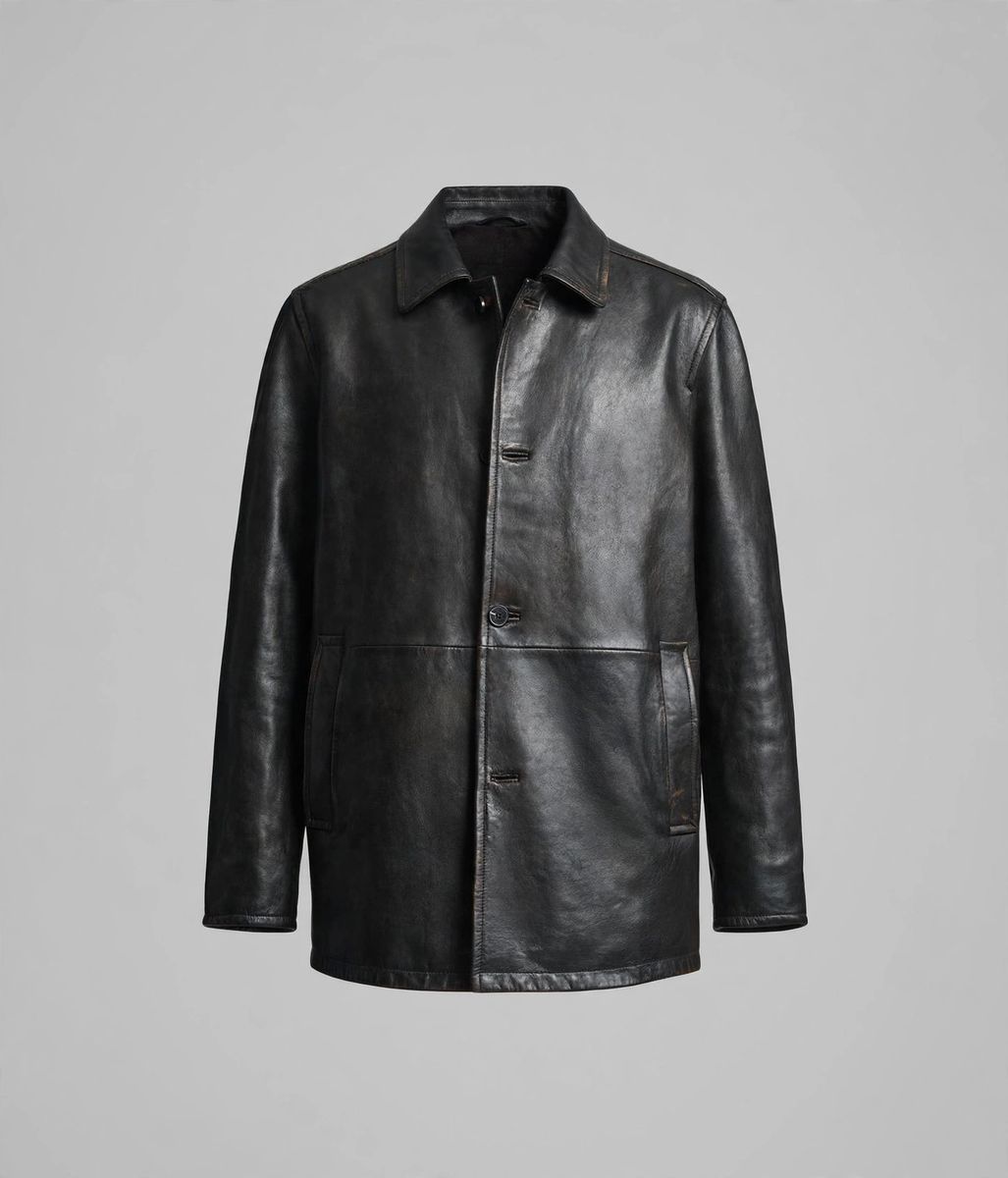
The trench is a long, strong line, so the outfit underneath should be simple and relatively slim. For women: tailored trousers and a fine knit; a slim midi dress; straight jeans and a tucked top. The Liv Washed Moto Trench over a knit dress and boots is the reference outfit. For men: a roll-neck and tailored trousers, or a shirt and dark denim — the Antonio Car Coat shows the men's long-coat line at its cleanest. Avoid volume underneath: chunky oversized knits and wide trousers plus a long coat reads as swamped rather than layered. One exception — a fine scarf, worn inside the collar, adds warmth without bulk.
Footwear and finishing
Boots are the trench's natural partner — ankle boots for a sharper line, knee boots for full drama in winter. Heeled boots lengthen the leg under a long coat, which matters most on petite frames. Clean trainers work with a trench worn open over a casual outfit, in the deliberate high-low way; loafers suit the men's car-coat length. Bags: carry structured, medium-sized bags that sit above the belt line or in the hand; a long crossbody strap cutting across a belted trench fights the line.
Trench, car coat or long jacket — which long coat?
The family has cousins worth distinguishing. The trench is belted, collared and detailed — storm flaps, epaulettes and a defined waist in its classic form — and it is the most tailored of the three. The car coat is simpler and straighter: no belt, a clean front, ending around the knee; it was designed for drivers, which is why it is the easiest long coat to sit, move and live in, and the most understated. The long moto or washed trench (like the Liv) borrows biker details — asymmetric zips, hardware — and wears the most casually. Choose the trench for presence and polish, the car coat for minimalism and daily ease, and the moto-trench when your wardrobe is denim-first. All three obey the same length law: the hem belongs at a natural break point, and the belt or button line belongs at your natural waist.
Colour and occasion
Black leather trenches are evening-capable and city-sharp; saddle, tan and brown are softer, more daytime, and show the leather's character best. A belted style like the Genevieve Belted Trench in black is one of the few garments that works at a formal dinner and a wet Tuesday commute with equal conviction. Trenches are also the most weather-capable leather silhouette: the length protects trousers and dresses, the belt seals the front, and the collar turns up properly. A light protector routine from our rain guide makes it a genuine all-weather coat.
Care for a long coat has one extra rule: length collects the weather. The hem of a trench meets puddle-splash, step edges and car doors, so wipe the lower third down more often than the rest, and condition the hem and the belt — the two hardest-working parts — a little more frequently than the body. Hang it on the widest hanger you own; a long coat's shoulders carry real weight. Our leather care guide covers the full routine.
Fit, finally, follows the same law as every leather garment — shoulders seated, front closing without strain — with one addition: check the coat sitting down. A long coat that cannot be sat in comfortably will not be worn, however magnificent it looks standing. Our size guide covers the measurements. Get length, belt and proportions right, and the trench stops being a statement you make occasionally and becomes simply how you arrive.