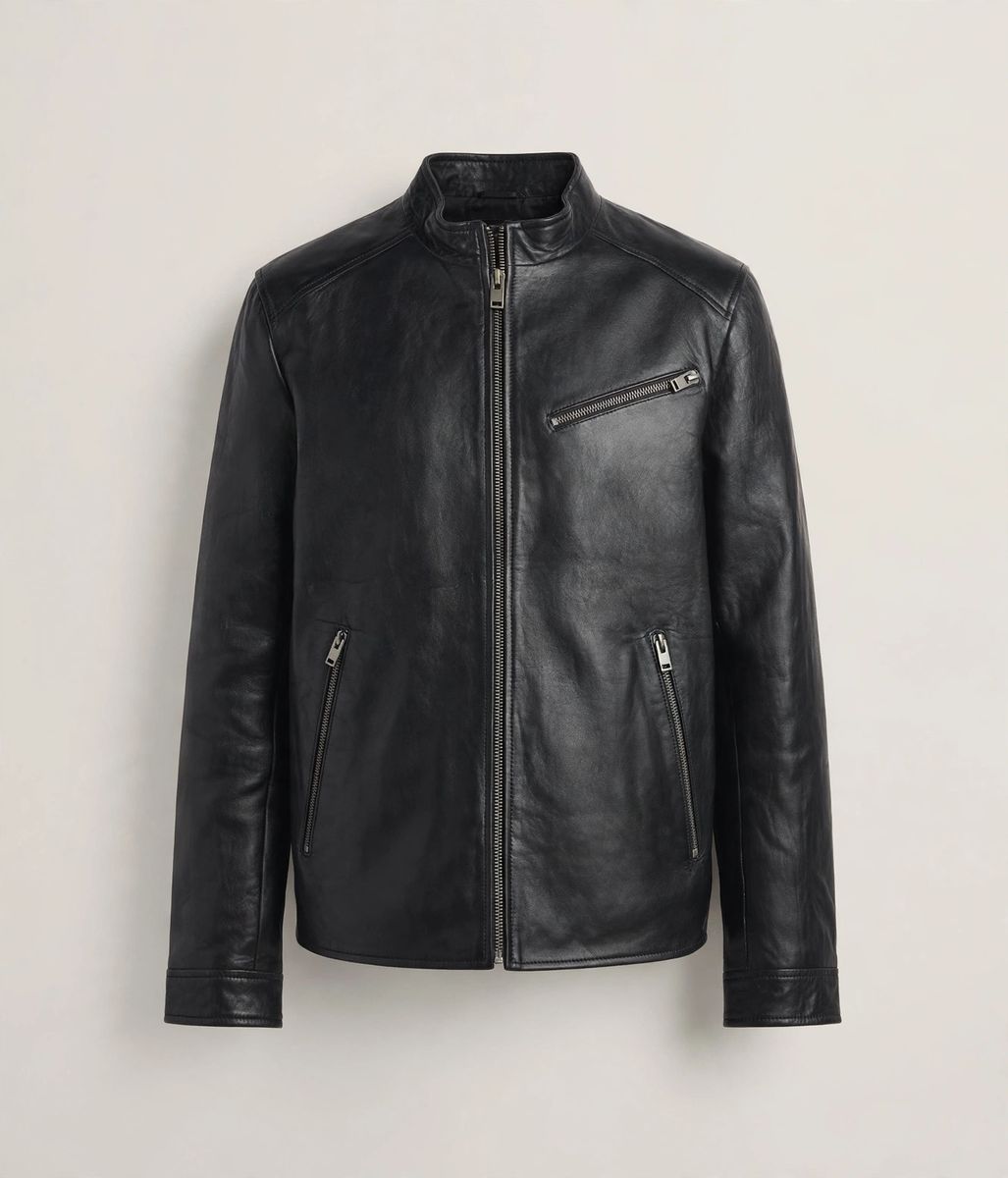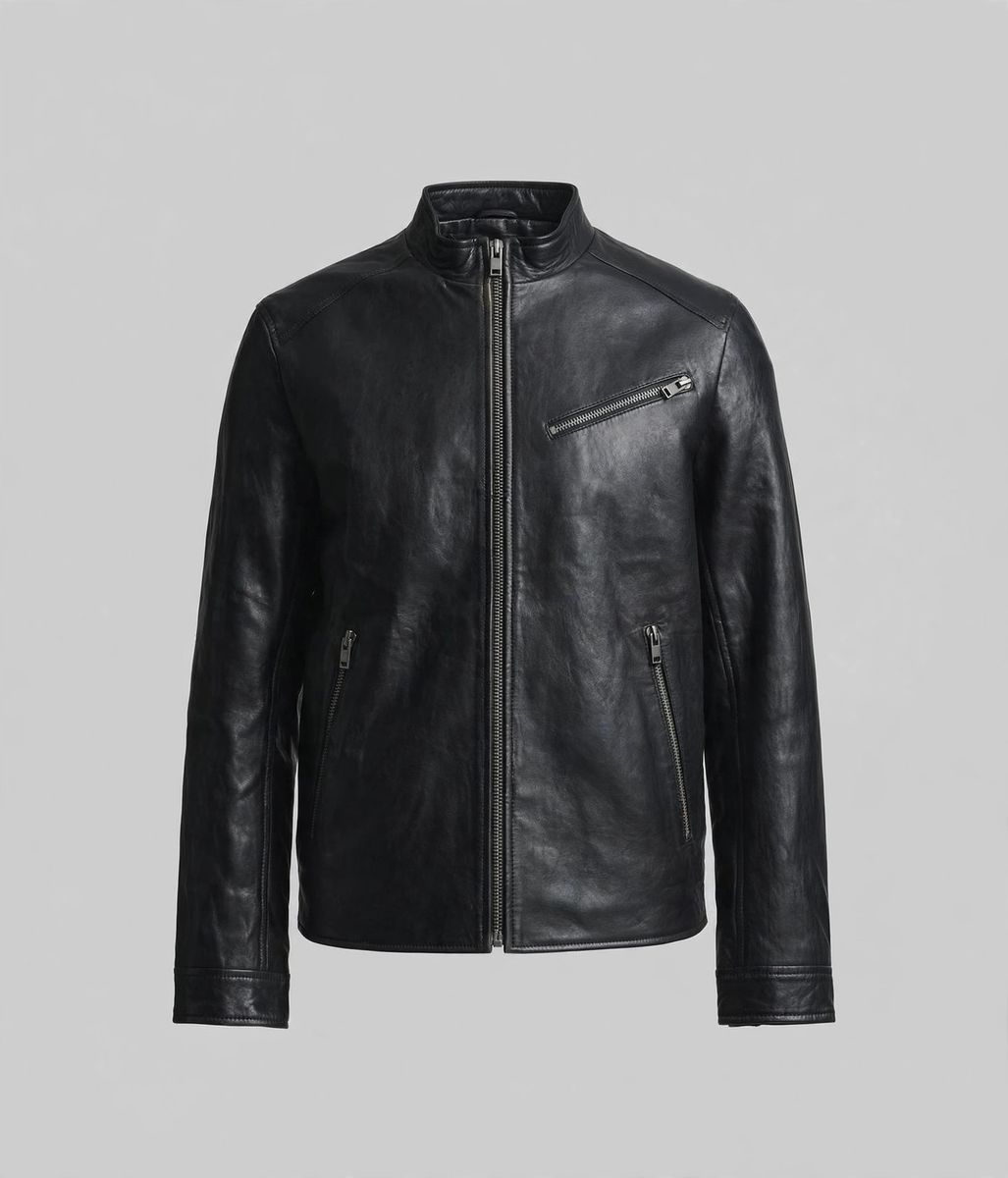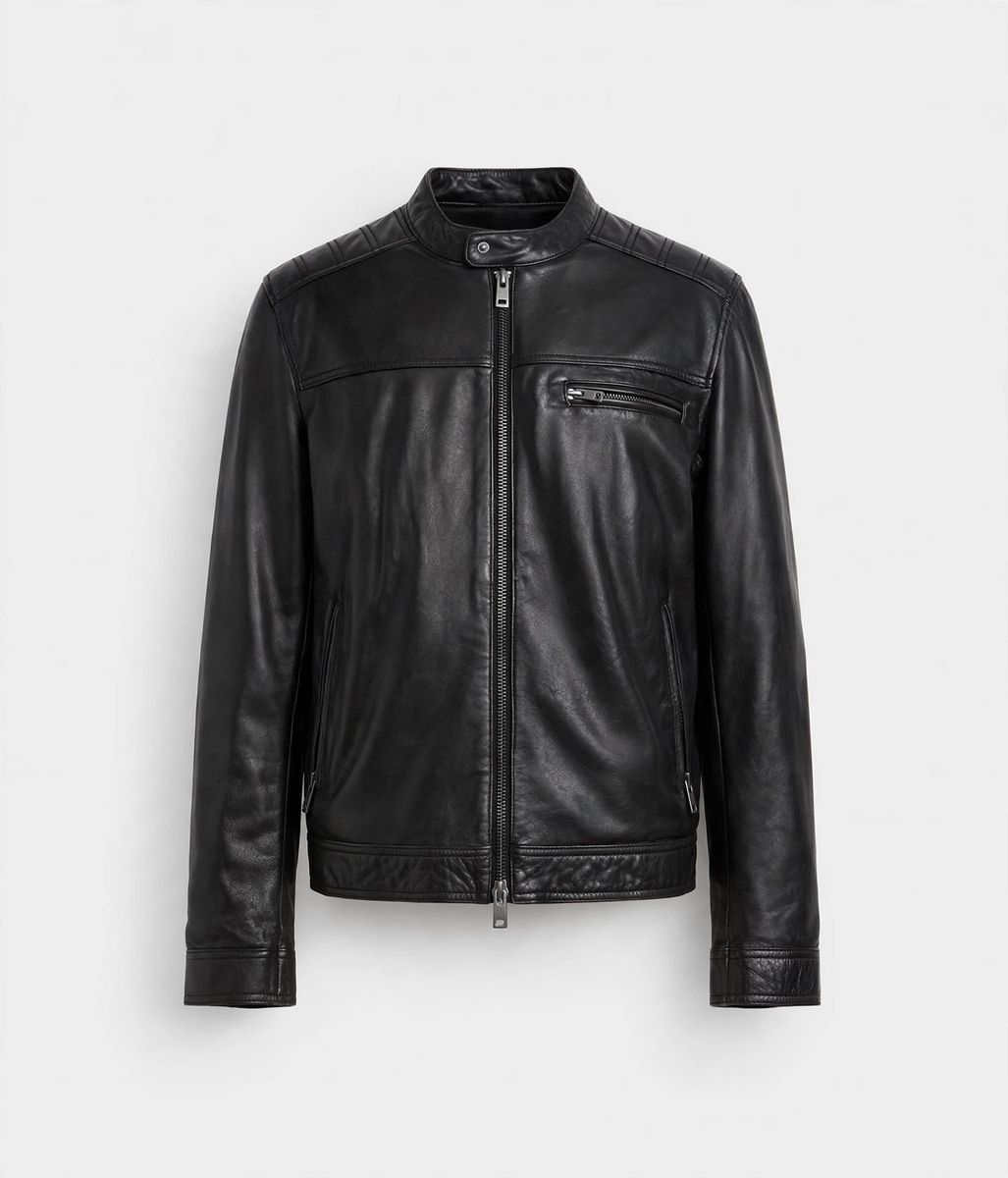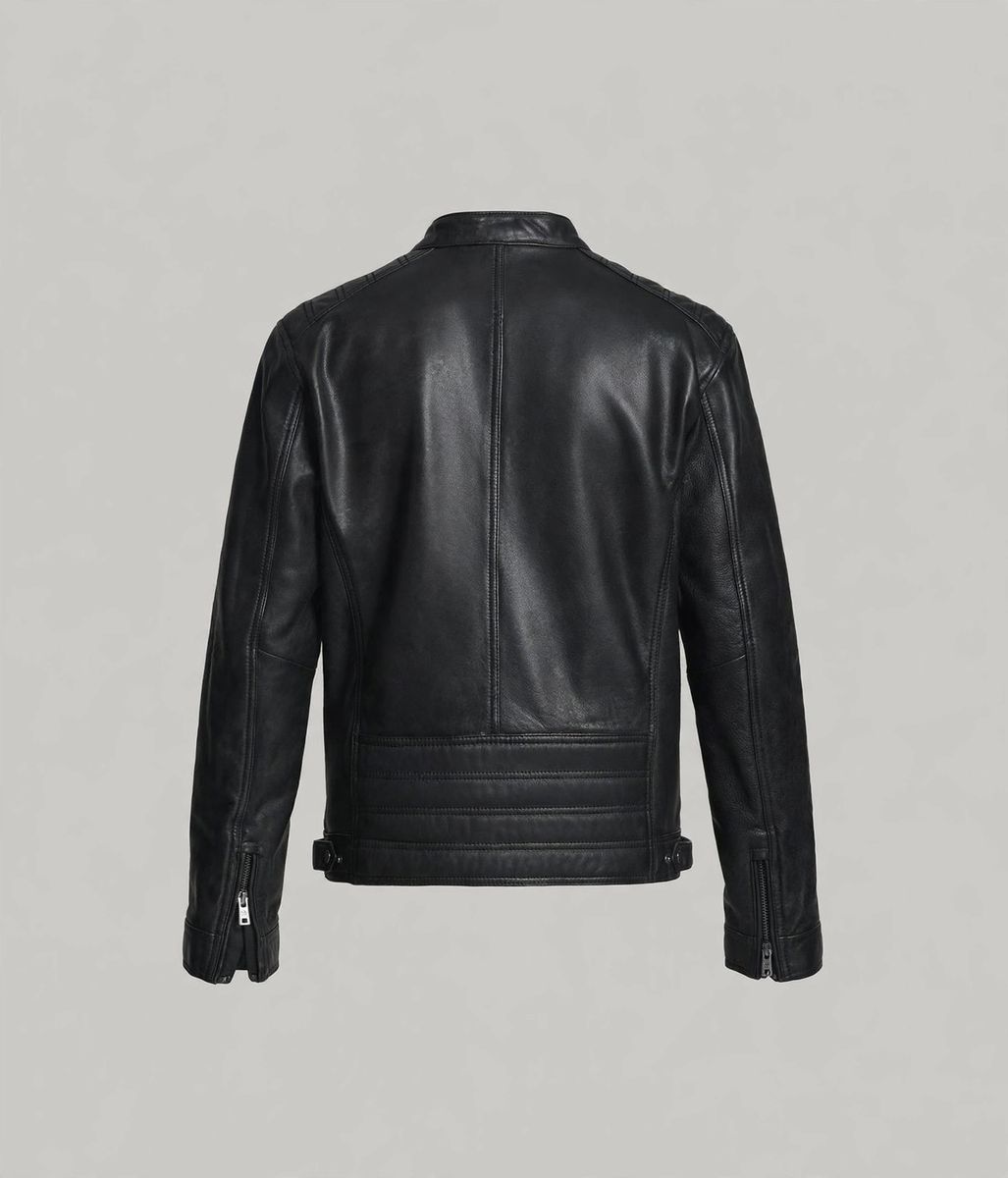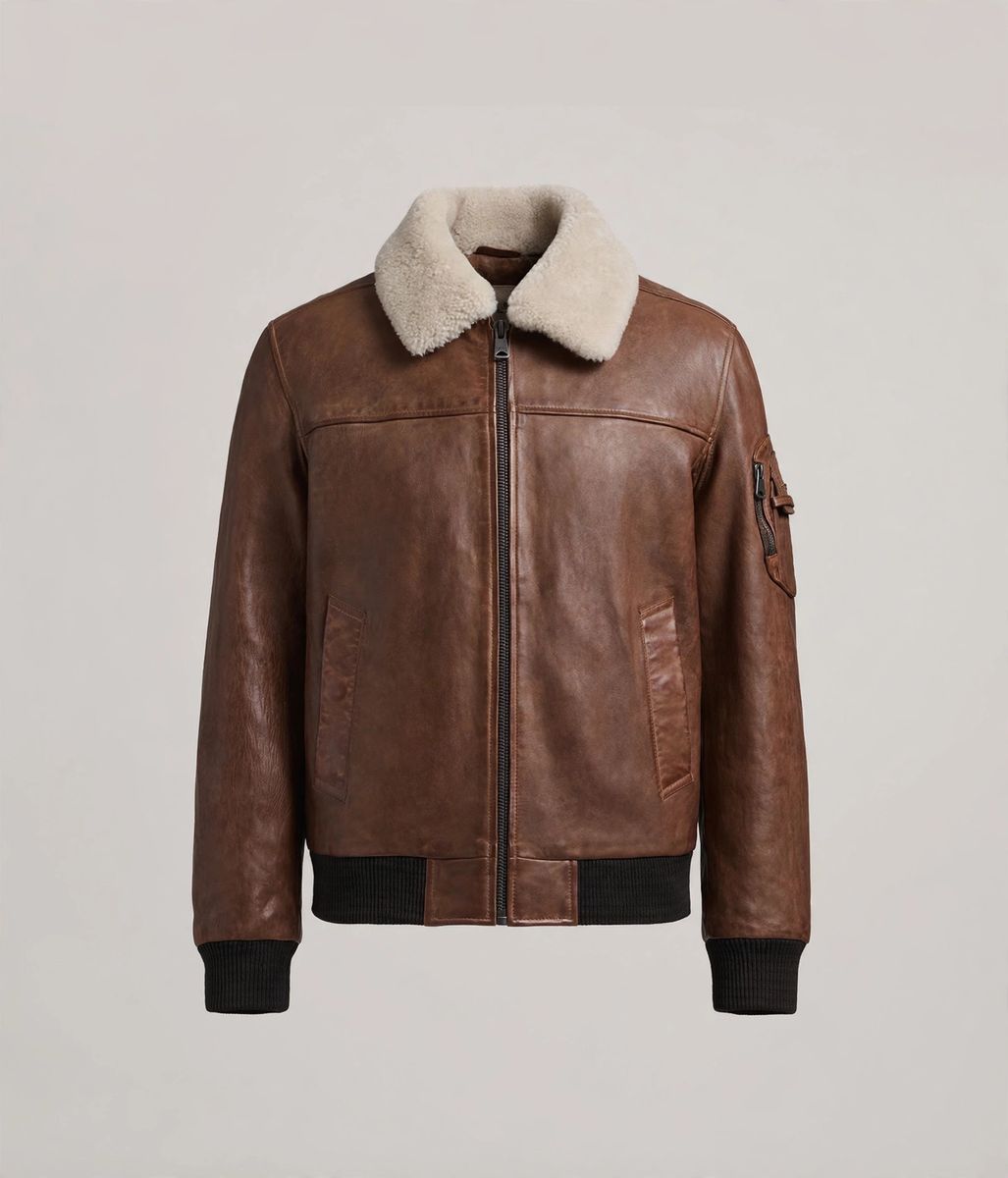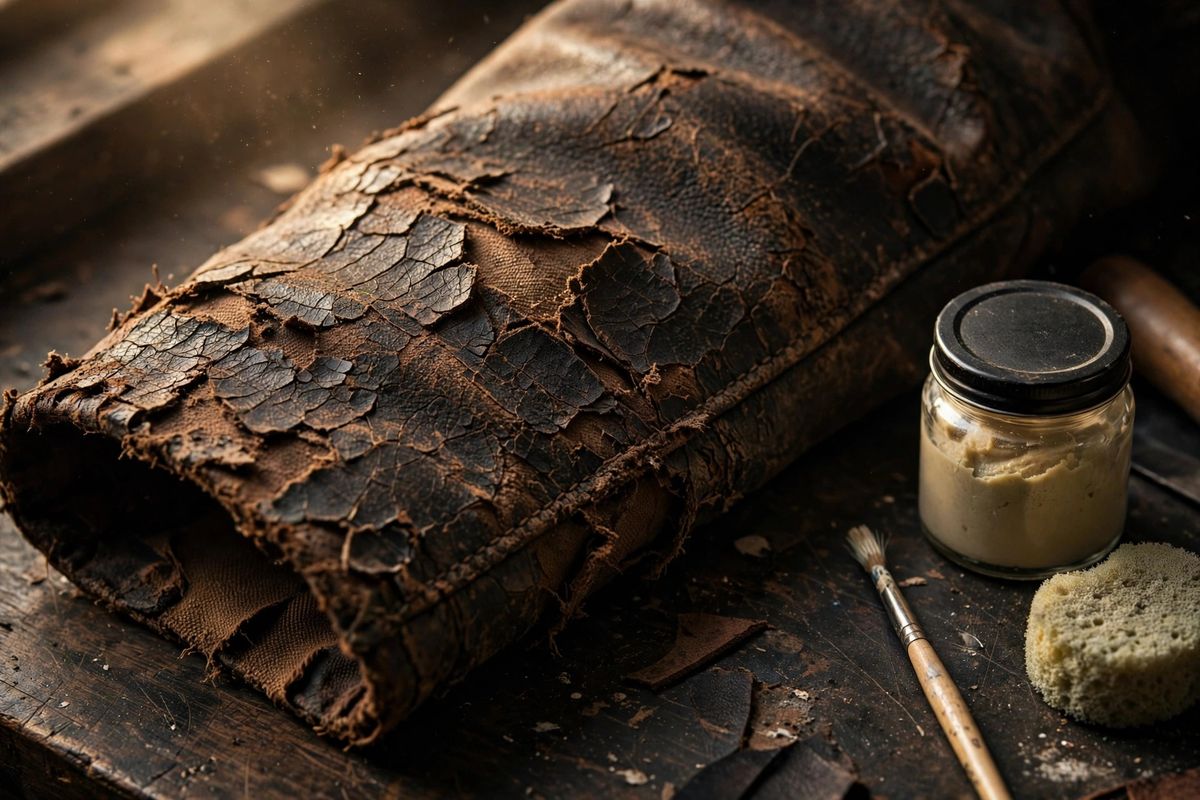
Few sights are sadder than a favourite jacket coming out of the cupboard with cracks across the shoulders or flakes lifting from the collar. The internet will sell you a dozen miracle products for it. The truth is more specific: "cracked" and "peeling" describe several different problems with different causes, some genuinely fixable, some cosmetically improvable, and one — the most common in cheap jackets — that no product on earth can reverse. This guide helps you diagnose which problem you have, and gives you the honest repair for each.
First, diagnose: three different problems
Dry, surface-cracked real leather. The surface shows fine cracks, usually at flex points — elbows, shoulders, across the back — and the leather feels stiff and thirsty. The structure is intact; the leather has simply lost its oils, usually through heat, age or neglect. This is the fixable one.
Peeling finish on real leather. Flakes of colour or coating lift from a leather base that is still sound underneath. Common on heavily finished or corrected leathers, where a thick pigmented coating ages faster than the hide beneath it. Partly fixable, cosmetically.
Peeling "leather" that was never leather. The surface peels in sheets or bubbles, revealing fabric or foam beneath. This is faux leather (PU) reaching the end of its life — the plastic coating hydrolyses and delaminates after some years, whatever you do — or bonded leather, whose glued fibre base cannot hold its finish. This one is not repairable. No filler, balm or dye changes it, and any product claiming otherwise is selling hope. If your jacket is here, the honest options are at the end of this guide.
Not sure which you have? Run the edge and smell tests from our real leather guide: a fibrous edge and a leather smell mean a real hide; a fabric backing means problem three.
Fixing dry, cracked real leather
- Clean first. Wipe the jacket down with a barely damp cloth to clear dust from the cracks; let it dry fully.
- Condition in stages. Apply a quality leather conditioner in thin layers, letting each absorb fully — cracked leather drinks unevenly, and three light feeds over two days restore far more than one soaking. The cracks will soften and become less visible as the fibres rehydrate.
- Rest and reassess. Hang the jacket for a day. Fine surface cracks often fade to near-invisibility once the leather is fed; deeper cracks remain as character lines but stop progressing.
- For deep cracks, a leather filler (a flexible paste, colour-matched) can level the worst areas before conditioning. Work it in thinly with a palette knife, let it cure fully per its instructions, then condition. This is a cosmetic repair — it fills, it does not re-grow leather.
Prevention, afterwards, is the standard care routine: condition two or three times a year and never store near heat. Cracked-from-dryness is a maintenance debt, and it only asks to be paid going forward.
Improving a peeling finish
If the leather beneath is sound, loose flakes can be gently lifted away at the edges (never pick at sound finish), the area cleaned, and a flexible leather recolouring balm or finish applied to blend the patch. Results range from "barely noticeable" on dark colours to "honestly better" on lights. Large areas — a whole collar or shoulder — are a professional re-finishing job; a specialist can strip and re-apply a finish properly, and on a quality jacket that cost is often worth it. Ask for the quote before deciding: re-finishing a beloved sheepskin jacket can cost less than replacing it and keeps the jacket that already fits your life.
When it is faux or bonded: the honest options
Delaminating PU cannot be re-bonded permanently. Temporary cosmetics exist — fabric paint on a peeled patch will buy a few wears for a costume or a farewell tour — but they will crack and lift again. The real options are: retire the jacket; keep it for rough duty where appearance does not matter; or, if the design was the appeal, replace it with the same style in real leather, which will never do this to you. This is, in the end, the core economic argument for real leather: it ages by softening and gaining character, not by shedding its skin.
What a professional can do (and roughly when it is worth it)
A leather specialist's menu is longer than most owners realise: deep cleaning and reconditioning; recolouring faded or uneven panels; re-finishing a peeling coating properly, with the old finish stripped first; crack filling and surface rebuilding on structurally sound hides; zip, lining and hardware replacement (not damage, but the repairs that most often retire otherwise healthy jackets). The economics are simple: on a quality real-leather jacket, professional restoration almost always costs a fraction of replacement and returns a garment already broken in to your shape — a quality no new jacket can offer at any price. On a cheap jacket, the same work can exceed its value, which is itself a diagnosis of the original purchase. Get the quote, compare it honestly with replacement, and decide with numbers rather than sentiment — though a little sentiment, with leather, is entirely forgivable.
Prevention, for the next jacket
Buy real leather and name the animal (our leather types guide helps). Condition occasionally. Store it breathable, cool and dark — the full routine is in our storage guide. Keep it away from radiators and long direct sun. Do those few things and cracks and peeling become things that happen to other people's jackets.