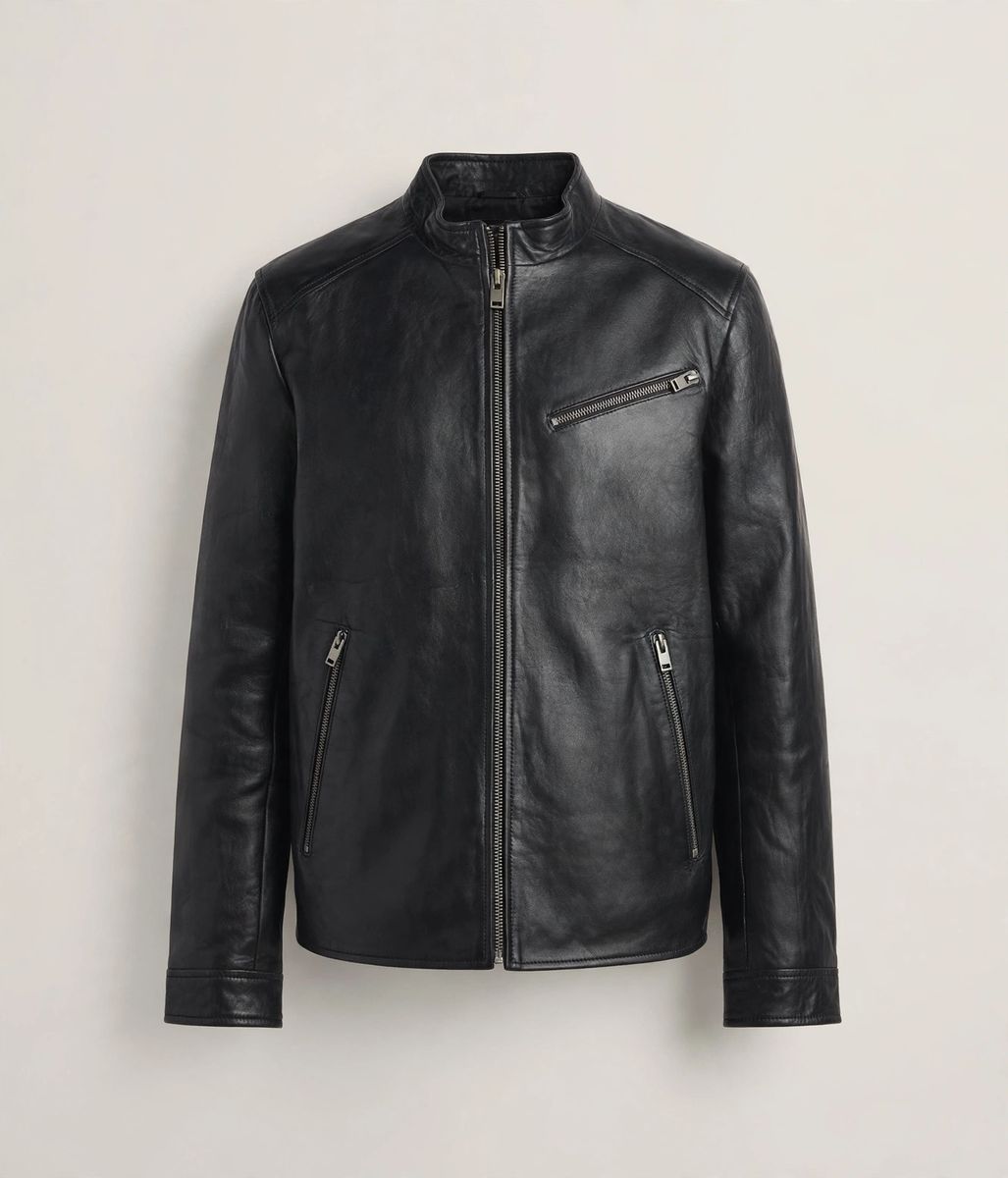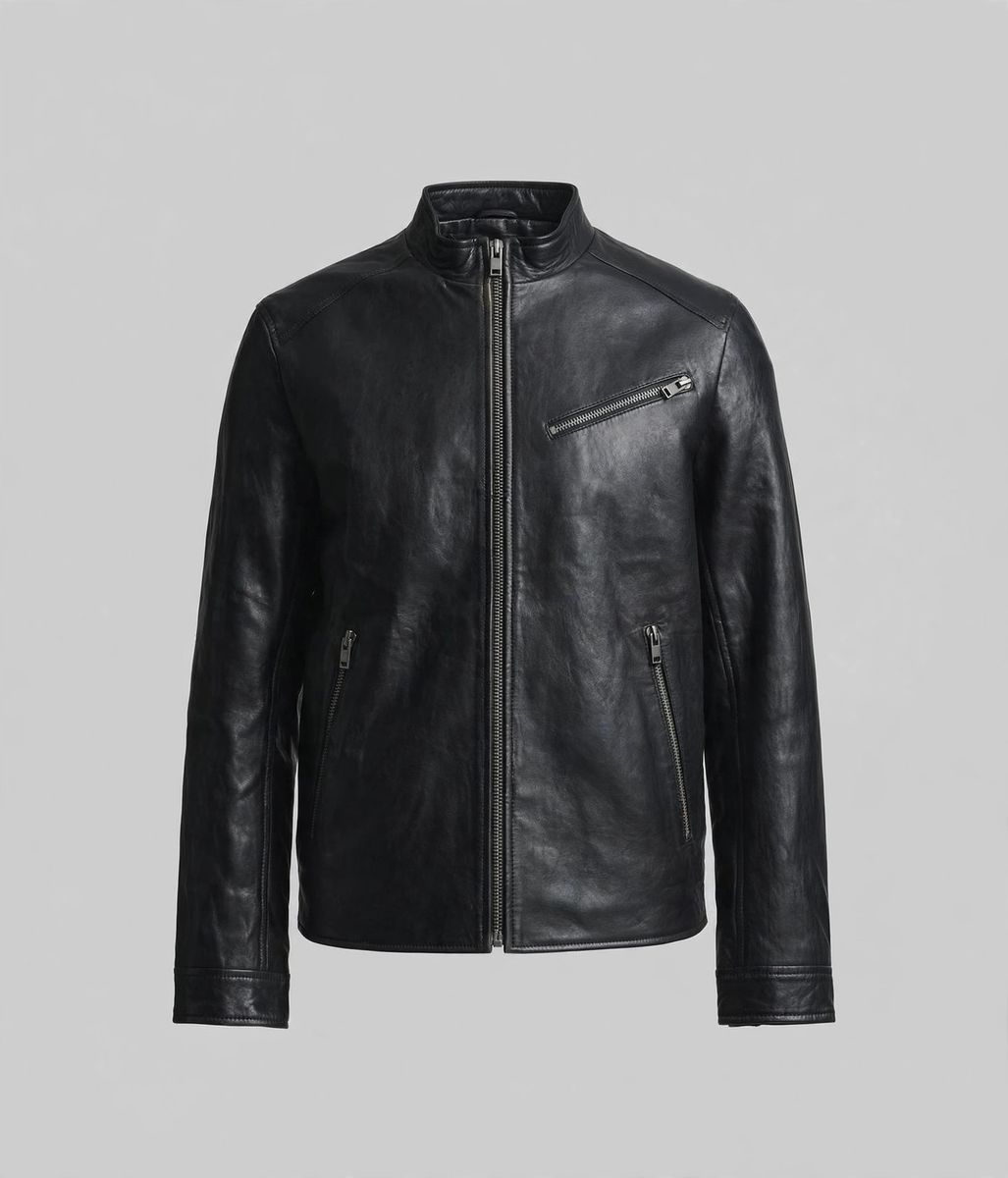
Ask a leather specialist what kills jackets and you will hear the same answer: not wear — storage. A jacket worn daily and wiped down occasionally will outlive a jacket thrown over a hook in a damp cupboard for two summers. Storage damage is quiet and specific: shoulders dented by thin hangers, mildew blooming inside plastic covers, leather dried to cardboard by heat, colour faded by light, creases pressed in so long they become permanent. All of it is preventable with one proper routine, done once, before the jacket goes away.
Step 1: Clean it before you store it
Never store a dirty leather jacket. Dirt, body oils and spills left on leather for months set into stains, and organic residue is what mildew feeds on. Wipe smooth leather down with a barely damp cloth and let it dry fully; brush suede thoroughly with a suede brush (see the suede guide); empty every pocket — forgotten tissues, receipts and coins corrode, stain and distort. If the jacket needs a proper clean, do it now, not in autumn: a specialist clean before storage means it comes out ready to wear.
Step 2: Condition smooth leather (lightly)
A light condition before storage replaces the oils the season took and protects against the drying effect of months in a cupboard. Small amount, soft cloth, buff the excess — the full method is in our care guide. Suede skips this step; shearling gets a gentle fleece brush instead. Do not over-condition "for the long term": excess oil in a closed space can go tacky and attract dust.
Step 3: The hanger is not a detail
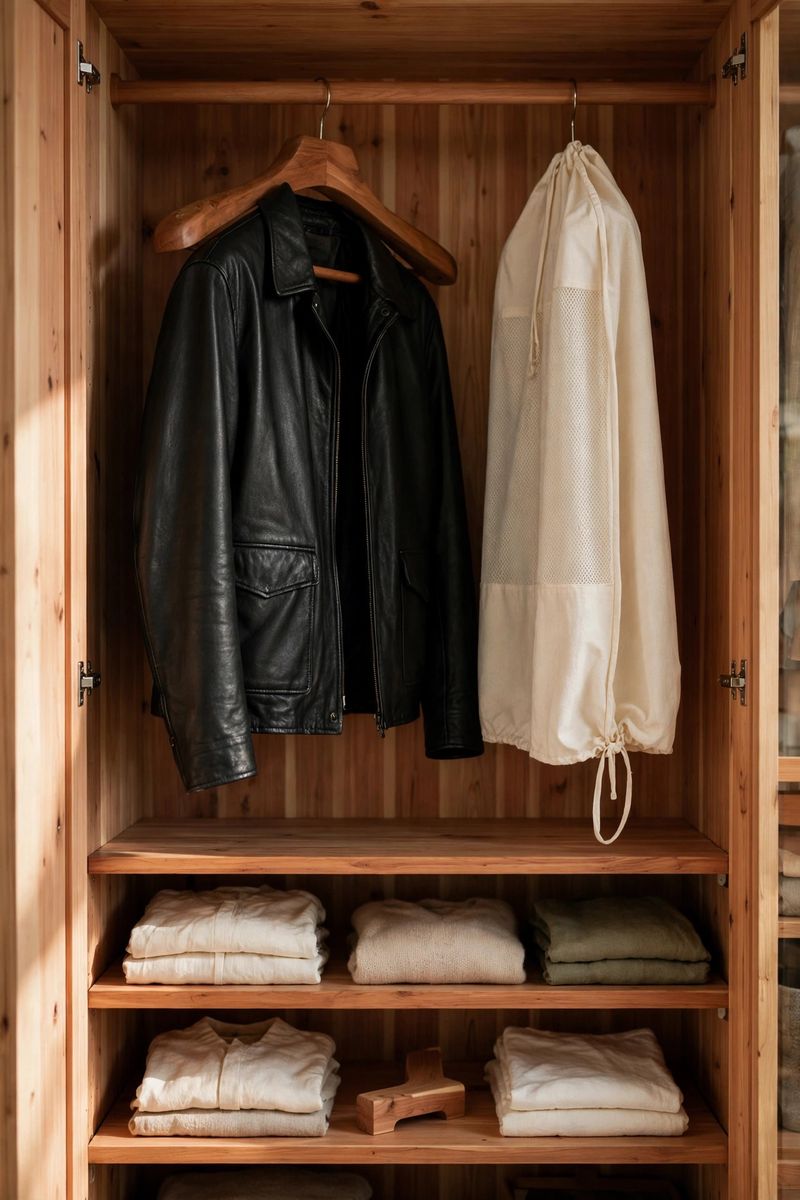
Leather is heavy, and it takes the shape of whatever holds it. A wide, padded or contoured wooden hanger supports the shoulders at their natural angle; a thin wire or plastic hanger concentrates the weight into two points and will dent and stretch the shoulder line over a single summer — damage that does not come back out. Zip or button the jacket closed so it hangs in its intended shape, and fasten the belt loosely if it has one. If you must fold a jacket (for travel, briefly), fold along the seams, pad the folds with tissue or clothing, and hang it again as soon as you can — days folded, not months.
Step 4: The cover — breathable or nothing
A cotton or canvas garment bag is the correct cover: it blocks dust and light while letting moisture escape. Plastic is the enemy. A sealed plastic cover traps the humidity that leather naturally holds and creates a private greenhouse for mildew — the single most common storage disaster, and the hardest to reverse. If a jacket arrives in a plastic cover, retire the cover. No cover at all is better than plastic.
Step 5: The place
Cool, dry, dark and ventilated. In practice: an interior wardrobe away from external walls (which condense moisture), away from radiators and hot-water pipes (heat dries leather out), and out of sunlight (which fades colour, suede fastest of all). Attics fail on heat, basements fail on damp, and the back of a steamed-up bathroom-adjacent cupboard fails on both. If your storage space is borderline damp, a small silica gel pack or a rechargeable dehumidifier in the cupboard is cheap insurance; check the jacket once mid-season if you are storing it somewhere new. That single mid-season check — two minutes, a look and a sniff — catches mildew while it is still a wipe-clean surface problem rather than a specialist bill.
Long-term storage (a year or more)
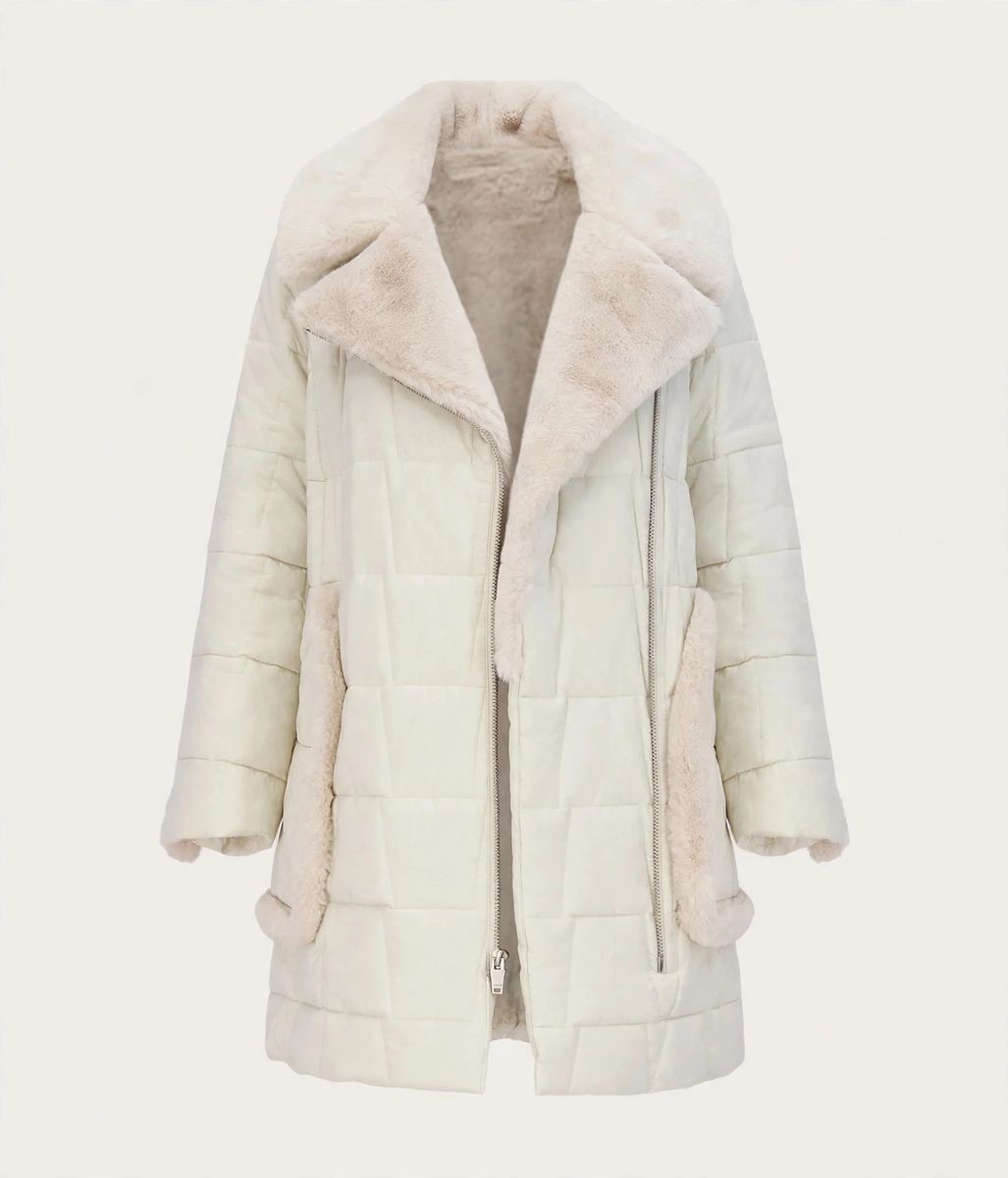
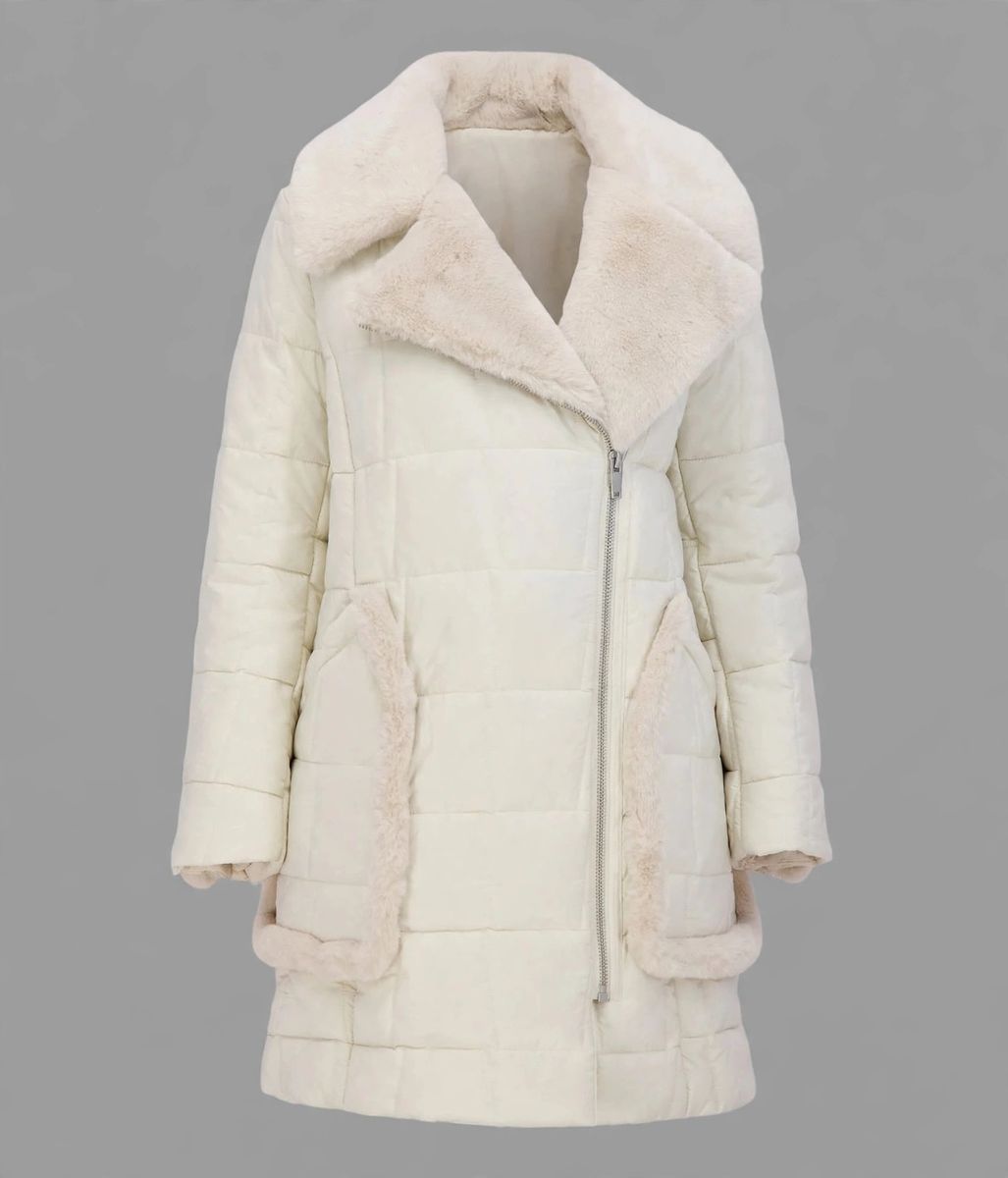
For storage measured in years, add three habits: take the jacket out every six months for a day of airing in shade, re-check for mildew and stiffness; re-condition smooth leather once a year even in storage; and change its fold or hanging position slightly so no single crease becomes permanent. Shearling needs the same airing plus a fleece brush, and extra vigilance about moths — cedar blocks in the cupboard are the traditional, effective answer.
Travelling with a leather jacket
Storage rules change on the road. Wear the jacket on the plane or in the car rather than packing it — it is the bulkiest thing you own and it travels best on you. If it must go in a case, turn it inside out (the lining protects the surface), fold along the seams with tissue or soft clothes in the folds, and place it on top of everything else. On arrival, hang it immediately; travel creases fall out within a day on a hanger, faster in a steamy bathroom. In a hotel, the wide-shouldered hangers in the wardrobe are fine for a few nights — storage damage is a game of weeks and months, not days. And never leave a leather jacket in a hot car boot for a holiday's duration: a car in the sun is a radiator with seats, and heat is leather's oldest enemy.
Bringing it back
When the season turns: hang the jacket in fresh air for a few hours, check seams and lining, condition smooth leather if it feels dry, brush suede or shearling, and it is ready. A jacket stored this way comes out of the cupboard in the condition it went in — which is the entire point. Storage is the cheapest care there is: one hanger, one cotton bag, one clean, and a cool dark place. Your jacket deserves the twenty minutes.