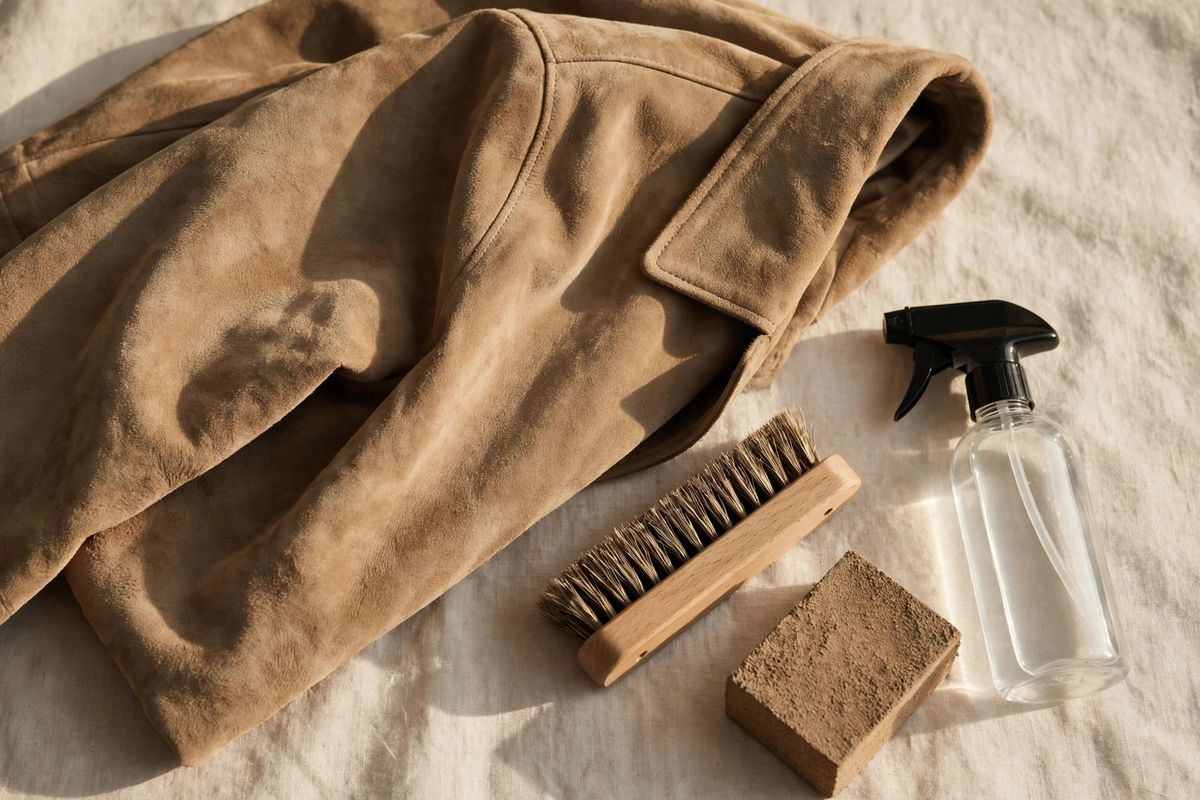
Suede has an unfair reputation. People buy a suede jacket, hear "never let it near water, never touch it, never wear it on a Tuesday", and leave it hanging in the wardrobe until it is effectively a museum piece. The truth is kinder: suede is a durable material that asks for a different routine than smooth leather — brushing instead of wiping, prevention instead of polishing — and rewards it with a texture and depth no other material matches. Here is that routine, complete.
The two tools that do 90% of the work
A suede brush — one side crepe rubber or soft bristles for everyday dust, the other side stiffer (often brass) for restoring flattened nap and working on marks. A suede eraser — a small block that crumbles as it lifts surface marks and shiny spots. Together they cost very little and handle almost everything suede will ever present you with. Keep them where you keep the jacket, not in a drawer in another room, or you will not use them.
The everyday habit: after every few wears, brush the whole jacket gently in one direction to lift dust out of the nap, then — if you want the rich, even finish — brush once against the nap and once with it. Two minutes. Suede that is brushed regularly almost never looks dirty, because dirt never gets the chance to settle into the fibres.
The protector spray: suede's raincoat
Before the first wear, and every few months after, apply a suede protector spray. It will not make the jacket waterproof — nothing will — but it makes water bead and roll instead of soaking straight in, and it buys you time to get out of the rain. Spray evenly from about 20 cm, in a ventilated space, let it dry fully (an hour), and brush lightly afterwards. This single habit transforms suede from "fair weather only" into a jacket that survives ordinary life, including being caught in a shower. More on rain strategy is in our rain protection guide.
Stains: what to do, in order
- Dry dirt and dust: let it dry completely, then brush. Brushing wet mud grinds it in.
- Scuffs and shiny patches: rub with the eraser, then restore the nap with the stiff side of the brush.
- Water marks: if the whole panel got evenly wet, it will usually dry evenly. For a tideline mark, very lightly dampen the whole panel with a mist of water so it dries as one tone, then brush when dry.
- Oil and grease: blot immediately, cover with cornstarch or talc, leave overnight, brush out. Repeat if needed. Grease is suede's hardest stain; a specialist cleaner is the honest answer for a bad one.
- Rain-soaked jacket: stuff loosely with newspaper, dry at room temperature away from radiators, then brush thoroughly. Suede recovers from rain far better than its reputation suggests — it is heat and rubbing-while-wet that ruin it.
What never to do
Never use smooth-leather products on suede: conditioners, creams and polishes are designed to soak into a grain surface and will stain and flatten the nap permanently. Never wash suede in a machine. Never use a hairdryer or radiator on it. And never store it in plastic — suede needs to breathe like any leather.
Reviving an older suede jacket
Found a neglected suede jacket — yours from years ago, or a vintage find? The revival sequence is: brush the entire jacket thoroughly to clear years of dust; work the eraser over every shiny or marked area; hold the jacket in steam (a steamy bathroom works) for ten minutes to relax the nap, then brush again as it dries; treat with protector spray; and finally check the colour in daylight — uneven fading can often be evened by a specialist with suede dye, which is a professional job, not a home one. What cannot be revived: suede that has been polished or conditioned with smooth-leather products (the nap is sealed and stained for good), and suede worn shiny-thin at elbows and cuffs. Everything else is usually just dirt and neglect, and dirt and neglect brush out.
Storage and the long game
Store suede on a wide hanger in a breathable cover, away from sunlight — suede colours fade faster than smooth leather, so a dark cupboard matters. Brush it before storing for a season and once when it comes out. Flattened nap from storage revives with steam: hold the jacket near (not over) a steaming kettle or in a steamy bathroom for a few minutes, then brush. Do not touch it with the iron itself.
One seasonal note: suede is at its best in spring and autumn — light enough for mild days, textured enough to carry an outfit — and it is a perfectly good winter jacket in dry cold. Its enemy is not cold or even occasional rain; it is slush, salt and being worn daily through a wet month without rest days. Rotate it, brush it, keep the spray topped up, and the seasons will not matter much at all.
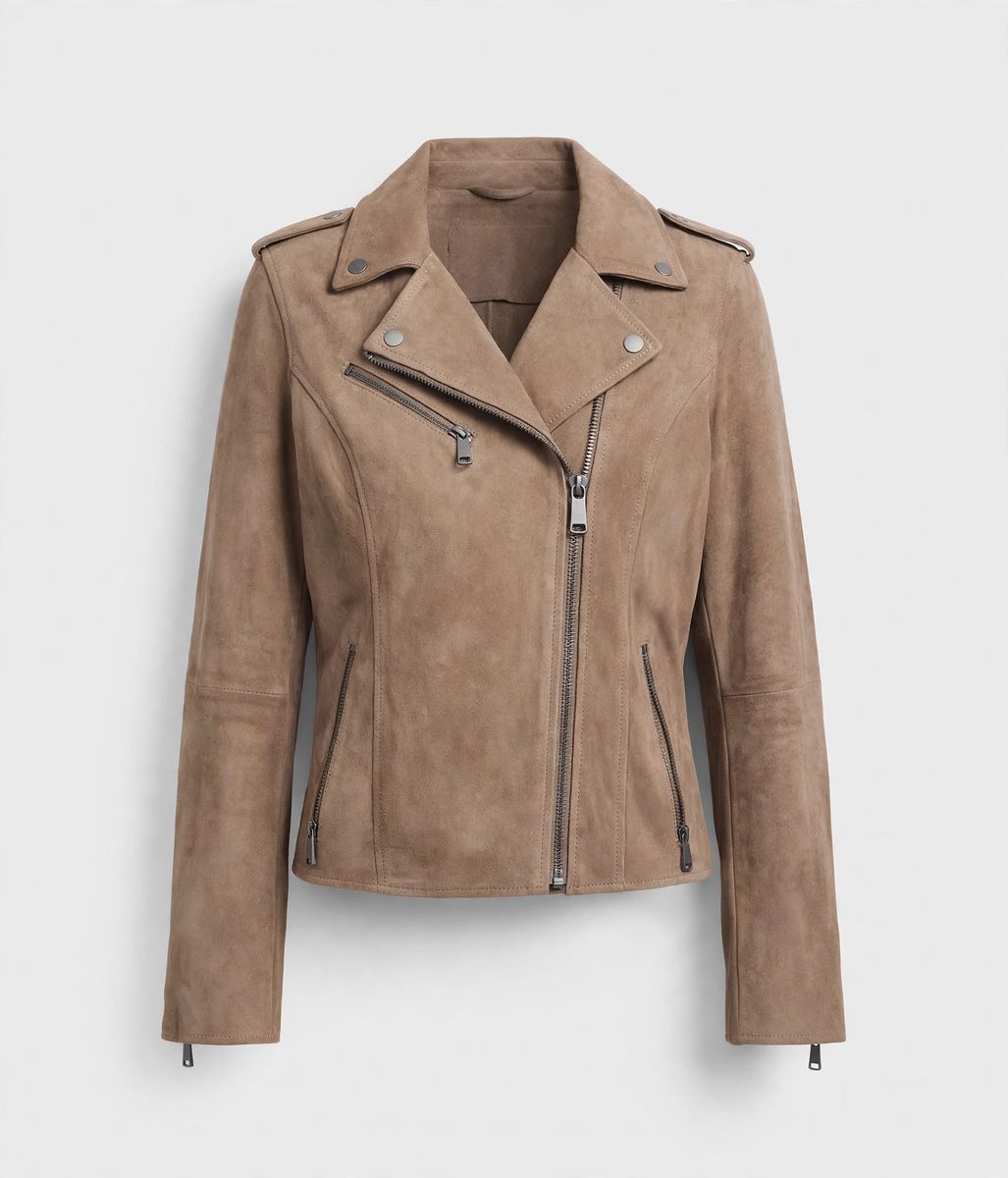
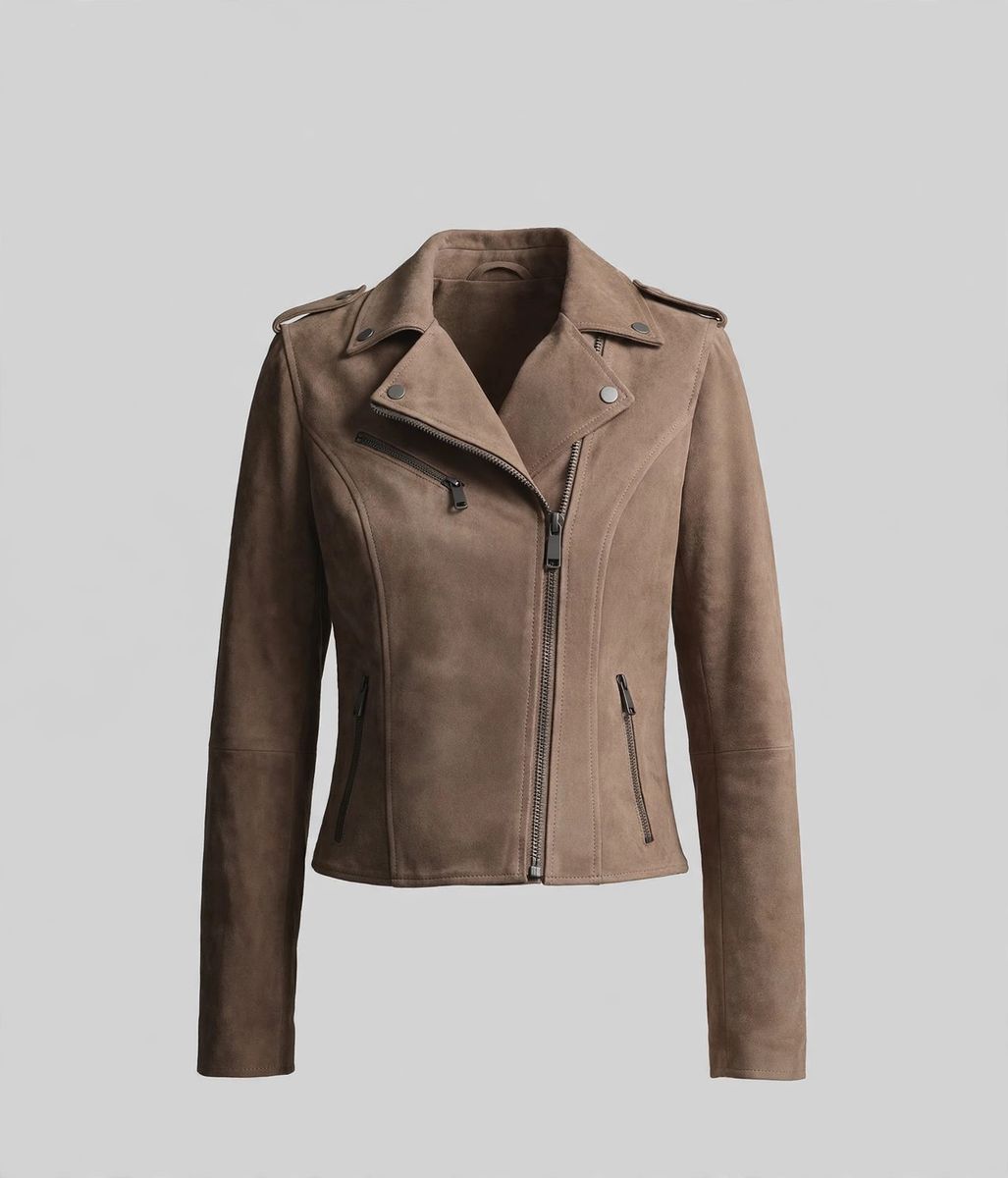
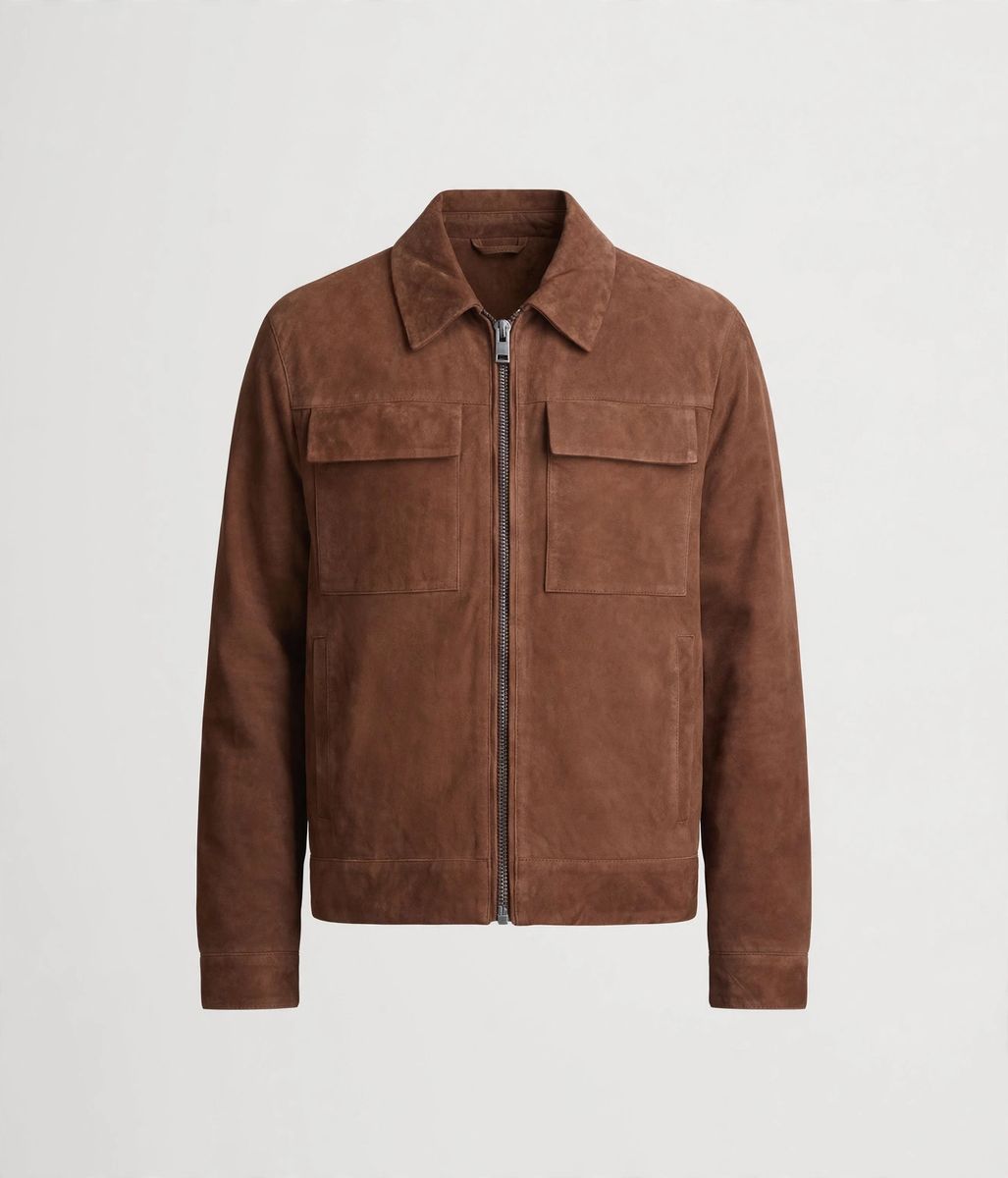
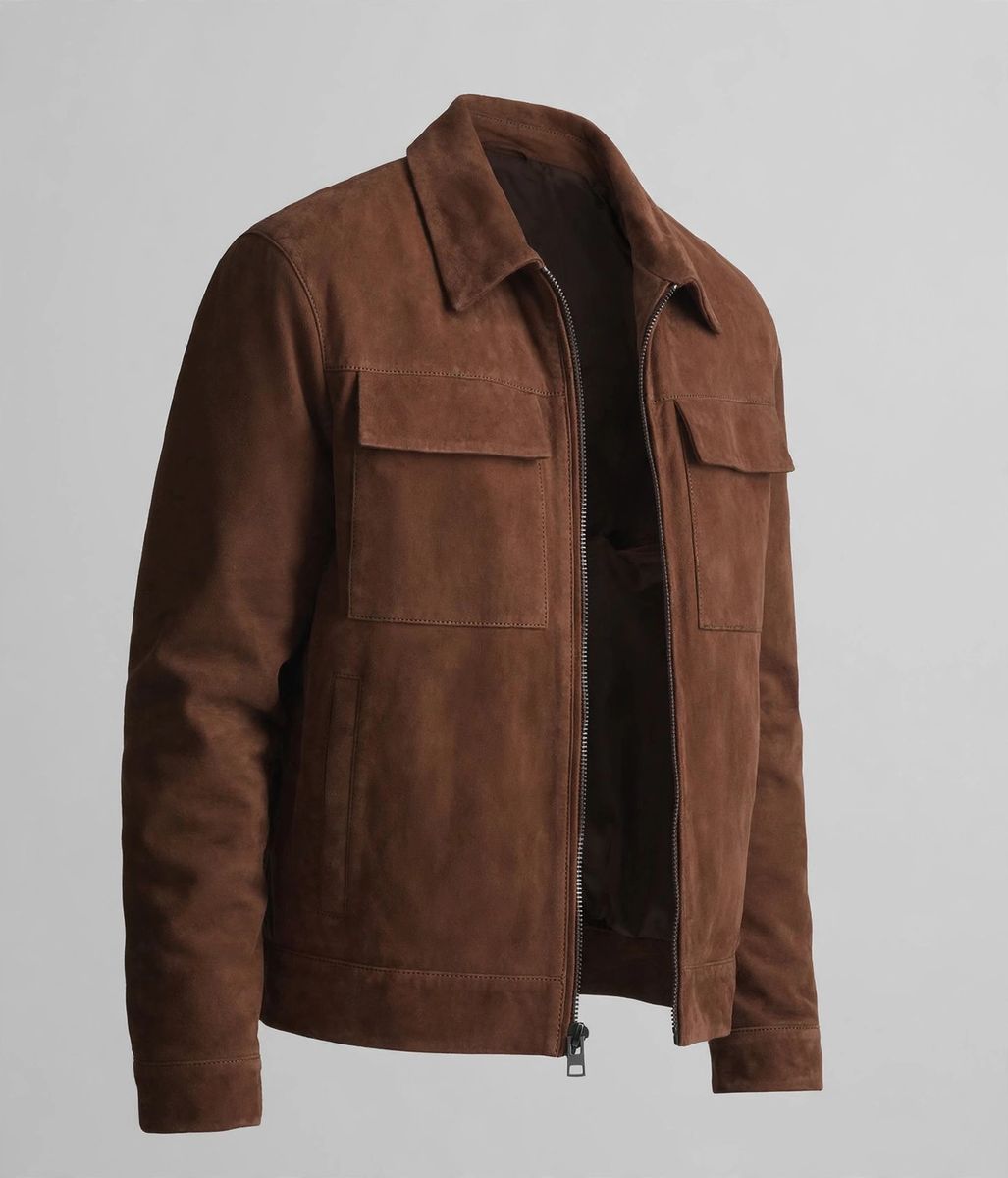
Looked after this way, a jacket like the Madeline Suede Moto or the Banks Suede Shirt Jacket will hold its nap and colour for years. Suede is not the delicate option. It is the textured option — and texture, in a wardrobe of smooth surfaces, is worth two minutes with a brush. For the smooth-leather counterpart routine, see our general leather care guide.