Few comparisons in the jacket world are argued as warmly as this one — fittingly, since warmth is the whole point. A shearling jacket is one of the great winter garments: leather and wool in a single skin. Faux shearling imitates it with a synthetic fleece and a suede-look outer, at a fraction of the price and weight. Neither is simply "better" — they are answers to different budgets, climates and lifestyles. Here is the honest comparison.
What each one actually is
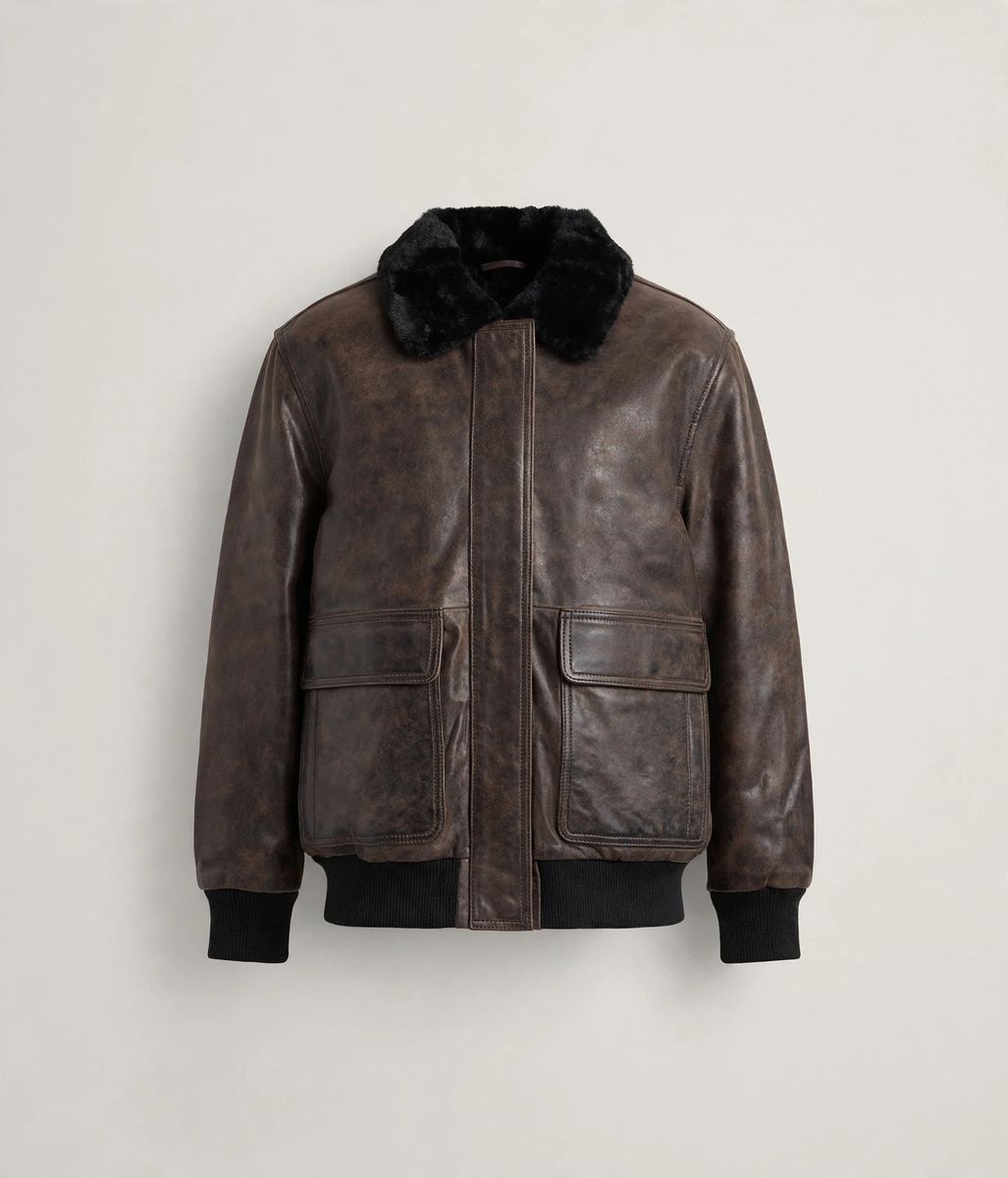
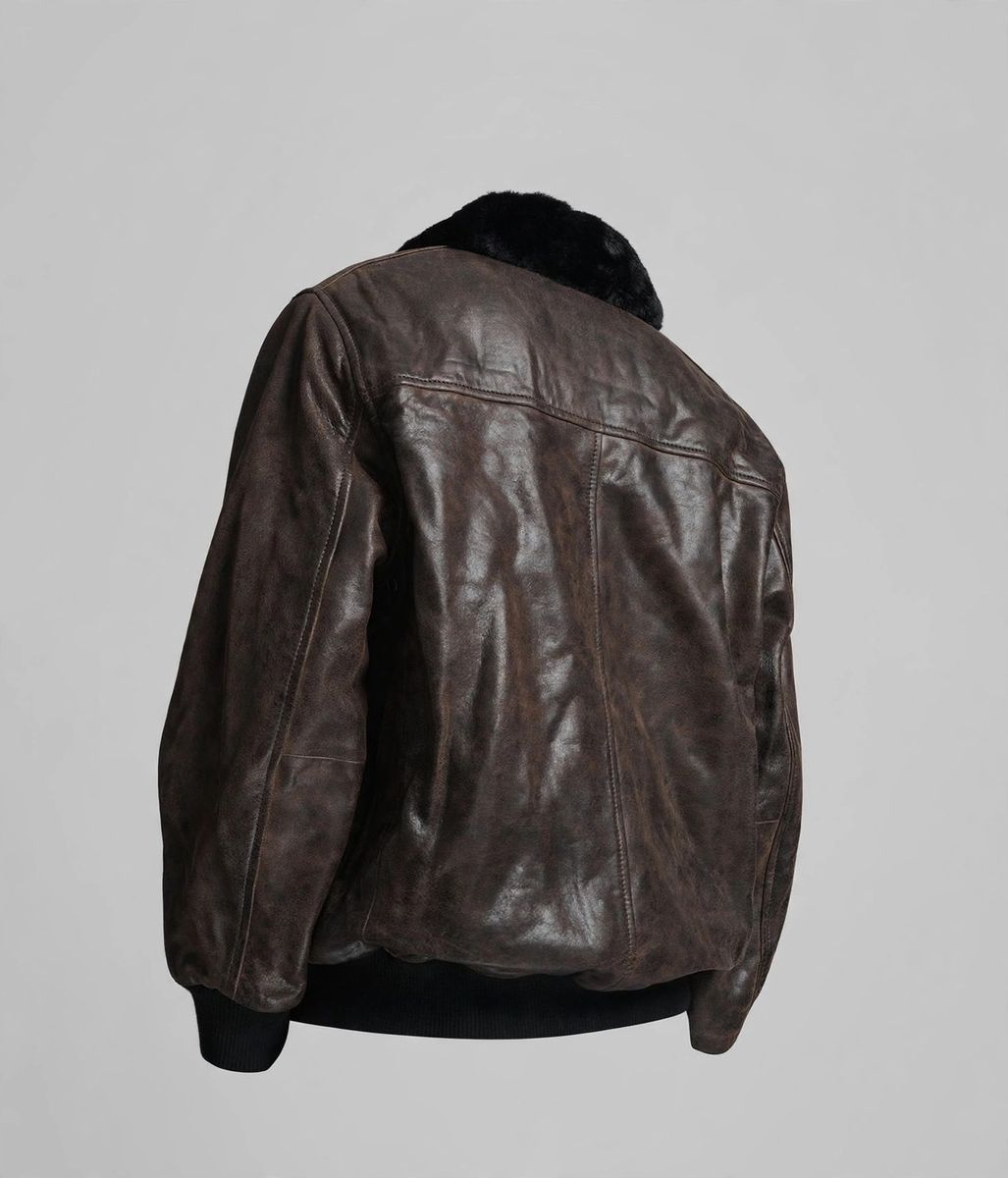
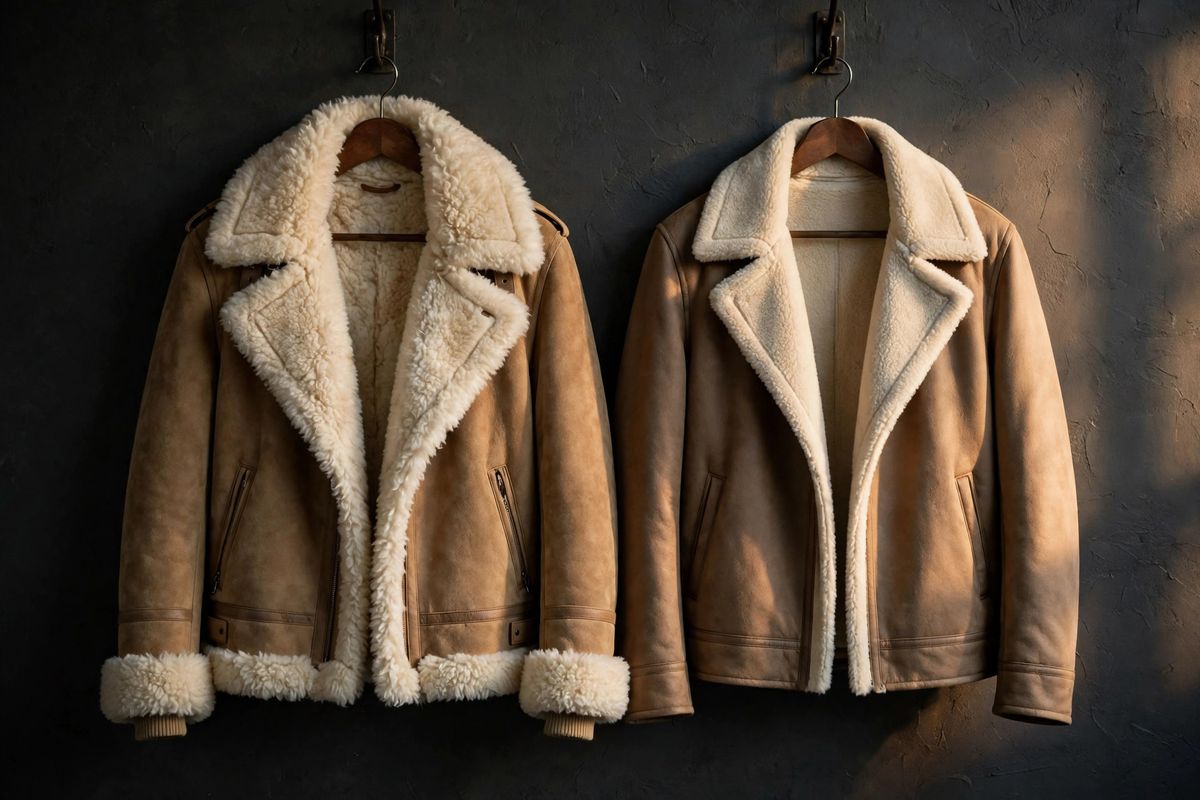
Real shearling is sheepskin with the wool left on. The fleece grows with the hide, so the insulation is literally part of the leather. A jacket like the Astor Shearling is a single material doing two jobs: weatherproof leather outside, deep natural insulation inside.
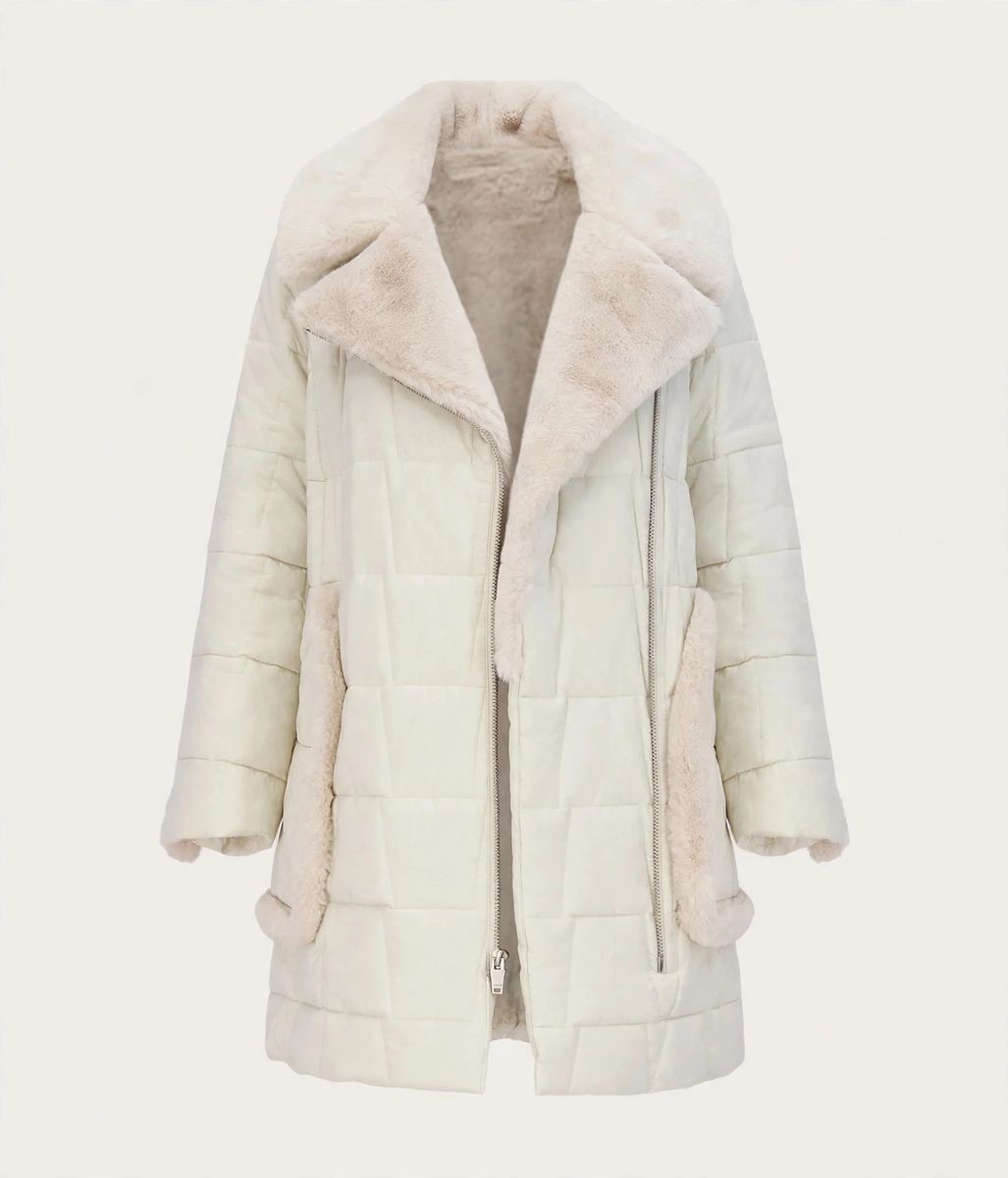
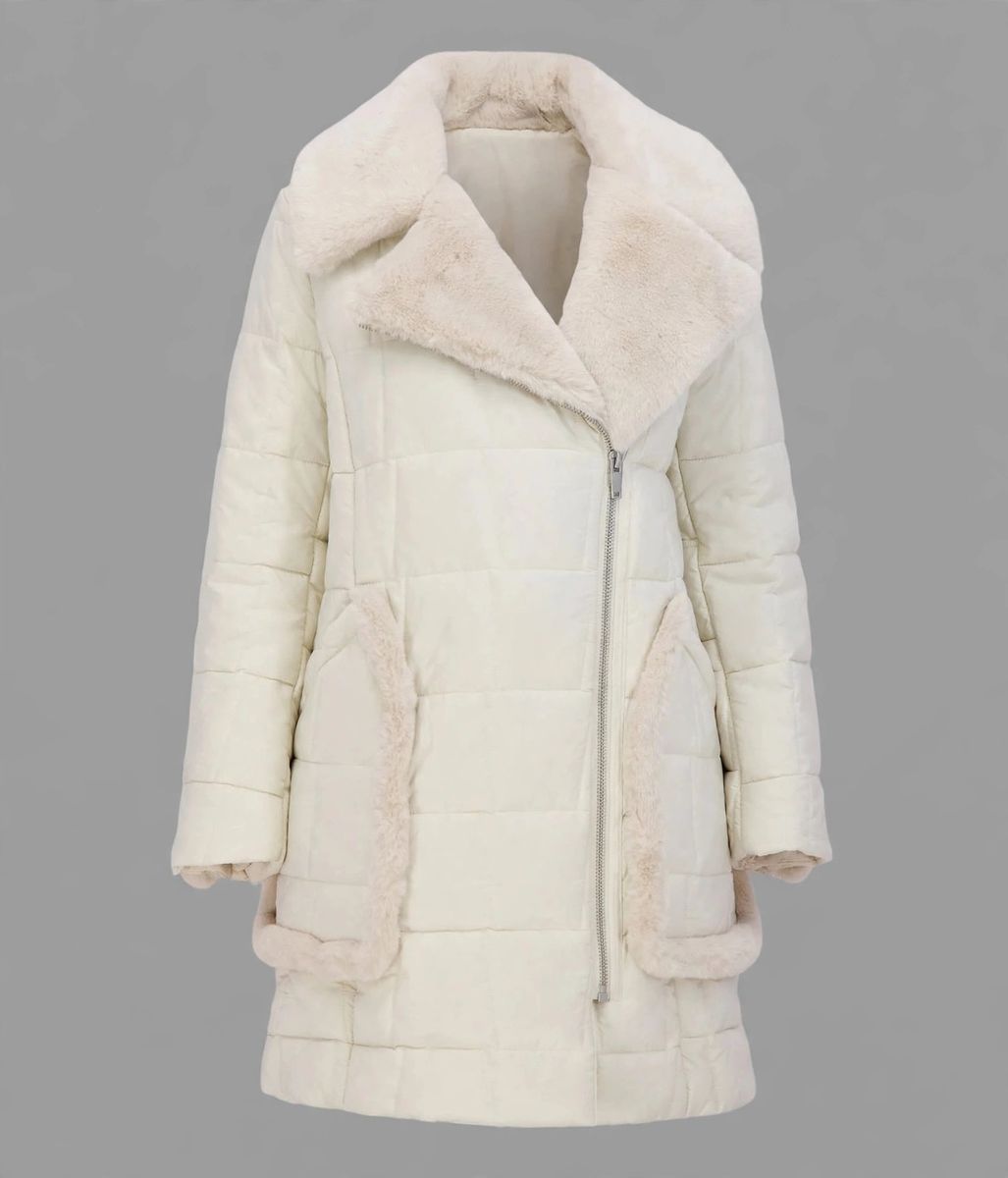
Faux shearling (sometimes called sherpa) is a manufactured fleece — usually polyester — bonded to a synthetic suede-look outer, as in the Everleigh Faux Fur-Lined Bomber. Modern versions are convincingly soft and even, and they keep getting better.
Warmth
Real shearling wins, and it is not only about thickness. Wool regulates temperature: it traps warm air when it is cold, breathes when you move indoors, and keeps insulating even if it gets slightly damp. It is why shearling was the material of flight jackets and mountain wear long before synthetic insulation existed. Faux shearling is genuinely warm — for city winters, commuting and evenings out it is more than sufficient — but it breathes less, so it can feel clammy during a brisk walk, and its insulation compresses over time in a way wool does not. If your winters are severe and you will live in the jacket daily, real shearling earns its price. If your winters are mild or the jacket is for occasional wear, faux is honestly enough.
Weight and feel
Here faux fights back. A real shearling jacket is a substantial garment — you feel its presence on your shoulders, which many people love and some find tiring over a long day. Faux shearling is dramatically lighter and softer from the first wear, with no breaking-in period. Real shearling, like all leather, moulds to its owner over the first season and becomes more comfortable the longer you own it.
Care and lifespan
This is the widest gap. Real shearling asks for respect: no machine washing, specialist cleaning only, storage in a breathable cover, and care around rain. In return it lasts decades — a shearling jacket is a genuine heirloom garment, and its cost-per-wear over twenty winters is remarkably low. Faux shearling can usually be spot-cleaned or gently washed at home, dries faster, and shrugs off a wet commute. Its lifespan is shorter — expect the fleece to flatten and the outer to tire after several seasons of hard wear — but at its price, that trade is fair.
Ethics and environment, briefly
For some buyers this decides it before warmth does. Real shearling is a by-product of the meat industry — the skins would otherwise be waste — and a jacket that lasts twenty years has a small footprint per wear, but it is an animal product, full stop. Faux shearling avoids animals entirely, but it is a plastic textile: it sheds microfibres, cannot be repaired the way leather can, and will eventually be landfill. There is no impact-free choice here, only an informed one — buy the version you will wear for years rather than the version that wins an argument.
Cost
Real shearling is one of the most expensive jacket materials there is, because a single jacket consumes several large, flawless skins. Faux shearling typically costs a third to a fifth as much. The honest way to compare is cost per winter: a real shearling worn for fifteen winters against a faux replaced every four or five. For a daily-wear winter staple, real often wins the maths. For a fashion piece, a second jacket, or a first experiment with the aviator look, faux wins it easily.
How to wear it: the aviator shape
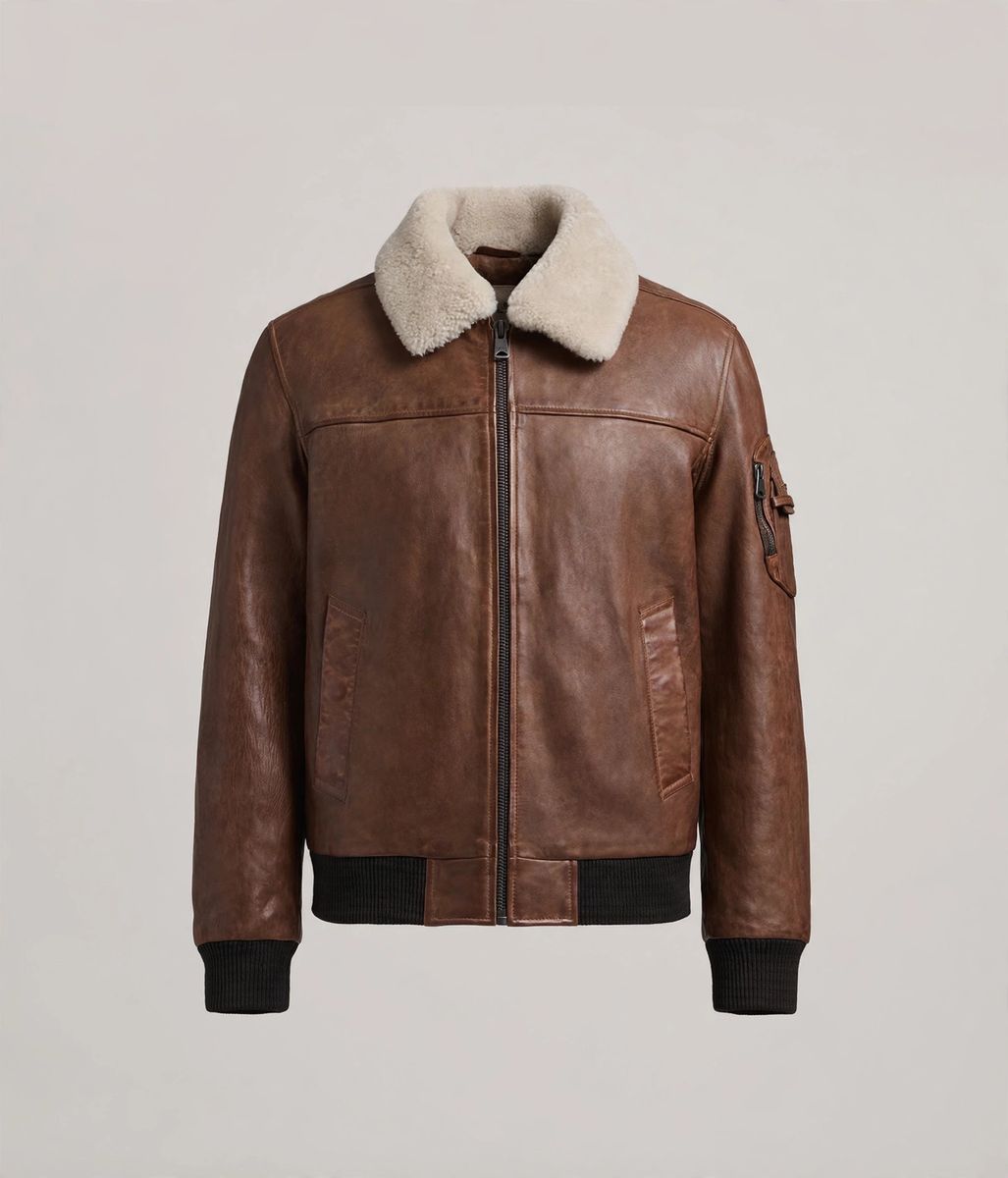
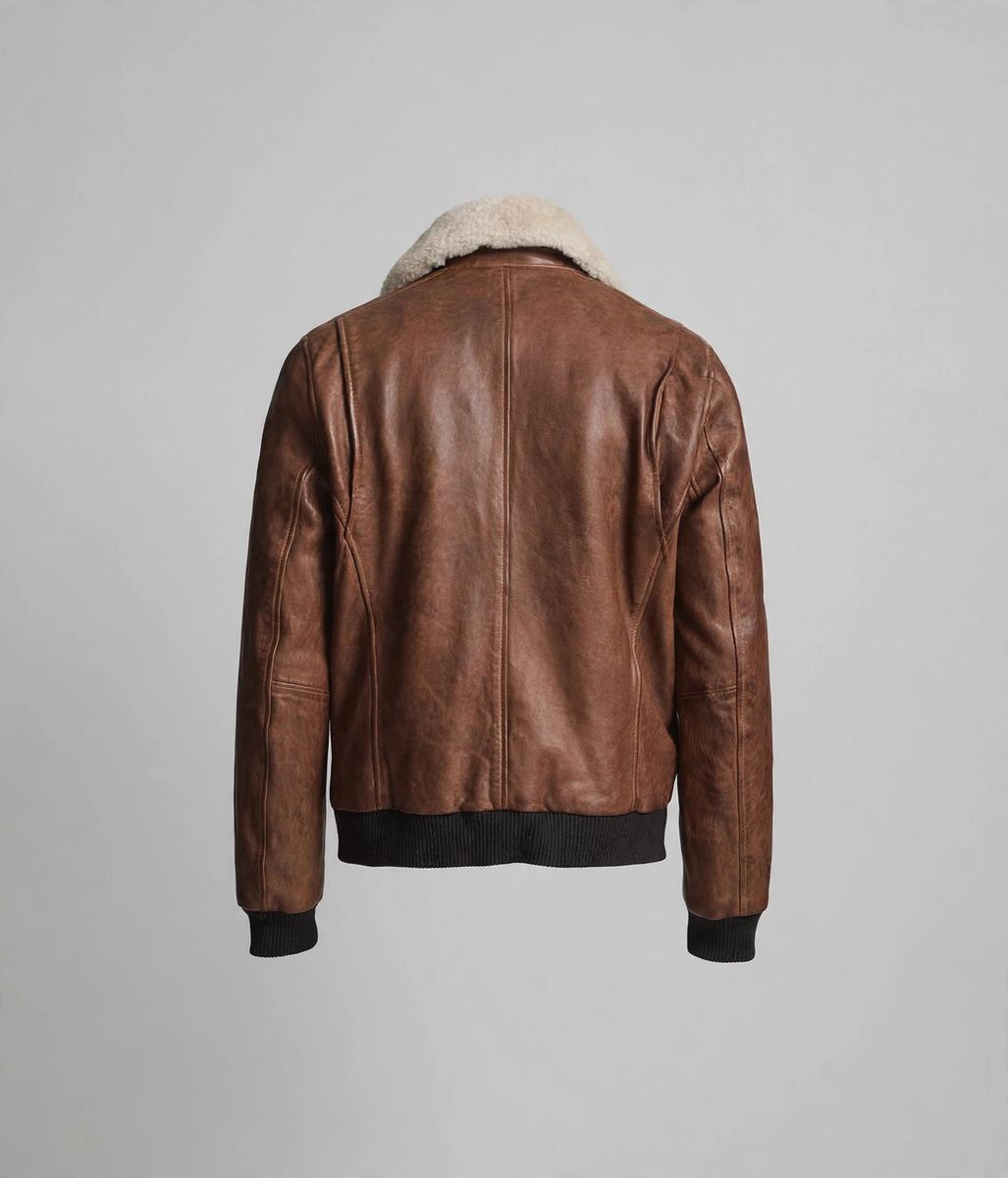
Both materials arrive most often in the aviator or bomber silhouette — big collar, zip front, hem at the hip — and the styling is the same for both. The collar is the feature: wear it turned up against real cold, folded open over a knit when you want the fleece visible. Because the jacket has volume, keep the lower half clean — straight or slim trousers, boots, nothing billowing. Colours matter too: real shearling usually comes in natural tones (birch, sepia, brown, black) that age beautifully, while faux offers a wider, cheaper colour range including fashion shades like blush. If you fall for a fashion colour, faux is the sensible way to buy it. For the full story on the style itself, see our aviator jacket guide, and if warmth is the priority, our warmest jackets guide ranks the whole winter family.
So, which should you buy?
- Buy real shearling if winter is serious where you live, you will wear the jacket most days, and you are buying for the long term.
- Buy faux shearling if your winters are milder, your budget is tighter, you want the look without the weight or the specialist care, or you are testing whether the style suits you.
- Either way, check the details that matter in both: an even, dense fleece with no bald patches, a collar that stands up properly, and seams that lie flat where the fleece meets the cuff and hem.
Both jackets appear across our women's and men's collections, and every product page states plainly which material you are getting — because with shearling, more than any other style, honesty about the material is the whole purchase. For more on where shearling sits among the hides, see our types of leather guide.