Fit you can exchange. Style you can grow into. Colour is the decision you live with for the entire life of a leather jacket — which, if you have bought well, is a very long time. Yet most people choose it in about four seconds, either defaulting to black without thinking or falling for a colour that fights their whole wardrobe. This guide slows that decision down: what each colour actually does, what it pairs with, and how to choose the one you will still love in year ten.
Black: the default, for good reasons
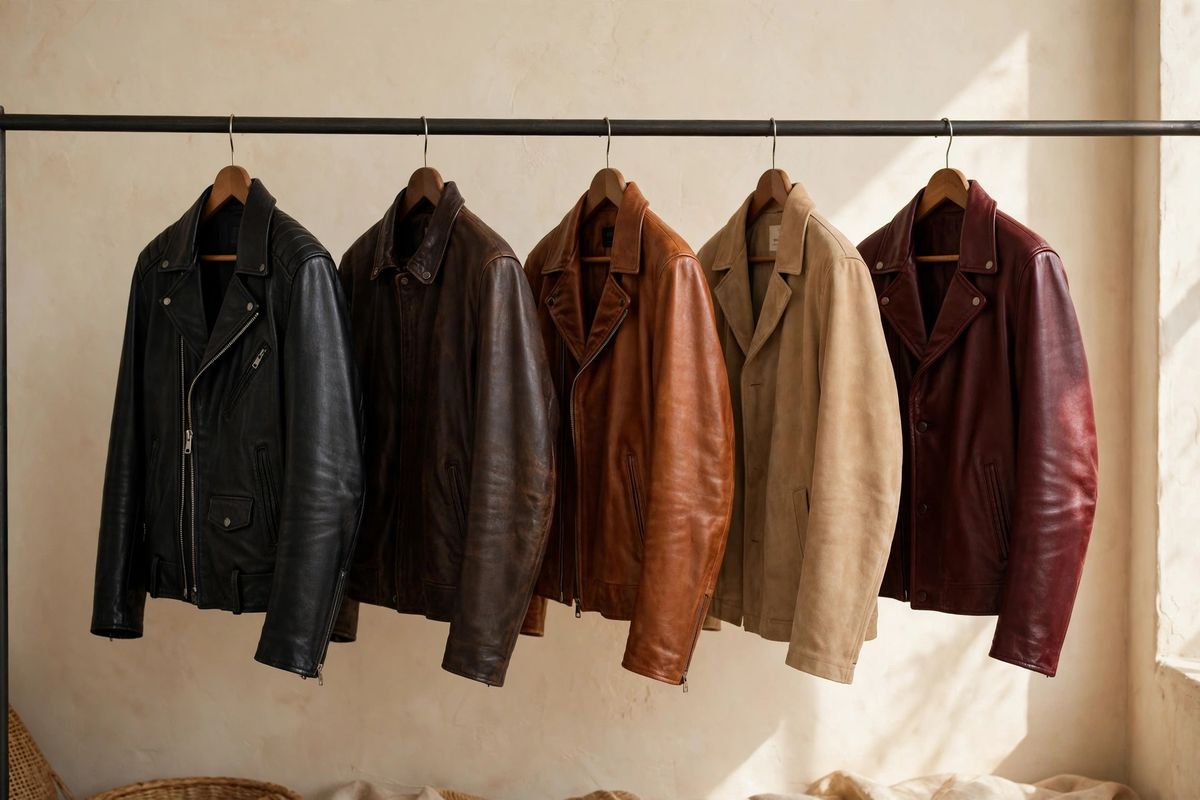
Black is the most versatile leather colour ever made. It pairs with every other colour in a modern wardrobe, reads the smartest of all the leather colours (a black racer can nearly pass for tailoring), hides the scuffs and marks of daily life, and suits every skin tone. Its one weakness is that it can look harsh in very soft daylight and shows dust. If this is your first jacket, or your only jacket, and your wardrobe is built on black, grey, navy and white — buy black and spend your decision energy on fit instead. Pieces like the Elmont are wardrobe infrastructure.
Brown: the warmer classic
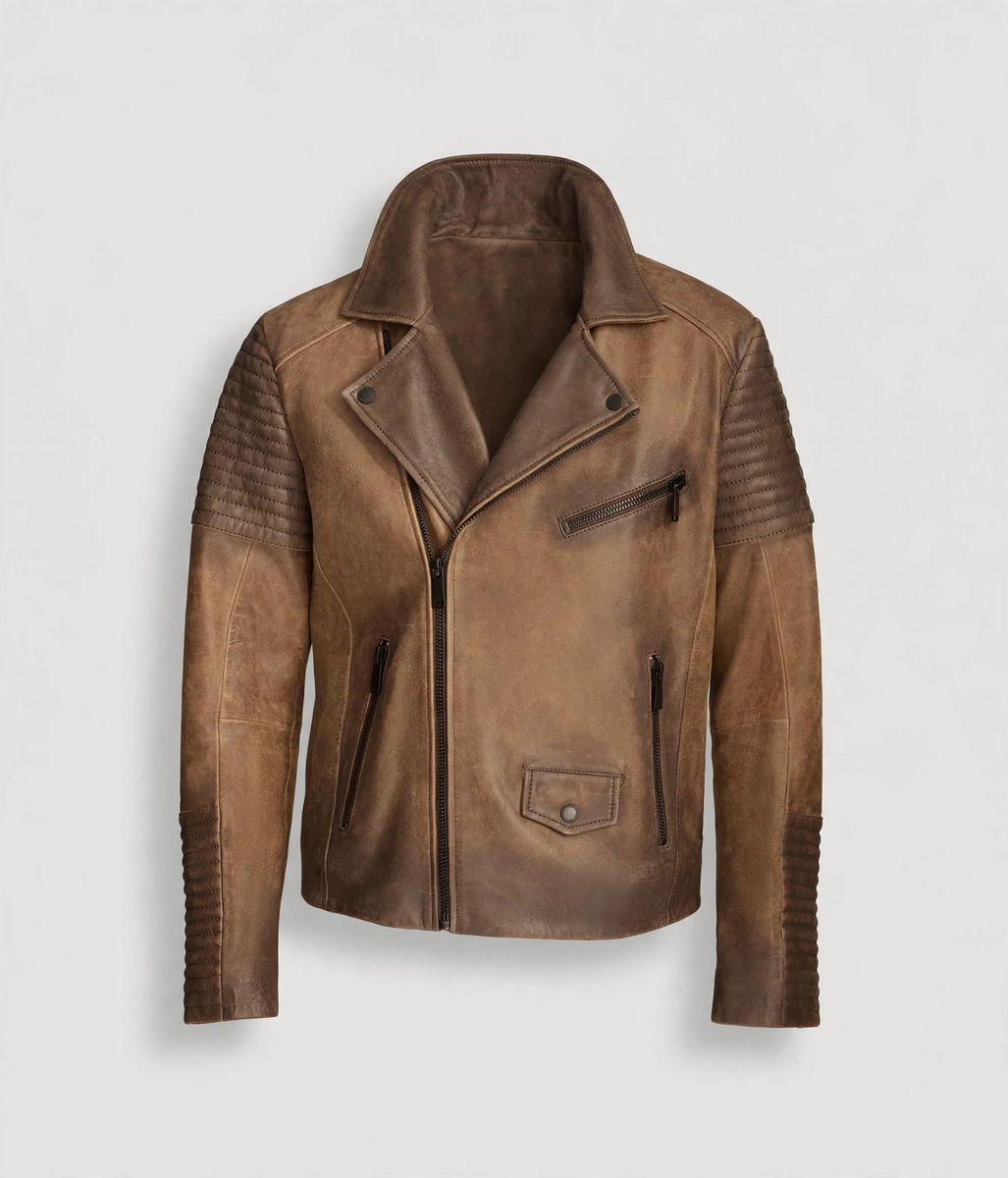
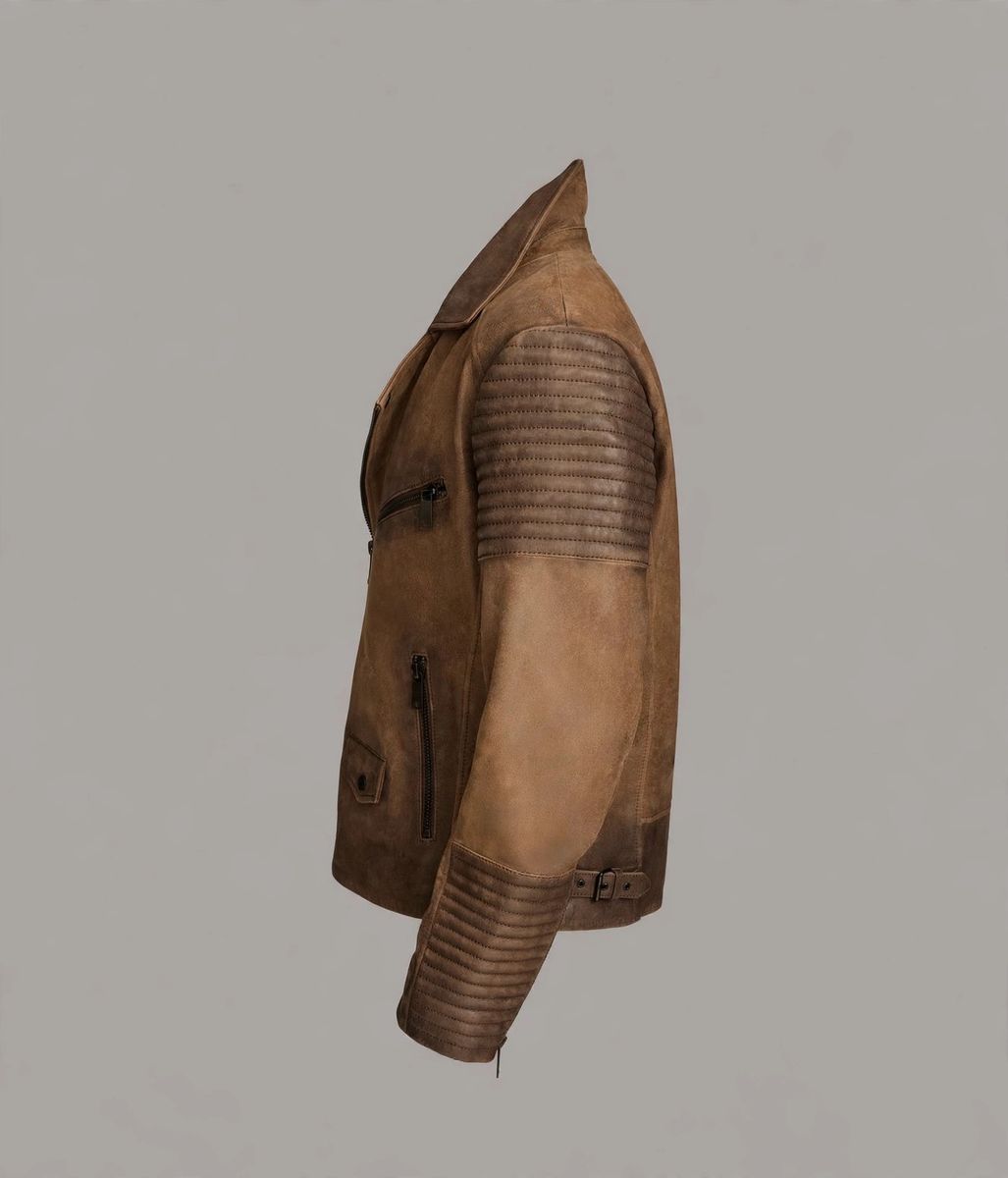
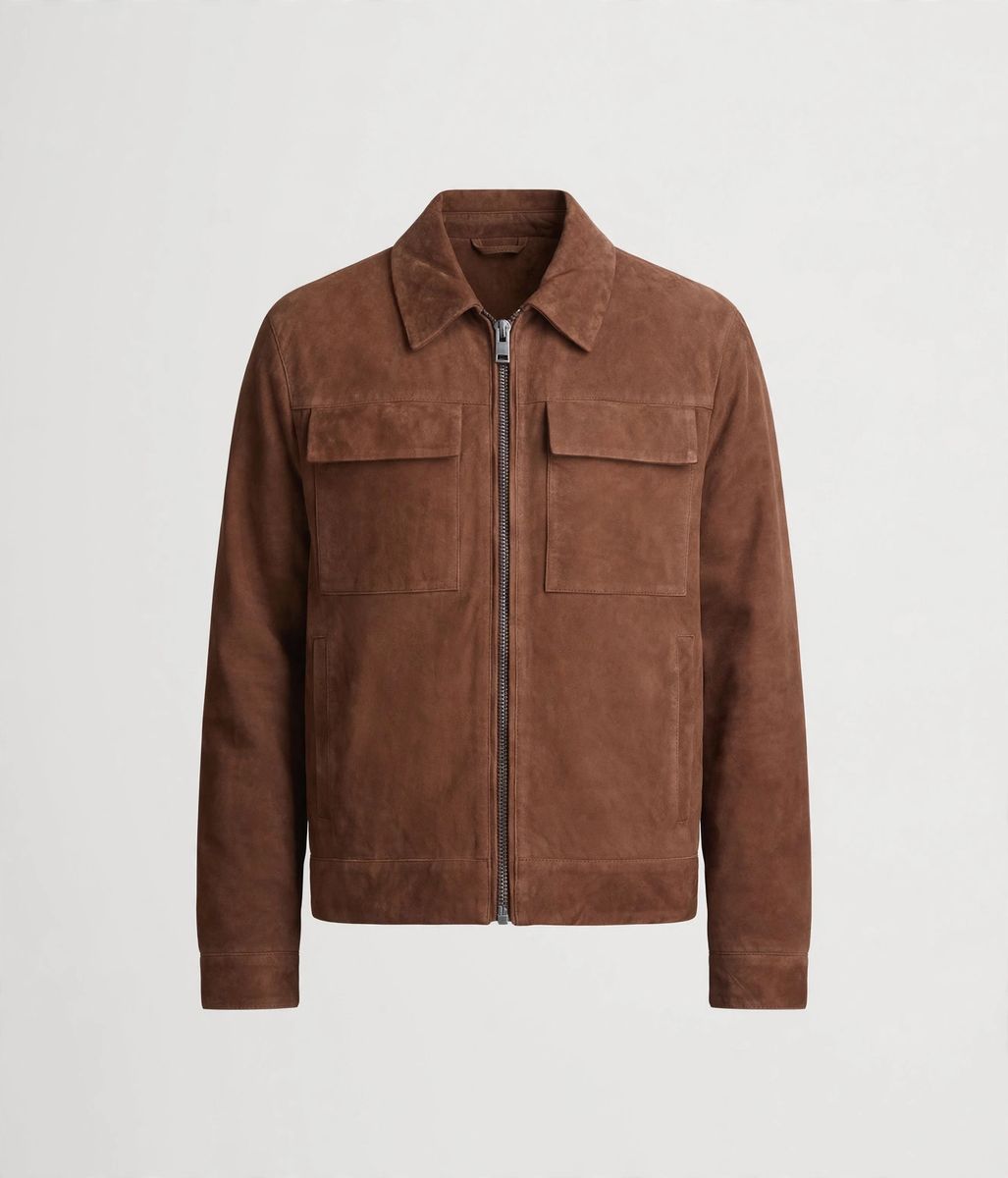
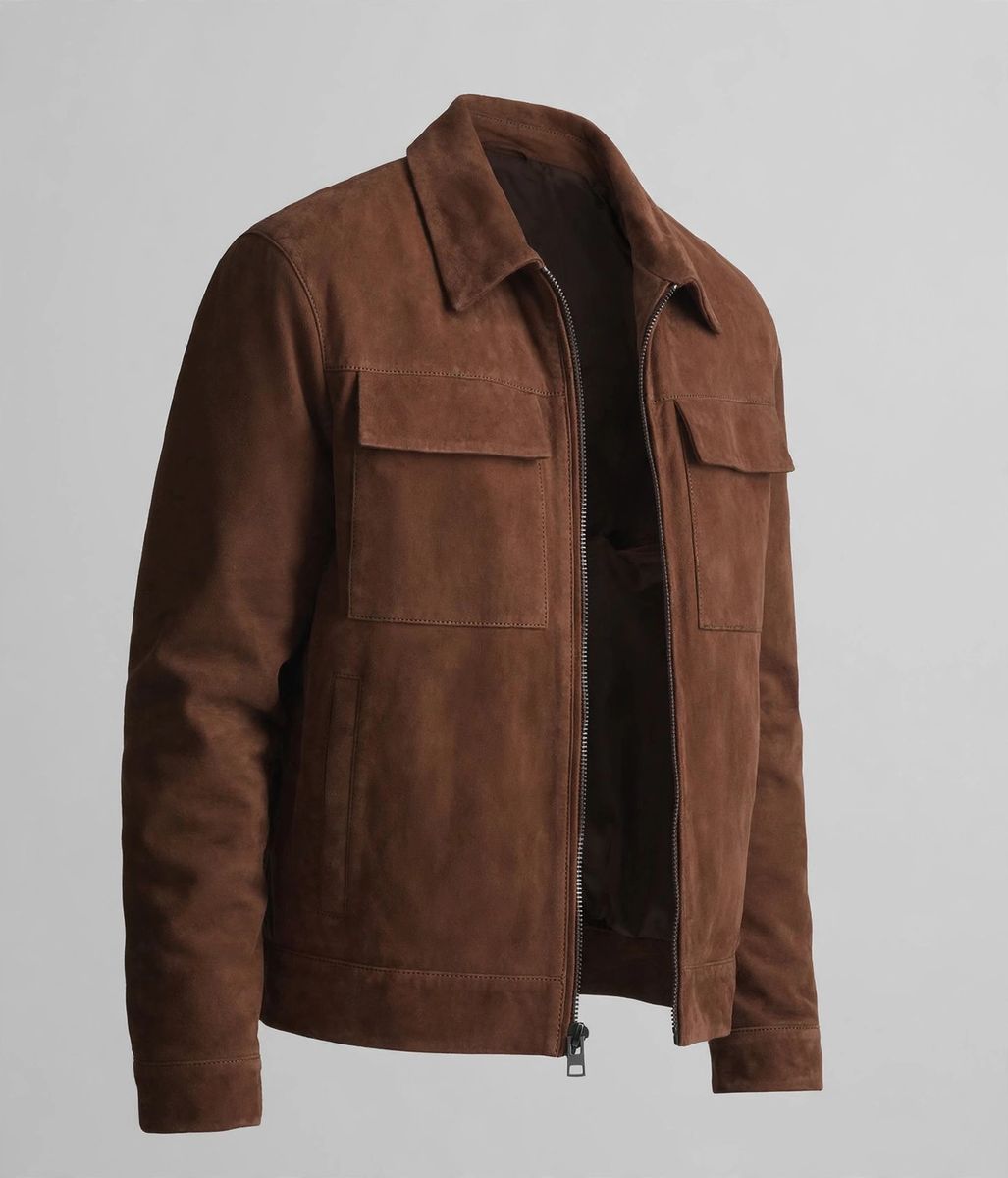
Brown — from deep chocolate to mid-brown — is the heritage colour: it is how leather looks in old photographs, and it develops the most beautiful patina of any colour, darkening and richening where hands and sun touch it. Brown pairs naturally with denim (all washes), cream, beige, olive, rust and autumn tones generally. Its friction point is black: brown leather with black trousers and black shoes needs care to look deliberate. If your wardrobe leans warm and denim-heavy, brown will be worn more than black would.
Cognac and tan: the statement neutral
Cognac, tan and saddle sit between brown and a fashion colour: neutral enough to pair widely, warm enough to be the most interesting thing in the outfit. They are magnificent with white, cream, denim and navy, and they are the colours that make suede look expensive. They show marks and water spots more honestly than dark colours, and they can clash with cool grey tailoring. Choose cognac when you want the jacket noticed — politely.
The deep colours: burgundy, green, navy
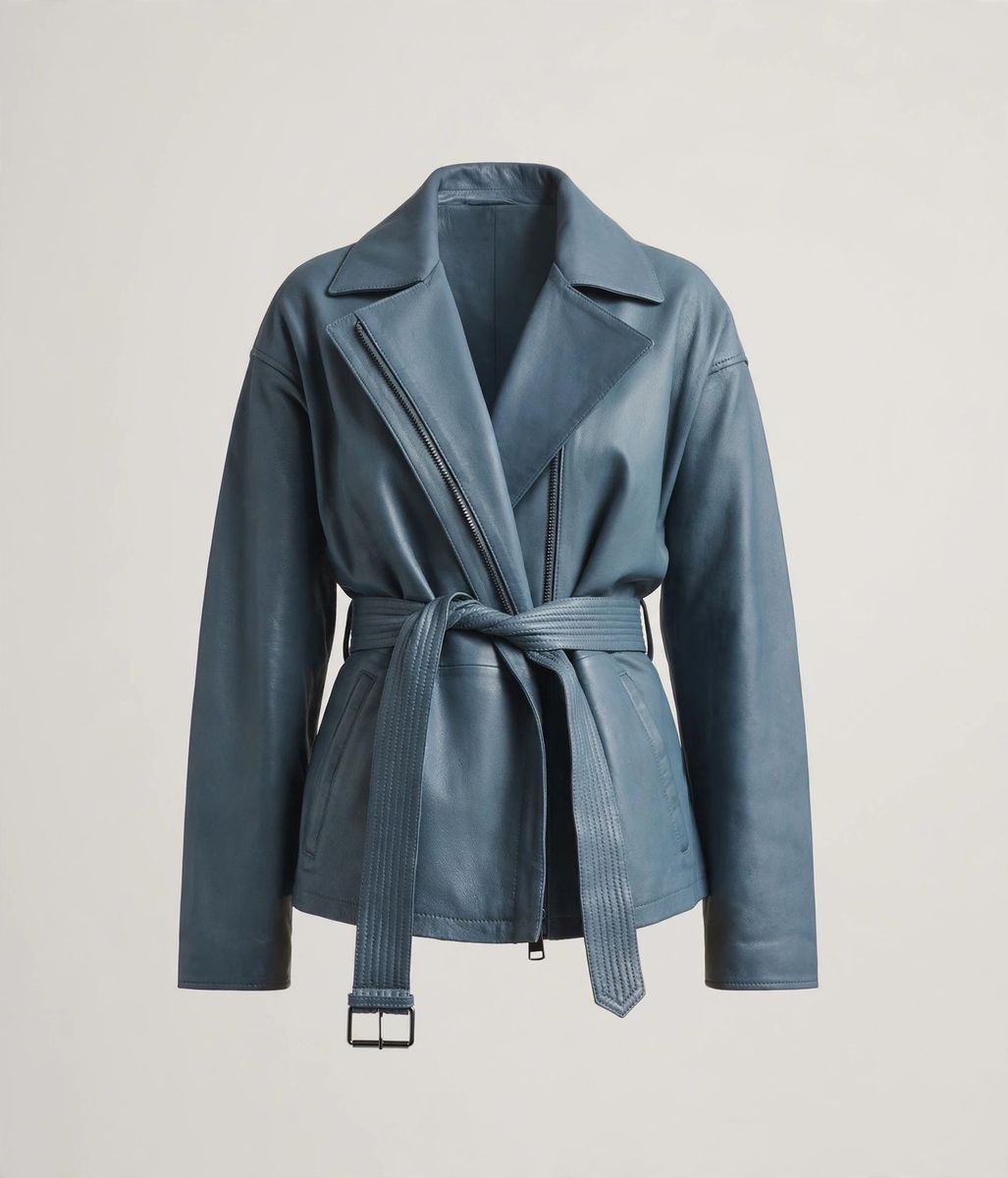
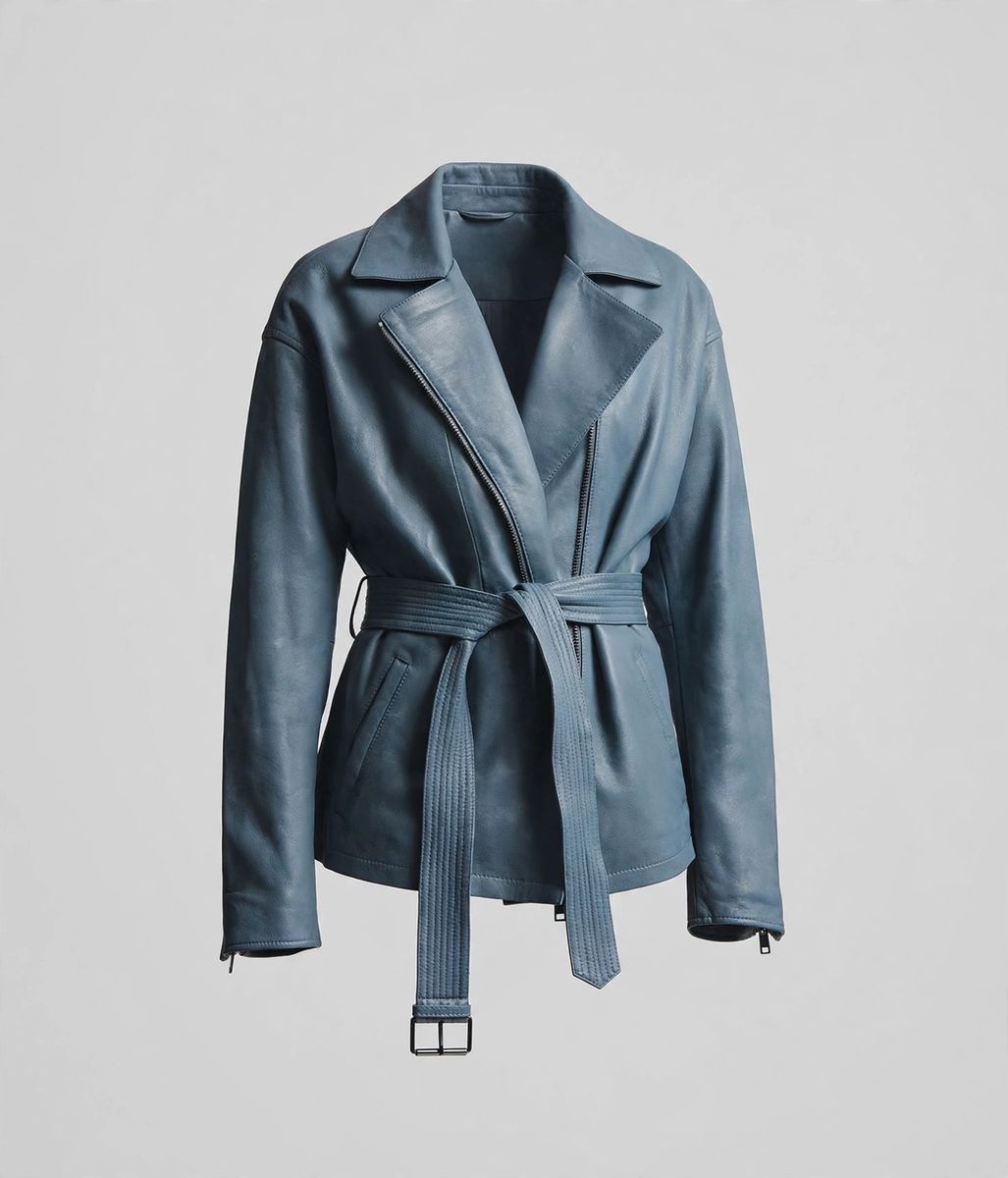
Burgundy (oxblood, port), bottle green and deep navy behave like neutrals in winter and pair beautifully with black — they are the connoisseur's alternative to a second black jacket. A burgundy or blue piece like the Monroe Belted Moto works with everything black works with, plus it gives an all-black outfit a pulse. These are excellent second-jacket colours and perfectly good first choices for people whose wardrobes are mostly black.
White, cream and the lights
White and cream leather are striking, modern and — in smooth finishes — more practical than they look, because smooth leather wipes clean. They are superb in racers and minimal styles, and they light up summer evenings. They will, however, pick up dye transfer from dark denim and show every mark; buy them with open eyes and a soft cloth.
Fashion colours and two-tone
Red, pastel, colour-blocked and striped designs — like the vintage colour-block styles in our men's collection — are treats, not infrastructure. The test from our women's styling guide applies to everyone: count the outfits the colour completes. Seven or more, it is a wardrobe piece; two, it is a treat. Treats are allowed. Just do not buy one believing it is a staple.
Skin tone and hair: a short, honest note
Colour advice often drowns in rules about "seasons", but two observations hold up. First, contrast is flattering: very fair skin and dark hair carry black and deep colours dramatically, while low-contrast colouring (fair skin, fair hair) often looks better in the warmth of brown, tan and cognac, which do not overpower. Second, the colour sits next to your face, so hold the leather near your jaw in daylight before deciding — if your face looks brighter, the colour is right; if you look tired, it is not, whatever the chart says. Beyond that, wear what you like looking at: you will see the jacket on the hanger every day, and affection is a practical feature in a ten-year garment.
Matching your shoes (the tiebreaker)
When two colours both work, let your footwear decide. Leather does not need to match your shoes exactly — that rule is for formal tailoring — but it should live in the same family. Mostly black boots and shoes: black or deep-colour jacket. Mostly tan, suede or brown footwear: brown or cognac. Mixed equally? Choose by wardrobe temperature — warm colours (cream, olive, rust, denim) point to brown; cool colours (grey, navy, white, black) point to black.
Care differs slightly by colour, too. Dark leathers hide conditioner darkening and everyday marks; light leathers show both, and benefit from gentler, less frequent conditioning and a soft-cloth wipe after wear. Suede colours fade in sunlight faster than smooth leather in any shade, so storage in the dark matters most for the beautiful mid-tones — cognac, sand, taupe. None of this should decide the colour for you, but a light-coloured suede jacket bought by someone with a sunny, dusty commute deserves an informed owner.
Choose the colour your actual life pairs with, and the jacket will be worn hundreds of times. Choose the colour an imaginary life pairs with, and it will be worn twice. Leather rewards honesty like nothing else in the wardrobe.